


Criminally Charged for Standing, Silently Praying
Despite being cleared in court and compensated for two unjust arrests over silent prayer, this charitable volunteer now faces criminal charges. ADF UK is supporting her legal defence.
61% funded
"Everyone has the right to freedom of thought." - Isabel Vaughan-Spruce
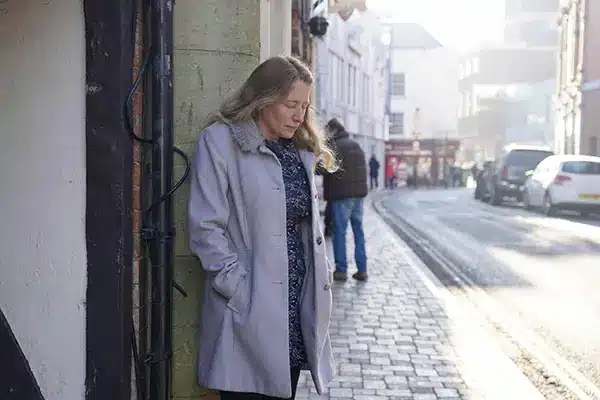
West Midlands Police and the Crown Prosecution Service have criminally charged Isabel Vaughan-Spruce because she “stood outside” an abortion facility, where “influence” is prohibited.
The charitable volunteer has been under investigation since January for engaging in silent prayer on a public street near an abortion facility in Birmingham.
This is the first charge under the new national “buffer zones”, which came into force in October 2024, under Section 9 of the Public Order Act 2023.
The Attorney General confirmed on 16th December, in response to a parliamentary question from former Home Secretary Suella Braverman MP about Vaughan-Spruce’s case, that “The Crown Prosecution Service has issued proceedings under Section 9 of the Public Order Act 2023, in relation to one case, since it was commenced on 31 October 2024.”
Vaughan-Spruce had not yet received information about the criminal charge when this written answer was issued, but was informed hours later in a letter from West Midlands Police.
All previous court cases regarding the status of silent prayer took place in the context of “buffer zones” enforced by local authorities via Public Spaces Protection Orders, rather than through this new law.
The new national law prohibits “influencing any person’s decision to access, provide or facilitate abortion services” within 150m of abortion facilities, but does not mention silent prayer specifically.
CPS guidance on the law stipulates that silent prayer on its own is not enough to meet the threshold of criminality unless it is accompanied by “overt” activity.
Investigated for a “thoughtcrime”
On 18 March 2025, West Midlands Police informed Vaughan-Spruce she was under investigation for praying silently near the facility on 27th January, as well as several other subsequent dates. Vaughan-Spruce has been peacefully praying in the same public area on a regular basis for two decades.
Vaughan-Spruce, with legal support from ADF International, sent numerous requests for clarification in proceeding months as to the status of her case, pointing out that the legislation does not function as a ban on her mere presence or on holding pro-life Christian beliefs.
Repeated injustice over silent “thoughtcrime”
In 2023, the charitable volunteer was acquitted in court after being arrested for praying in a local “buffer zone,” under a Public Spaces Protection Order that banned “expressions of approval or disapproval” of abortion. The incident occurred while the abortion facility was closed. The prosecution offered no evidence to support a conviction.
Despite being cleared of any wrongdoing, Vaughan-Spruce was arrested again for her silent thoughts in the same location weeks later in March 2023, opening an investigation that lasted several months. In August 2024, Vaughan-Spruce successfully challenged her two unjust arrests and received a settlement from West Midlands Police of £13,000.
On regular occasions, she has been approached by officers and asked if she is praying. Once, she was observed by two officers posted to watch her activities.
Your generosity allows us to provide legal support at no cost to our courageous clients.
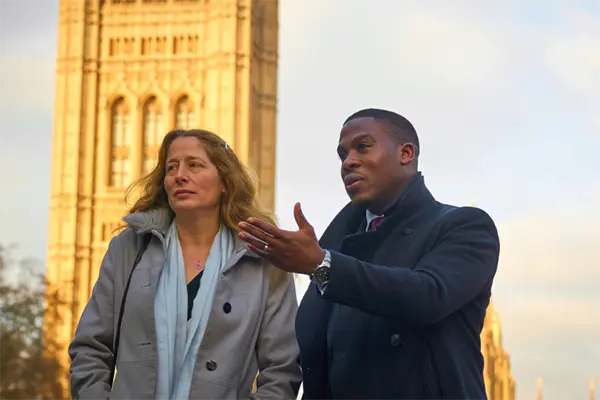
Buffer zones are among the most concerning frontiers of censorship in the modern west. We all stand against harassment and abuse, but the ‘buffer zone’ law broadly bans ‘influence’ which is being interpreted by police officers to target innocent people who happen to stand in a certain place and believe a certain thing.

Jeremiah Igunnubole
Legal Counsel for ADF UK
FAQ
A censorship zone sets out a defined area around an abortion facility that prevents citizens from engaging in otherwise legal activities within it. Prohibited activities can include offering leaflets about crisis pregnancy support services, or even praying quietly alone.
Censorship zones around abortion facilities can include several streets within their circumference and are usually intended to prevent any contact between citizens entering a facility and those engaging in pro-life activities.
Censorship zones are sometimes referred to as ‘buffer zones’, ‘bubble zones’ or ‘access zones’ by their proponents. The problem with this terminology is that it suggests that there is a need for society to be ‘buffered’ from all of the activities included in such measures, many of which are reasonable or even beneficial to others. While everyone condemns harassment – which is already a crime – censorship zones have been instrumentalised to criminalise people peacefully offering help, or simply thinking pro-life thoughts, on public streets.
ADF UK stand firmly against harassment against women in any circumstances. Censorship zones (so-called “buffer zones”) aren’t the solution to protecting women from harassment.
Harrassment is illegal in England, Wales and Northern Ireland under – to name just one example – the Protection from Harassment Act 1997 (and the adjacent Protection From Harassment (Northern Ireland) Order of the same year).
In Scotland, if someone is engaging in harassment, they can be subject to a non-harassment order. If that order is breached, it’s an offence with up to 2 years jail time. Censorship zones, then, wouldn’t newly ban harassment. They would, however, newly ban other forms of behavior which are perfectly legal, protected in human rights law under freedom of speech, thought, and assembly, and indeed can be a vital lifeline to women.
In 2018, the UK Home Office reviewed the situation outside abortion facilities nationwide. Considering evidence gathered about harassment, the Home Secretary at the time said this: “…what is clear from the evidence we gathered is that these activities are not the norm, and predominantly, anti-abortion activities are more passive in nature. The main activities reported to us during protests include praying, displaying banners, and handing out leaflets.” (Since 2018, there has been no evidence of a substantive escalation of any violence, abuse, or harassment outside of abortion facilities).
The Home Secretary thus concluded, “Introducing national buffer zones would not be a proportionate response, considering the experiences of the majority of hospitals and clinics, and considering that the majority of activities are more passive in nature.” This conclusion corresponds with the testimonies of women who say they felt helped, not harassed, by volunteers in nearby abortion facilities. Alina Dulgheriu is one such woman who has made her story public. She was alone, abandoned, and jobless when she found herself in a crisis pregnancy.
Like almost 1 in 5 women who have abortions, she felt pressured into the decision. She thought she had no choice but to abort her child. Fortunately, Alina received a leaflet about help available, right at her point of need. She chose to accept the offer and flourishes as a mother today. Find her story, as well as others, at www.behereforme.org.
PSPOs were designed to grant local authorities the power to target particular anti-social activities such as dog fouling, control of fires & barbecues etc. Parliament did not intend such orders to be used as unaccountable tools to restrict fundamental rights and freedoms.
Unlike Court Orders, injunctions or other targeted measures, PSPOs are not targeted at any specific individual and are easier for councils to implement with more limited accountability and scrutiny.
The question of intentions is a good one that ought to be more common in debates concerning criminal law. Increasingly, we are seeing criminal laws apply without reference to the accused’s intentions, with the feelings of the accuser treated as almost sacrosanct, and officers unthinkingly arresting individuals in public spaces based on reports that some bystanders are offended instead of considering the fundamental rights at play.
In a democratic society, being offended by others is a given. It is a significantly less costly price to pay than ceding fundamental rights to the state. We know from history that once fundamental rights are ceded, the state will very rarely, if ever, willingly give them back.
The law should be able to differentiate between silent unassuming prayer and charitable offers of help and criminal harassment and intimidation. PSPOs conflate all of these, bringing the threshold of criminality to an impermissibly low level. The government should look at the PSPO legislative regime and either scrap it in its entirety or expressly prohibit any interference with the peaceful exercise of fundamental rights.
The reference to intimidation in Isabel’s charge is particularly alarming. At all material times, Isabel prayed silently while the abortion facility was closed. The wording of the charge appears to accuse her of intimidating by silent prayer, which is wholly new territory.
In Scotland and Northern Ireland, proposed national buffer zones legislation broadens criminal liability to any “influencing activity”. The scope of this term is so vague and unclear that it betrays the basic rules of good law. Indeed, the scope is so broad that it would inevitably lead to numerous unjust arrests and needless interferences with the fundamental rights of people to think and speak on the public street freely.
In a recent submission to the Supreme Court, the Lord Advocate for Scotland clarified her belief that silent prayer should be treated the same as violent or threatening behaviour, alleging that silent prayer could be ‘psychologically damaging’.
Are so-called offers of charitable help not just anti-choice covers for harassment and intimidation?
For those who remain unconvinced that pro-life volunteers outside abortion facilities help women, please see the accounts of these women.
Pro-choice advocates should see the glaring inconsistency in arguing for a woman’s right to choose abortion while simultaneously denying their right to choose to engage in offers to discuss charitable alternatives to abortion.
A woman’s freedom to choose to keep her child does not suddenly disappear as she approaches the public spaces around an abortion centre.
The idea that a decision has already been made ignores the fact that women are often unsure, coerced, confused or otherwise pressured toward abortion.
Importantly, the idea that a woman has already made her decision when approaching the abortion centre cannot be reconciled with the fact that abortion centres are themselves meant to provide counselling support, including support for those wishing to keep their child.
Such support would be unnecessary if it is assumed that the visiting woman has already made an unchangeable decision.
No. The paramount rights in law, in this case, are freedom of thought and religion. Freedom of thought is an absolute right, which means the state cannot interfere with it under any circumstances.
Freedom of religion can only be interfered with by the state when strictly necessary and proportionate to do so. Given that Isabel and Adam both stood and prayed silently in a public space, it is hard to see how an arrest, prosecution or penalty fine could ever be justified.


Stay Informed
Get involved! Sign up to receive updates:
"*" indicates required fields