

A Global "Censorship Industrial Complex" Demands a Global Response

What was once confined to dystopian fiction has now become an undeniable reality; censorship has become one of the most pressing issues in our digital age. Under the banner of combating “mis-, dis-, and mal-information,” sweeping laws and regulations are being deployed to muzzle voices and suppress free expression on an unprecedented scale.
At its core, censorship is about power—who has it and who gets to decide what is said and what isn’t. This has led to what can be termed the “censorship industrial complex”—a robust and dangerous alliance of governments, international institutions, tech giants, media outlets, academic institutions, and advocacy groups collaborating to control the flow of information, primarily online.
Much like the “military-industrial complex” that US President Dwight Eisenhower warned about in 1961—an influential alliance between government and defence contractors—the “censorship industrial complex” suggests a similar coalition, this time with the intent to control public discourse. Eisenhower warned that when government and industry become too connected, they end up putting corporate or political interests above the public.
As said in the Westminster Declaration: “We understand that words can sometimes cause offence, but we reject the idea that hurt feelings and discomfort, even if acute, are grounds for censorship.” If we fail to address this growing web of censorship, the right to free speech will be chipped away, piece by piece.
How Global Censorship Laws Impact Free Speech Across Borders
The “censorship industrial complex” operates on a global scale, from the suppression of religious speech and political dissent in authoritarian countries to the increasing censorship of conservative or religious perspectives on social media in democratic countries.
The global fight for free speech has reached a critical point, complicated by the vast web of censorship laws across countries. Speech allowed in one country is restricted or criminalized in another, preventing people from sharing ideas across borders.
And in democratic countries in Europe and the Americas, the threats to free speech are mounting and severe.
“Hate Speech” Legislation as a Tool for the Censorship Industrial Complex
This year, the Irish government debated a “hate speech” law that, if adopted, could criminalize the possession of “hateful” material with up to five years in prison. This law raised alarm among free speech advocates, who asserted that vague definitions of “hate” could lead to suppressing legitimate discourse.
In June, ADF International briefed Irish lawmakers on the dangers and gathered free speech advocates in Dublin to oppose the draconian bill. While the Irish government signalled it would not proceed with the bill, similar legislation likely will be attempted again in the future.
Similarly, in April, Scotland passed a law criminalizing “stirring up hatred” against protected categories, including transgender identity, with a possible seven-year prison sentence. This law also includes ambiguous terms that could criminalize speech perceived as “offensive”.
Wherever these laws are put in place, the term “hate” isn’t clearly defined, opening the door for anything deemed offensive to be categorized as a “hate crime.”
The free speech crisis is far from restricted to one bill in one country. As we’ve seen, restrictive legislation spreads and with it, the erosion of our fundamental freedoms.
Digital Censorship as a Cornerstone for the Censorship Industrial Complex
A peaceful online statement can lead to criminal charges or even prison time in many parts of the world, and the threat of financial penalties is used to pressure and intimidate tech giants like X to censor unwanted speech, leaving anyone at risk for sharing their beliefs.
ADF International is supporting the legal defences of several individuals whose free speech rights have been attacked at national and international levels. Their cases transcend national borders, emphasizing the international nature of the “censorship industrial complex”.
Our Legal Work Against Digital Censorship
Former Mexican congressman Gabriel Quadri was convicted of “gender-based political violence” for tweets on transgender ideology and fair play in female sports. Civil society leader Rodrigo Iván Cortés was convicted of the same for his peaceful expression. Both were sentenced to publish court-written apologies daily on social media and placed on an offender’s registry.
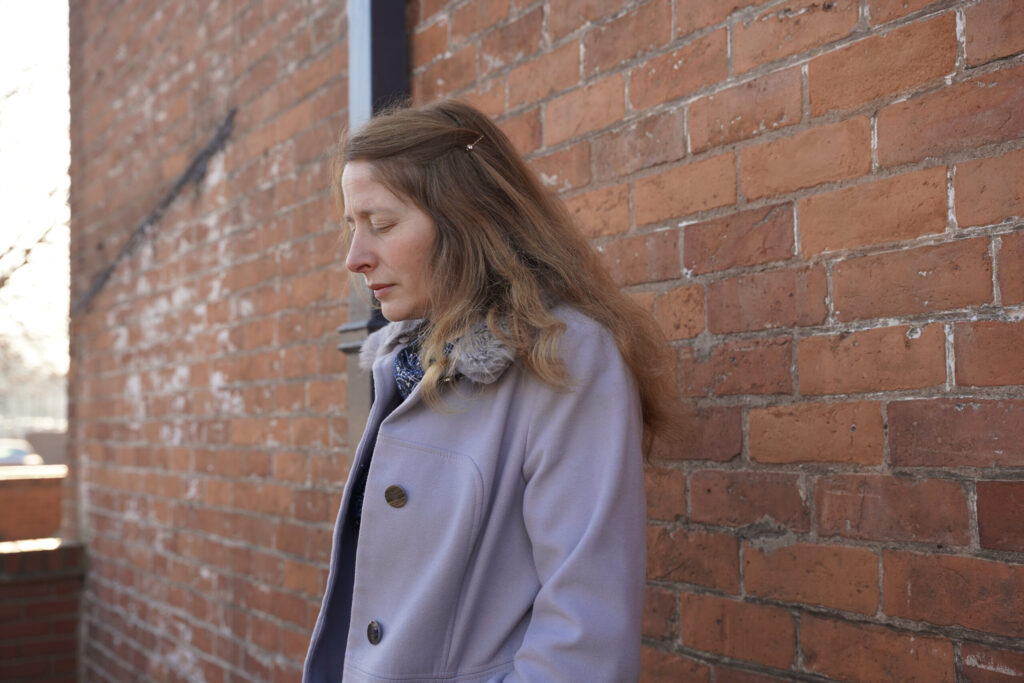
Finnish Parliamentarian Päivi Räsänen has faced charges, trials, and hours of police questioning since a 2019 tweet quoting the Bible’s Book of Romans, in which she questioned her church’s support of a Pride parade.
Citizen journalist and Canadian Billboard Chris was censored for tweeting the truth that a trans-activist shouldn’t serve on a World Health Organization panel for children. Australia’s “E-Safety Commission” tried to force X to take the post down and when X refused, they forced the platform to geo-block it.
Egyptian Father of five Abdulbaqi Saeed Abdo has spent over two years in prison for being part of a Facebook group created for those interested in converting to Christianity.
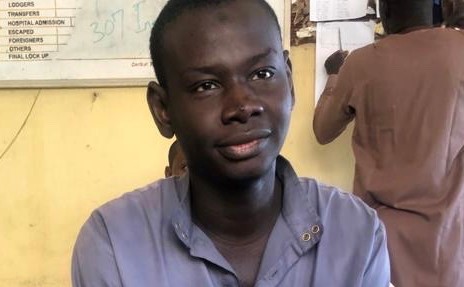
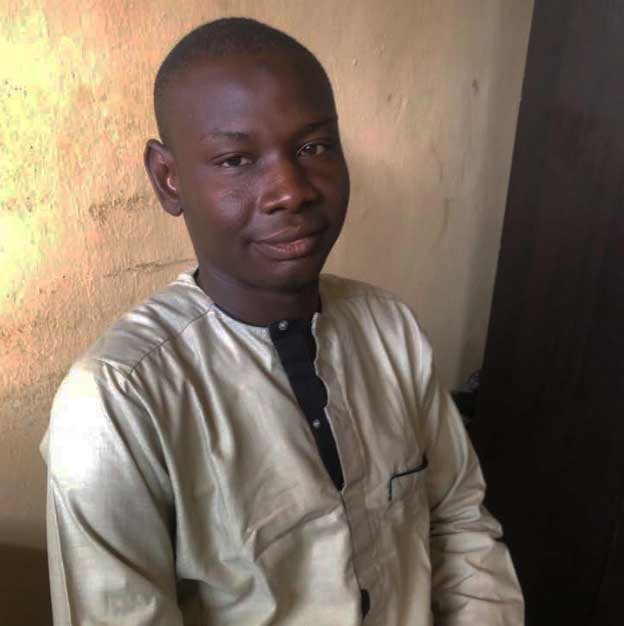
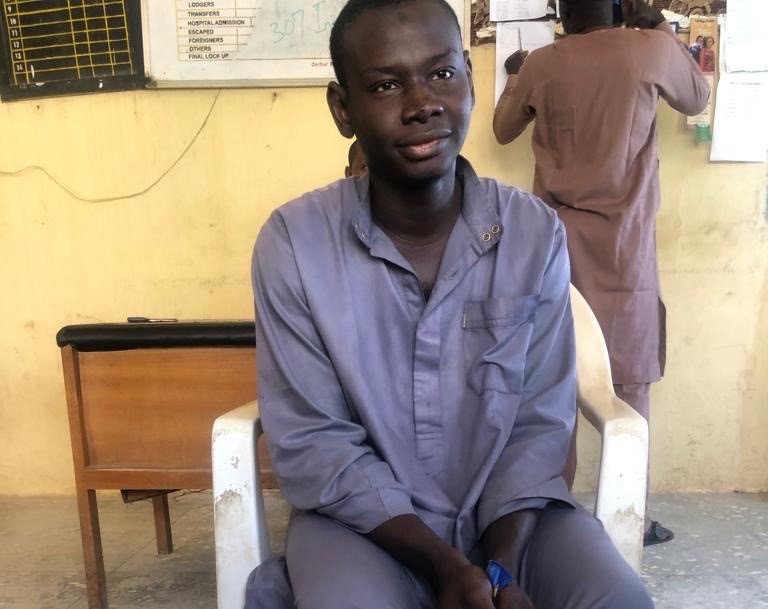
In Nigeria, Deborah Emmanuel Yakubu was brutally killed by her classmates after she posted a message in a class WhatsApp group, thanking Jesus for helping her with her exams. Her murder was filmed and widely shared. Rhoda Jatau, who allegedly shared a video of Deborah’s killing, condemning it, was also accused of blasphemy. She spent 19 months in prison before being released on bail. In December 2024, following a two-and-a-half-year legal ordeal, a judge in Bauchi State, Nigeria, acquitted Rhoda Jatau of “blasphemy” charges.
You are currently viewing a placeholder content from YouTube. To access the actual content, click the button below. Please note that doing so will share data with third-party providers.
More Information“Online Safety” Clampdown in Europe
Two major pieces of online speech legislation were passed in Europe over the last two years: the EU’s Digital Services Act (DSA) and the UK’s Online Safety Act (OSA).
The UK’s Online Safety Act aims to “combat harmful content online” by requiring platforms to moderate it or face penalties. However, it has the clear markings of censorship.
A U.S. Congressional Committee has criticized this law, along with the UK’s recent nationwide “buffer zones” legislation, calling it part of a “tsunami of censorship” threatening free speech in America.
The House Judiciary Committee pressed concerns about free speech in the UK and Europe highlighting on Twitter (X):
“Generally speaking, they require platforms to censor alleged hate speech and harmful content…The UK’s laws mirror or go beyond the EU’s laws & include Orwellian practices to investigate speech.”
The Financial Stakes and the Censorship Industrial Complex
“What do platforms risk if they don’t comply? Penalties are as high as six percent of global revenue from the EU’s DSA and 10% of global revenue from the UK’s OSA. Billions of dollars for most major platforms.
“The Digital Services Act and Online Safety Act enable bureaucrats in the EU and the UK to put platforms out of business. So now, social media companies and their employees are incentivized to overregulate speech on their platforms to preserve their business.”
ADF International’s Executive Director, Paul Coleman, stated, “If British politicians do not act to protect free speech, all other considerations aside, the UK will continue to suffer severe reputational harm on the world stage.”
Award-winning author and journalist Michael Shellenberger recently spoke at the European Parliament about the threats posed to free speech by the DSA at an event attended by ADF International. His message to the EU and President of the Commission Ursula von der Leyen was simple: “Back off your attacks on freedom of speech.”
Our Georgia Du Plessis participated in a roundtable discussion at the Parliament with Shellenberger, MEP Fernand Kartheiser, and former MEP Rob Roos about the DSA and freedom of expression. ADF International is committed to ending the free speech crisis.
Online Censorship Under the Guise of Cybersecurity
Barbados is debating a cybercrime bill that could imprison people for up to seven years for causing “annoyance” or “emotional distress” online.
Under the proposed law, it would be a criminal offense to “publish, broadcast, or transmit data that is offensive” or share content that might subject someone to “ridicule, contempt, or embarrassment.” Even vague notions like “annoyance” and “inconvenience” could lead to prosecution.
Such laws will be used to stifle dissent, intimidate critics, and force self-censorship. The risk? Peaceful expression could be criminalized under the guise of cybersecurity.
We brought this issue before the Inter-American Commission on Human Rights in Washington, DC, emphasizing that freedom of speech is under direct threat.
While governments have a duty to combat real online crimes like hacking or incitement to violence, targeting “annoyance” crosses a dangerous line. These regulations, which are supposedly designed to protect the public, are increasingly being weaponized against the public.
The proposed legislation raises a critical question: who defines what is offensive or annoying? Without clear definitions, enforcement becomes arbitrary and ripe for abuse. History shows us how such vague laws can pave the way for authoritarian crackdowns on free speech.
The chilling effect is real: people self-censor to avoid crossing invisible lines and even face the threat of imprisonment.
Ban of ‘X’ in Brazil
Brazil has also been grappling with extreme censorship, making it one of the Americas’ most restrictive countries for free speech.
In August, Supreme Court Justice Alexandre de Moraes blocked X in the country, citing concerns over “misinformation” and “hate speech” affecting the national elections. He didn’t want Brazilians freely engaging in dialogue online in such a way as to impact the elections, so he abused his office to shut down X.
ADF International filed a petition before the Inter-American Commission on Human Rights about the prohibition, representing five Brazilian legislators who were prevented from reaching their audience of millions ahead of a national election.
In September, over 100 global free speech advocates – including UK Prime Minister Liz Truss, journalist Michael Shellenberger, five US Attorneys General, and Senior UK, US, European, and Latin American politicians and professors united in an open letter to call for free speech to be restored in Brazil.
The United States’ Role in Dismantling the Censorship Industrial Complex
The incoming Trump administration is poised to tackle the global censorship issue.
President Trump’s first major policy statement since his victory outlined his plan to restore free speech. He asserts that this fundamental right has been diluted by federal officials who have worked with tech executives to suppress views they don’t like.
Documents uncovered through lawsuits and released by X owner Elon Musk reveal how US agencies collaborated with social media platforms to remove content.
The US’s approach could have wide-ranging effects on censorship laws worldwide, as the US plays a significant role in setting international precedents around free speech and Internet governance.
The US may encourage other countries to protect free speech and, in so doing, work to end the global censorship crisis.
Conclusion: The Censorship Industrial Complex Threatens Our Freedom of Speech
The “censorship industrial complex” is a network of ideologically aligned governmental, nonprofit, media, tech, finance, and academic institutions that are colluding to censor vast swaths of speech they claim threatens democracy, including speech on a wide array of critical social and political issues.
They are weaponizing terms like “hate” and “misinformation/ disinformation” to censor speakers directly, pressure digital platforms to censor, and threaten to shut down platforms that refuse to bend the knee to censorship demands.
Throughout history, those in power have always sought to censor speech with which they disagree.
We must confront the “censorship industrial complex” and safeguard the right to free speech if we are to ensure a future where ideas can flourish without fear of suppression.