Nigeria: Country of Particular Concern

Letter Calling on the US State Department to Designate Nigeria as a Country of Particular Concern

Dear Secretary Blinken:

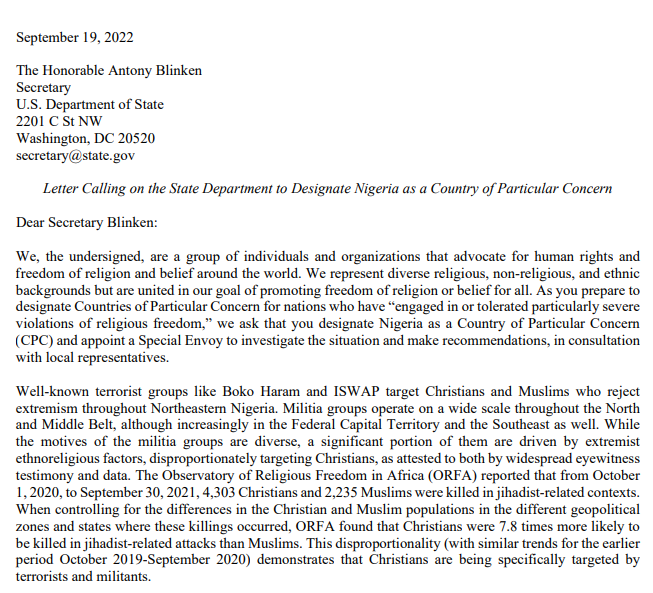
We, the undersigned, are a group of individuals and organizations that advocate for human rights and freedom of religion and belief around the world. We represent diverse religious, non-religious, and ethnic backgrounds but are united in our goal of promoting freedom of religion or belief for all. As you prepare to designate Countries of Particular Concern for nations who have “engaged in or tolerated particularly severe violations of religious freedom,” we ask that you designate Nigeria as a Country of Particular Concern (CPC) and appoint a Special Envoy to investigate the situation and make recommendations, in consultation with local representatives.

Affirm Dignity: Our Guide

Our Guide

Affirm Dignity

Who has dignity? What does it mean for us to affirm the inherent dignity of every person? What does 'dying with dignity' really mean?

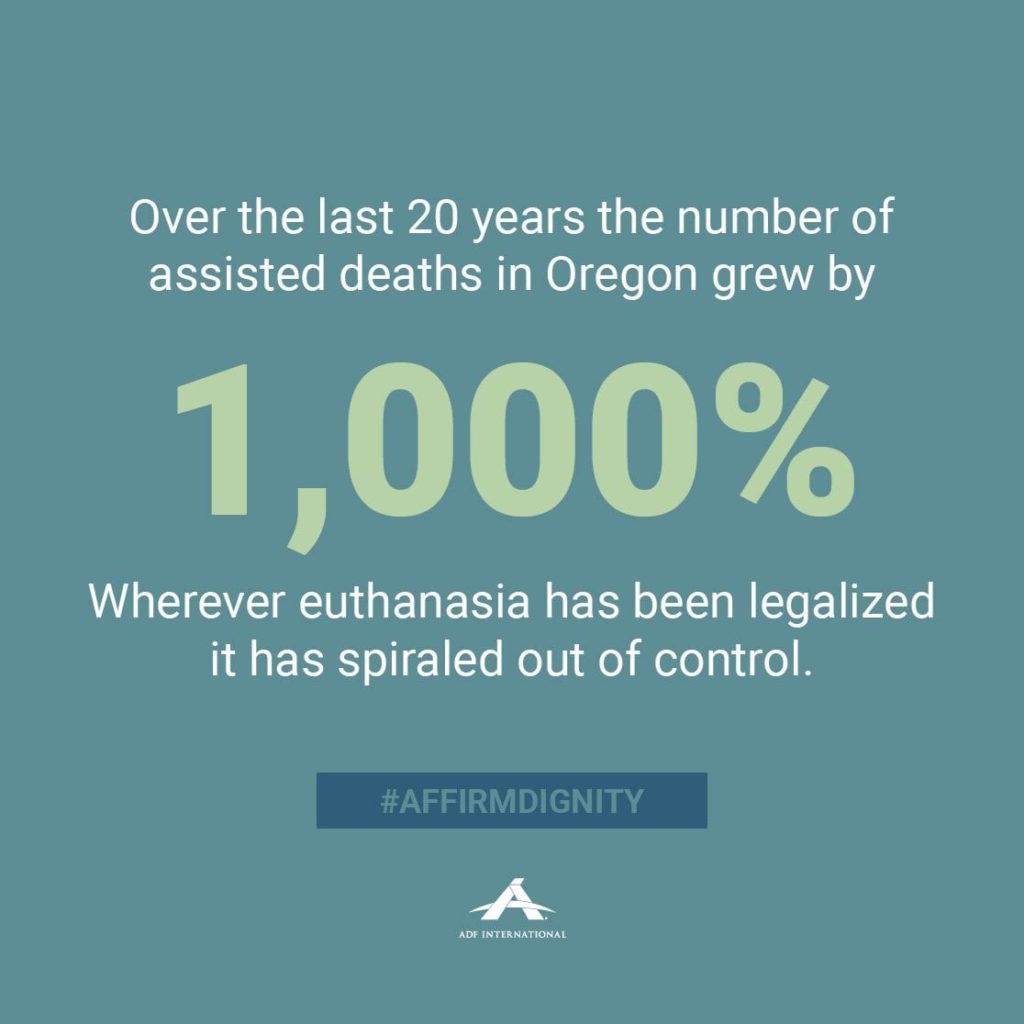
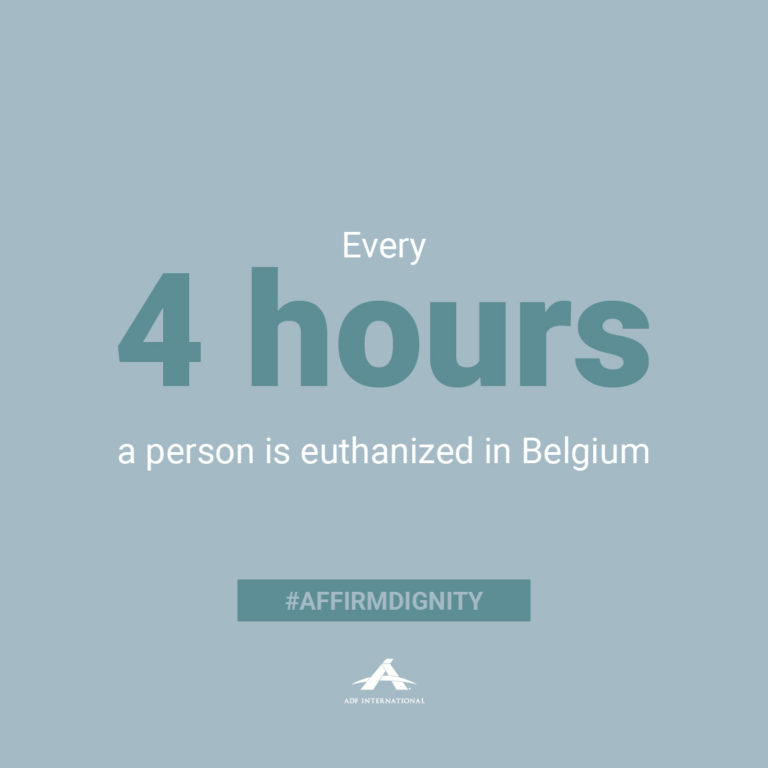
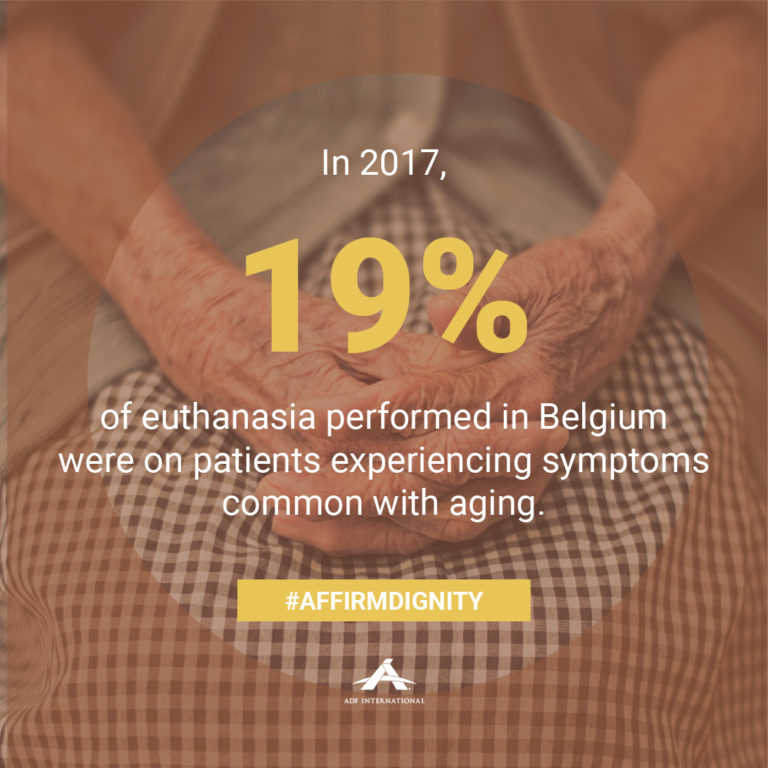
We believe that all people have inherent dignity, no matter their age or health condition. A fair and just society cares for its most vulnerable. Once we open the door to intentional killing, there is no logical stopping point. This is not just a hypothesis. In countries such as Belgium and the Netherlands, euthanasia cases have increased a hundredfold since legalization. And Canada is widening its “Medical Assistance in Dying” law to include mental illness among other treatable conditions as criteria for euthanasia, making it among the worst countries in the world for the protection of human life.

Main Videos

You are currently viewing a placeholder content from YouTube. To access the actual content, click the button below. Please note that doing so will share data with third-party providers.

More Information

You are currently viewing a placeholder content from YouTube. To access the actual content, click the button below. Please note that doing so will share data with third-party providers.

More Information

You are currently viewing a placeholder content from YouTube. To access the actual content, click the button below. Please note that doing so will share data with third-party providers.

More Information

You are currently viewing a placeholder content from YouTube. To access the actual content, click the button below. Please note that doing so will share data with third-party providers.

More Information

Our Charter

The right to life is a fundamental and inherent human right, recognized by the Universal Declaration of Human Rights and guaranteed by all human rights treaties. People at all stages of life and in all regions of the world are increasingly vulnerable to assaults on this foundational right. Without respect for human life, there can be no respect for human dignity. The most vulnerable deserve our compassionate love and support. There is nothing progressive about a society that refuses to care for them.

Therefore, we:

affirm that the right to life cannot include a right to die;

deplore the promotion of practices like euthanasia or assisted suicide;

consider every suicide a tragedy, and we recall the international obligation on States to take measures to prevent suicide;

denounce the slippery slope of legalized euthanasia which results in pressure on the vulnerable to die;

condemn the application of euthanasia to children, vulnerable adults, and those who have not given their consent;

believe society owes those suffering better options than euthanasia, such as palliative care;

affirm that palliative care is prevention and relief of suffering, which does not hasten nor postpone death (as defined by the World Health Organization);

call for the prohibition of euthanasia and assisted suicide and further investment in compassionate alternatives which Affirm Dignity.

Stats about Euthanasia

Advocacy Paper

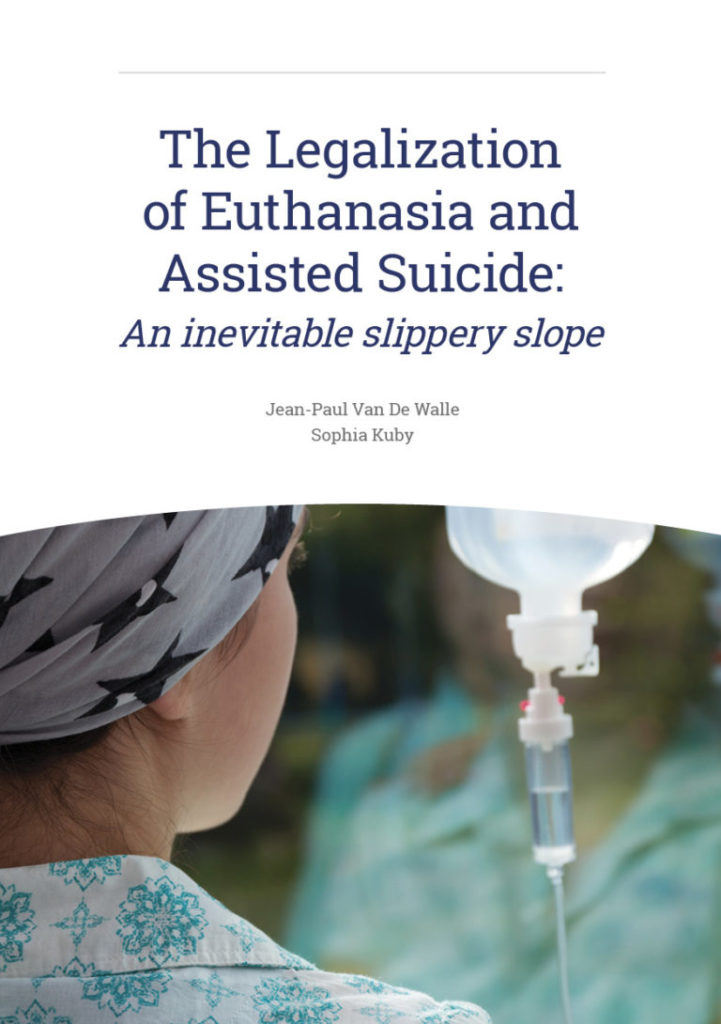
The Legalization of Euthanasia and Assisted Suicide: An inevitable slippery slope

This paper makes the case for the protection of life and the societal norms of caring for one another through the prohibition of euthanasia and assisted suicide. Rather than requiring the legalization of these troubling practices, international law robustly protects the right to life – particularly for the most vulnerable. The threat posed by a number of legislative proposals across Europe is highlighted through the example of those countries which have already gone down this road. An investigation into the most recent developments in Belgium, the Netherlands, and Canada shows that where euthanasia and assisted suicide are legalized, the number of people euthanized, and the number of qualifying conditions increase with no logical stopping point. The paper concludes by refuting the main arguments relied upon in support of legalization.

More videos about Euthanasia

You are currently viewing a placeholder content from YouTube. To access the actual content, click the button below. Please note that doing so will share data with third-party providers.

More Information

You are currently viewing a placeholder content from YouTube. To access the actual content, click the button below. Please note that doing so will share data with third-party providers.

More Information

You are currently viewing a placeholder content from YouTube. To access the actual content, click the button below. Please note that doing so will share data with third-party providers.

More Information

You are currently viewing a placeholder content from YouTube. To access the actual content, click the button below. Please note that doing so will share data with third-party providers.

More Information

You are currently viewing a placeholder content from YouTube. To access the actual content, click the button below. Please note that doing so will share data with third-party providers.

More Information

You are currently viewing a placeholder content from YouTube. To access the actual content, click the button below. Please note that doing so will share data with third-party providers.

More Information

You are currently viewing a placeholder content from YouTube. To access the actual content, click the button below. Please note that doing so will share data with third-party providers.

More Information

Guatemala (42nd Session)

UPR

Guatemala (42nd Session)

ADF International is a faith-based legal advocacy organization that protects fundamental freedoms and promotes the inherent dignity of all people. This submission raises concerns with Guatemala’s Law Against Femicide and other Forms of Violence Against Women, whose overbroad definition of ‘psychological violence’ opens the door to arbitrary and unjustified restrictions of freedom of expression. Furthermore, the report highlights the need to strengthen maternal health care, particularly in rural areas, to tackle Guatemala’s high maternal mortality rate while remaining steadfast in its commitment to protecting and promoting the right to life.

Sri Lanka (42nd Session)

UPR

Sri Lanka (42nd Session)

ADF International is a faith-based legal advocacy organization that protects fundamental freedoms and promotes the inherent dignity of all people. This report outlines the continued lack of respect for the rights to freedom of religion or belief and expression in Sri Lanka. In particular, it raises serious concerns over laws and policies discriminating against religious minorities, as well as the lack of legal protection for non-coercive forms of proselytism. Furthermore, it addresses the grave impact of increasing mob violence and hostility towards religious minorities, including Christian and Muslim communities, and related impunity.

Pakistan (42nd Session)

UPR

Pakistan (42nd Session)

ADF International is a faith-based legal advocacy organization that protects fundamental freedoms and promotes the inherent dignity of all people. This report highlights the ongoing violations of freedom of religion and expression in Pakistan resulting, inter alia, from laws criminalizing blasphemy and defamation as well as from the increasing social hostility and mob violence directed against persons belonging to religious minorities. It also draws attention to a worrying trend in abductions with the purpose of forced conversion of women and children, often in connection with a forced marriage.

Peru (42nd Session)

UPR

Peru (42nd Session)

ADF International is a faith-based legal advocacy organization that protects fundamental freedoms and promotes the inherent dignity of all people. This report highlights the burdensome restrictions on freedom of religion or belief imposed by the government in its attempts to curb the effects of the Covid-19 crisis. It also discusses why Peru should continue to respect the right to life and resist calls to liberalize its abortion laws amidst its high maternal mortality rate.

Argentina (42nd Session)

UPR

Argentina (42nd Session)

ADF International is a faith-based legal advocacy organization that protects fundamental freedoms and promotes the inherent dignity of all people. This submission illustrates the status of homeschooling in Argentina and the unjustified restrictions, both in law and practice, on the right of parents to choose the appropriate kind of education for their children. Furthermore, it expresses concern over the threat posed by Argentina’s recently adopted abortion law to the freedom of conscience of medical professionals.

Switzerland (42nd Session)

UPR

Switzerland (42nd Session)

ADF International is a faith-based legal advocacy organization that protects fundamental freedoms and promotes the inherent dignity of all people. This report outlines how the permissibility of assisted suicide in Switzerland stands in flagrant violation of both the values enshrined in the Swiss Constitution and international human rights, including the principles of equality and non-discrimination. Assisted suicide is an affront to human dignity and violates the rights of persons in situations of vulnerability. Furthermore, the report identifies the inadequate provision of palliative care, suicide prevention, intervention, and postvention resources and programs, the for-profit nature of the healthcare sector, and the role of media as key factors contributing to increasing suicide rates in the country.

Ghana (42nd Session)

UPR

Ghana (42nd Session)

ADF International is a faith-based legal advocacy organization that protects fundamental freedoms and promotes the inherent dignity of all people. This report outlines how the permissibility of assisted suicide in Switzerland stands in flagrant violation of both the values enshrined in the Swiss Constitution and international human rights, including the principles of equality and non-discrimination. Assisted suicide is an affront to human dignity and violates the rights of persons in situations of vulnerability. Furthermore, the report identifies the inadequate provision of palliative care, suicide prevention, intervention, and postvention resources and programs, the for-profit nature of the healthcare sector, and the role of media as key factors contributing to increasing suicide rates in the country.

Guimares family: Portugal

Protecting Parental Rights in Portugal

#protectparentalrights

Topic | Parental Rights

As a mother I want to shield my children from being exposed to unsuitable graphic and controversial ideological material. My older children were allowed to sit out the sex-ed classes, but now the state wants to force my youngest to repeat two whole school years even though the school had agreed they did not have to take the classes,” says Ana Guimares. 

ADF International Allied lawyers are supporting the Guimares family to protect parental rights in Portugal and set a positive precedent for Europe. 

Who:
The Guimares family

Where:
Portugal

Advocacy Team:
Lorcán Price

"Clearly, the state is not acting in Tiago and Rafael’s best interest when it’s trying to force them to be set back and repeat two whole school years. Parents and children should not be punished for wishing not to be exposed to ideologically charged material."

Case Summary

As a mother, Ana Paula Guimares was concerned about the graphic and ideological content that was being taught in the sex-education classes of her children’s school. Thankfully, the public school in Porto agreed to exempt her two youngest sons, Tiago and Rafael, from the classes, as they had previously done for Ana’s older children. Because these arrangements had worked for years, Ana thought the matter resolved, until a new curriculum was introduced that made the controversial content part of the compulsory “citizenship classes” that her children were required to attend in order to graduate from each school year.  

To Ana’s dismay, the Ministry of Education took issue with the arrangement in 2020 and ordered that the boys be held back by 2 full years, just to repeat the classes. Because this was such a disproportional demand, Ana and her husband Arthur were successful in appealing this decision in early 2021. The first instance court ordered that the boys could continue their education without having to attend these classes. But the Ministry of Education didn’t leave it at that. It fought the first court’s decision until the second instance court overturned it.  

To keep their sons from being held back, Ana and Arthur Guimares sought and were granted an injunction, which is currently in place restraining the state from forcing the children from their current year until the case is determined. The Guimares family, continue to seek justice, hoping that the Supreme Administrative Court will decide in their favour as they appeal the second court’s unfavourable decision in spring 2022.  

More Cases

Stay Informed

Get involved! Sign up to receive updates:

"*" indicates required fields

This field is for validation purposes and should be left unchanged.
Name*