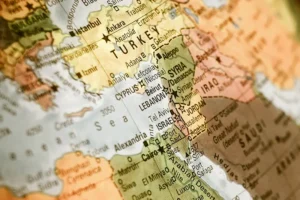
Top European Court Takes Up Cases of Christians Banned from Türkiye

  • European Court of Human Rights formally communicates 20 cases of Christians banned from Türkiye solely for living out their faith
  • ADF International supports 17 cases, highlighting serious, systemic human rights concerns

Strasbourg (5 February 2026) — The European Court of Human Rights (ECtHR) has formally taken up and “communicated” 20 cases brought by Christians whom Türkiye effectively banned from re-entry solely for living out their faith.

These cases — almost all supported by ADF International — stem from the Turkish government’s use of internal security codes such as “N-82” to label peaceful foreign Christian residents as threats to national security, blocking them from entering or remaining in the country despite long-standing lawful residence.

Since 2019, Turkish authorities have issued internal security codes like “N-82” and “G-87” to hundreds of foreign Christians, preventing them from re-entering Türkiye after trips abroad or denying them residence permits. These measures have affected at least 160 foreign workers and their families — estimated to be hundreds of individuals — many of whom lived and served in Türkiye for decades.

The ECtHR has jointly communicated these cases to the Turkish Government, indicating that the Court considers the applications sufficiently related to be examined together and has invited Türkiye to submit its observations as the proceedings move forward.

“Peaceful worship and participation in church life are not threats to national security. Yet foreign Christians in Türkiye — pastors, teachers, ministry workers, and missionaries — have been labelled security risks and expelled based on undisclosed files,” said Dr. Lidia Rider, Legal Officer for ADF International. Deprived of access to the allegations, they had no meaningful opportunity to defend themselves in courts. The Court’s communication of these cases is a crucial step toward accountability and redress.”

Discrimination Behind the Numbers

The government’s use of these codes effectively labels individuals as a “threat to public order and security,” a classification normally reserved for terrorism suspects. In practice, however, those targeted have no criminal records and no evidence of unlawful conduct — the only thing that they have in common is openly practicing and sharing their Christian faith.

The 2024 Human Rights Violation Report presented by the Protestant Church Association records 132 people who have been arbitrarily branded with an entry ban code, preventing them from entering Türkiye solely on the basis of their Christian faith. The total number of those affected is 303, according to the report.

Reports of similar measures affecting many foreign Protestant Christians show that these cases are not isolated, but point to a wider pattern of systemic discrimination. The cases raise serious questions about fundamental rights protected under the European Convention on Human Rights — including freedom of religion, family life, and protection from discrimination  — and highlight the need for clear, evidence-based decisions when governments invoke public order or national security, especially given the severe disruption these sudden and unexplained bans have caused to long-term residents and their families.

Real People, Real Consequences

Among those affected are long-term residents such as Pam and Dave Wilson, who served in Türkiye for almost 40 years before being barred from returning; Rachel and Mario Zalma (pseudonyms to preserve anonymity), whose ministry work led to an N-82 designation after attending a church conference; and David Byle, a Christian minister forced into exile after 19 years of service.

These bans have not only separated families from the communities they helped build but also left local churches without stable leadership, weakening the already-small Christian presence in a country where Christians make up a tiny fraction of the population.

A Longstanding Effort to Expose Systemic Abuse

Over several years, ADFI has raised awareness of these human rights violations through, among other activities, workshops with local lawyers, academic publications and expert submissions highlighting systemic violations of freedom of religion or belief and related rights.

ADF International has supported a number of applicants and counsel in these cases over several years. ADF International directly represents four individuals before the Court, two of whom are lead applicants, and has supported nearly all the other cases.

“We welcome the Court’s decision to jointly communicate these cases. These are not isolated mistakes or one-off decisions,” said Kelsey Zorzi, Director of Global Religious Freedom for ADF International. “By examining these cases together, the Court is acknowledging that they may reveal a pattern of discrimination against Christians in Türkiye. We look to the Court to uphold the fundamental principle that governments cannot strip people of their rights simply for living out their faith.”

Images for free use in print or online in relation to this story only

Pictured: Dave and Pam Wilson; David Byle; Lidia Rieder; Kelsey Zorzi

European Top Human Rights Court declines to hear legal attack on Poland’s pro-life protection for unborn babies with disabilities

Strasbourg (12 June 2023) – Is there a “right” to abort unborn babies with health conditions or special needs? 

This was the question raised before the European Court of Human Rights in Strasbourg by an organised campaign of pro-abortion activists from Poland. On 8 June 2023 the Strasbourg Court rejected the application of eight Polish citizens claiming to be “potential victims”, of the recently changed Polish law protecting unborn children with disabilities from abortion. The applicants claimed that, hypothetically, they would not be granted abortions on the grounds of “fetal abnormalities” after the Constitutional Tribunal of Poland found that such a reason for an abortion would be contrary to the Polish constitution in 2020.   

ADF International intervened in the case in support of the legal protections for children with disabilities. The Strasbourg Court held that the women had failed to produce any evidence that they were personally affected by the changes in Polish law to protect unborn children with disabilities. As a result the Court dismissed their applications stating that they made claims which were hypothetical and too “remote and abstract” to be considered by the court.

“Every child has a right to life – regardless of her health conditions. Children with special medical needs should be protected and cared for, a truly humane society will care for its weakest members. This is why international law calls for “appropriate legal protection, [for children] before as well as after birth”, as stated in the Convention on the Rights of the Child. Despite the pressure of a large scale organised pro-abortion campaign, the European Court of Human Rights court has refused to hold there is a “right to abortion” in international law,” said Lorcán Price, Legal Counsel for the legal advocacy organization ADF International.   

The decision of the Polish Constitutional Tribunal to protect unborn children with disabilities led abortion advocates to launch a legal campaign against Poland. In AM and Others v. Poland the applicants claim that as women of child- bearing age, legal protections for unborn children with special needs or health conditions infringed on their “right to respect for family and private life” as guaranteed in Article 8 of the European Convention of Human Rights. However, Europe’s top human rights court has repeatedly confirmed, that “Article 8 cannot be interpreted as conferring a right to abortion.” (P. and S. v. Poland and A,B,C v. Ireland) 

“The constant efforts to dehumanize unborn babies with disabilities such as those with Down Syndrome are deeply unjust. Across Europe almost all babies who are prenatally diagnosed with Down Syndrome are aborted: nearly 100 percent in Iceland, 98 percent in Denmark and 90 percent in the United Kingdom. Countries must protect the rights of unborn children with disabilities, we have an obligation to act in accordance with basic human rights which extend to all people,” Price continued. 

Europe’s Top Human Rights Court condemns Russia for punishing a Christian pastor for hosting a prayer in his home

Don Ossewaarde
  • Don Ossewaarde was arrested, convicted, and fined over a prayer gathering at his home in Russia.
  • European Court of Human Rights reaffirms that “missionary work or evangelism…is protected under Article 9” of the European Convention on Human Rights.

STRASBOURG (15 March 2023) – Russia has been condemned by the European Court of Human Rights (ECHR) for violating the right to religious freedom and discriminating against a Christian pastor. In a judgment issued on 7 March 2023, the ECHR held that a 2016 punishment levied by Russian authorities for organizing a peaceful prayer gathering in the pastor’s house in Oryol, Russia was a clear breach of human rights.

In 2016, Donald Ossewaarde, an evangelical Christian pastor, was arrested, taken to the police station, sued, and convicted after he invited locals to his house for worship, singing, and bible study. He was fined 40,000 roubles (appr. 650 euros at the time). After the sentence was upheld by Russian courts, Ossewaarde appealed to the ECHR. ADF International supported Ossewaarde in bringing the case to the Court.

“Nobody should be discriminated against or persecuted for sharing their faith, regardless of their religion or denomination. The European Court of Human Rights has yet again affirmed that evangelization and mission work is a key, and robustly protected, element of the freedom of religion under the European Convention on Human Rights,” stated Dr. Felix Böllmann, Director of Advocacy Europe at ADF International, a human rights group that defends religious freedom worldwide.  

Convicted for inviting people to prayer gatherings

Since 2005, Ossewarde, originally from Michigan, had been living with his wife in Oryol, less than 200 km from the Ukrainian border. They regularly organized prayer gatherings and communal Bible reading. On 14 August 2016, three police officers entered their home. The door was open to give anyone access who wanted to join the Sunday worship. After the service, the officers questioned the attendees. Then they ordered Ossewaarde to come to the police station for fingerprinting.

The police took Ossewaarde directly from the police station to the Zhelezhnodorozhnyy District Court in Oryol where he was convicted for carrying out missionary work.

Anti-terrorism law used to criminalize sharing one’s faith

In July 2016, Russia introduced a new anti-terrorism law, which criminalized “missionary work” by individuals in many instances. This served as the legal basis for the conviction of Ossewaarde. The law furthermore provides for higher penalties if the accused person is not a Russian citizen.

“I was unjustly punished for exercising my basic human right to speak about my faith and pray with others. My wife and I invited people into our home to sing hymns, read the Bible, and pray together. Millions of people around the world are free to do this without interference, but I was treated like a criminal and convicted under a Russian law directed at terrorists,” Don Ossewaarde recalls.

The right to religious freedom protects missionary work

In its judgment, the European Court of Human Rights has ruled that the penalty for missionary work constitutes a violation of the right to religious freedom. The Court confirmed that the “freedom to manifest one’s religion includes … the right to express one’s religious views”. Furthermore, missionary work or evangelism “is protected under Article 9 alongside with other acts of worship”. 

According to the Court, sharing one’s faith is a “vital dimension of a religion” and as such worthy of highest legal protection. The Court also dismissed the distinct penalties for foreign citizens, in contrast to those for Russian citizens, as “discriminatory”. As such they manifest a violation of Article 14—the right not to be discriminated against.

Russia should serve as a warning

“I am encouraged that the Court has clearly affirmed the individual right of religious freedom, and the key importance of protecting group worship and evangelism efforts. Nobody should be criminalized for praying, or for inviting others to partake in peaceful religious gatherings. Criminalization of religion leads to tyranny. We hope and pray that the international community will pay attention to the erosion of religious freedom in Russia, and that this Court decision will prompt other countries to affirm and robustly protect the religious freedom of their people,” Don Ossewarde said.

“We enthusiastically welcome the Court’s judgment, as it makes clear that religious freedom extends to people of all faiths and beliefs who are fully entitled to speak about their convictions and invite others to join in as well. We strongly call on Russia to respect the international human rights framework in accordance with this ruling,” concluded Böllmann


Images for free use in print or online in relation to this story only