EU ignores free speech concerns in review of censorial Digital Services Act

  • More than 100 global free speech experts last month sent a letter to the European Commission, coordinated by ADF International, warning of global censorship under DSA
  • Now, the European Commission has failed to address censorship concerns in its formal review, published yesterday; the Commission responded to experts’ letter just days ahead of the review, denying threats to free speech

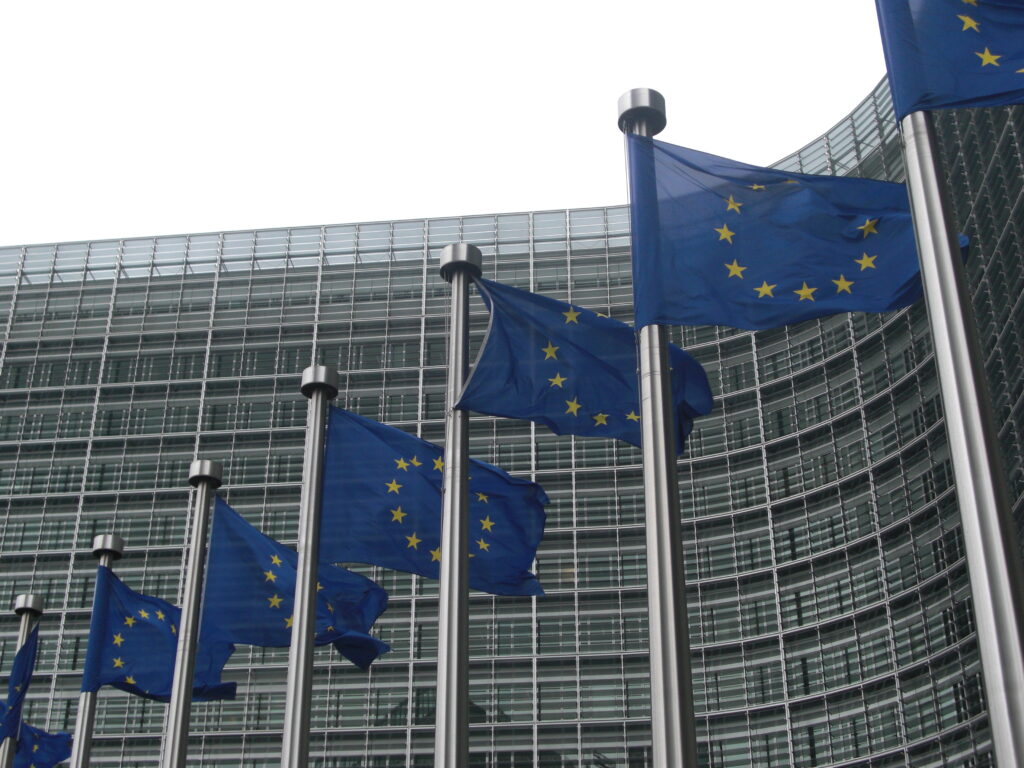
BRUSSELS (20 November 2025) – The European Commission has ignored substantive free speech concerns from experts from around the world in its first formal report on the Digital Service Act (DSA), published yesterday. 

The review, mandated by Article 91 of the DSA itself, came amidst widespread international outcry that the legislation violates freedom of expression, including from major online platforms, European civil society, the House Judiciary Committee of the U.S. Congress, the U.S. Ambassador to the EU, and others.  

In September, more than 50 European NGOs stressed that the broad terms of “systemic risks,” “disinformation,” and “illegal content,” coupled with the activist role of “trusted flaggers” might violate freedom of expression and information under Article 11 of the EU Charter of Fundamental Rights. Last month, over 100 free speech warned about global online censorship under the DSA, in a letter to the Commission coordinated by ADF International.   

“The Commission has missed an extremely critical opportunity to restore free speech and to engage constructively with its citizens."

The free speech experts’ letter called on the Commission to address these free speech concerns in its review of the DSA, which was published yesterday, but the Commission has now failed to do so in its report.  

Instead, the report reiterates the Commission’s position that the DSA is “content-agnostic” and therefore beyond free-speech scrutiny. This stance is at odds with the DSA’s real-world enforcement, which pressures platforms to remove content to avoid punishment from the EU, which can result in fines of up to 6% of global revenue. The report provides no substantive response to the concerns around censorship-by-proxy, overreach, or the DSA’s extraterritorial effects, nor does it assess the DSA under the EU Charter’s free speech protections, as requested by experts and NGOs. 

More alarmingly, the Commission further signals its intention to deepen and tighten DSA-related coordination, calling for stronger inter-authority cooperation, joint guidance, and even potential “one-stop-shop” mechanisms across the EU, a development that risks amplifying existing free-speech concerns rather than addressing them. 

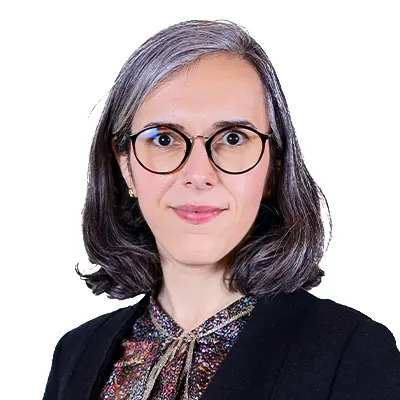
Reacting to the DSA review, Senior Counsel, Europe for ADF International, Dr Adina Portaru said: “It is alarming that the European Commission has disregarded well-founded censorship concerns and overreach, expressed by international free speech experts, big tech, and concerned governments alike in its review of the DSA. The Commission has indicated that they will address free speech in future reviews ( in 2027); however, the threat of censorship should not be taken lightly and addressing its effects cannot be delayed. 

“The DSA could install a global censorship regime and is the greatest threat to online freedom of expression in the Western world today. We will continue to advocate for the protection of free speech in light of the DSA’s censorial threat in order to keep the digital public square free.”  

Free speech concerns from US government and big tech companies  

The Commission’s report fails to address transatlantic free-speech concerns, despite growing tension around the DSA’s global effects. 

In September, US Ambassador to the EU Andrew Puzder expressed concern that the DSA risks censoring American citizens. This followed an August directive from US Secretary of State Marco Rubio to US diplomats in Europe to prioritize diplomatic efforts to challenge the DSA. 

X and Google have issued similar warnings about the potentially global censorship impact of the DSA. 

Ambassador Puzder also said: “No President of either party, and I can tell you President Trump in particular, is going to tolerate a foreign government restricting the First Amendment fundamental free speech, free expression rights of American citizens, to an extent that the United States government can’t even regulate those rights.  

“So we need to come to an understanding as to what’s happening with the Digital Services Act.” 

Ambassador Puzder also reportedly said the United States would make formal submissions under the European Commission’s review of the DSA.  

Free speech experts’ letter to European Commission 

Last month, 113 experts, including a former VP of Yahoo Europe, a former US Senator, and politicians, academics, lawyers and journalists from around the globe, wrote to the Commission, calling on it to consult free speech experts as part of its review into the DSA. 

The letter, which was coordinated by ADF International, said: “[The DSA] constructs a pan-European censorship infrastructure with loosely defined boundaries and the potential to suppress legitimate democratic discourse… 

“The wide definition of illegal content allows the most speech-restrictive provisions of one single EU country to be imposed as a standard across the entire Union, and potentially worldwide, effectively importing the lowest common denominator of expression.” 

The letter added: “The broad definition of ‘illegal content’ in the DSA, combined with existing jurisprudence of the Court of Justice of the European Union (CJEU) opens the door to worldwide takedowns.” 

The letter expressed concern over the European Commission’s opaque review process into the DSA and called on the Commission to: “Conduct a comprehensive and inclusive consultation with independent experts in freedom of expression, constitutional law, and digital rights, ahead of the November review, inviting public comments. 

“Publicly disclose the list of NGOs, civil society actors, and partner entities engaged in the review process, including the criteria and methodology used for their selection. 

“Ensure that the review includes a rigorous legal analysis of the DSA’s compatibility with fundamental rights protections, especially under Article 11 of the Charter of Fundamental Rights of the EU, Article 10 of the ECHR, and Article 19 of the ICCPR.”  

In the Commission’s response to the letter, it stated that, “the DSA does not regulate specific speech as it is content agnostic” and that “competent authorities…have no power to moderate user content or to impose any specific content moderation approach on online platforms.”  

“Claiming that the Commission is ‘not moderating’ because it does not press the delete button itself is disingenuous. Platforms respond to Commission pressure, and the Commission is fully aware of the practical consequences of the extraordinary amount of pressure it exerts. The response letter to the free speech experts’ concerns never addresses this indirect but powerful influence. 

“The Commission’s response simply ignores that its own enforcement actions are based not on agnostic principles but on contested normative determinations about which speech categories create systemic risks. In effect: the DSA cannot be content-agnostic when its entire enforcement architecture revolves around evaluating how platforms treat specific content types, even if the law avoids explicitly naming them,” responded Dr Portaru. 

“Further, the Commission has entirely dismissed the very valid concerns of extraterritorial reach despite the clear global threat of the DSA. The response fails to address repeated concerns from international partners, including the U.S., that the DSA incentivises de facto global moderation policies. The Commission has missed an extremely critical opportunity to restore free speech and to engage constructively with its citizens on the DSA’s impact on fundamental rights, Portaru continued. Read the free speech experts’ letter and see the full list of signatories here   

Images for free use in print or online in relation to this story only

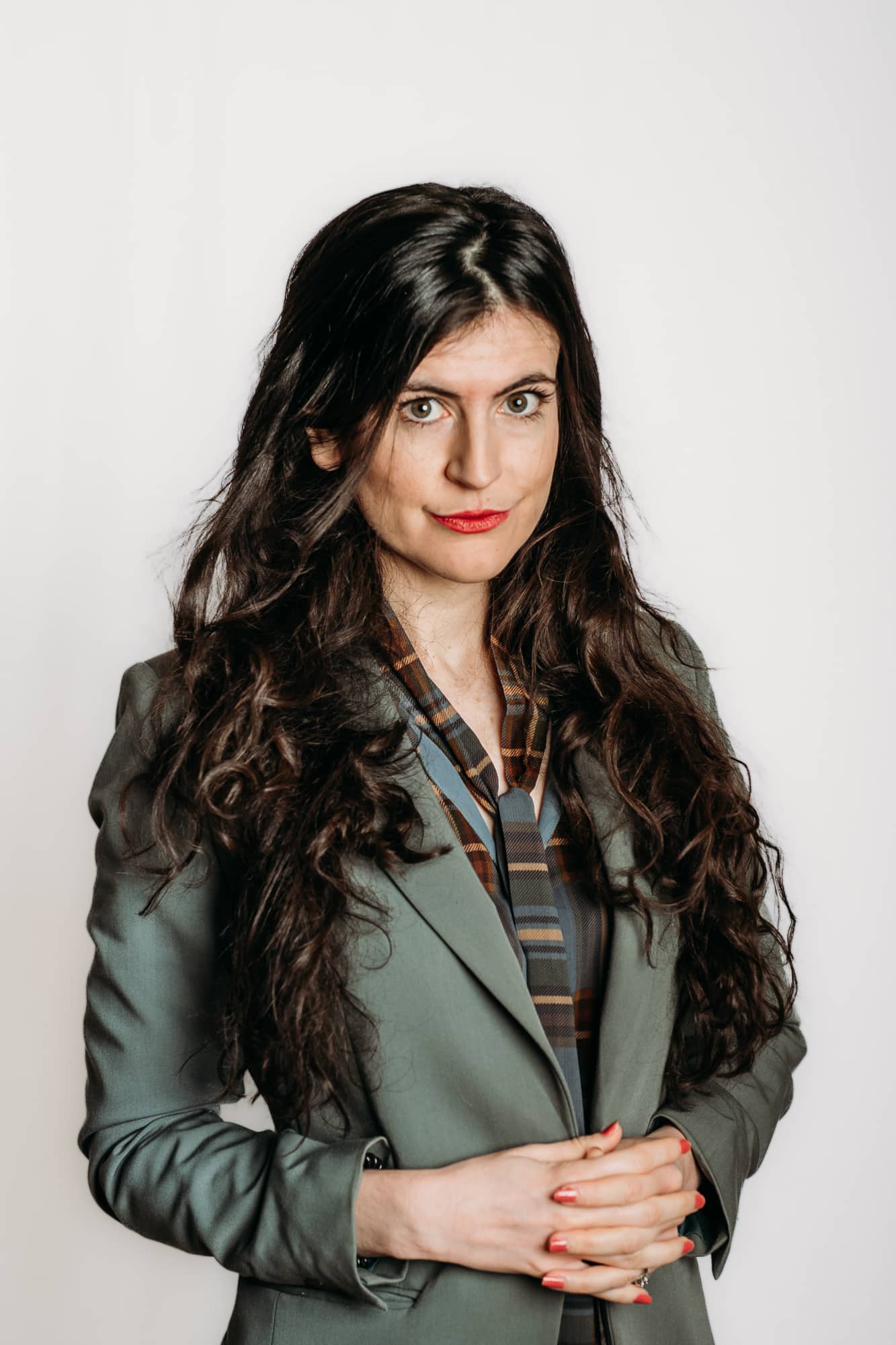
Pictured: Adina Portaru

Somalia (52th Session)

This report outlines concerns regarding the protection of freedom of religion or belief and freedom of expression in Somalia. In particular, it highlights laws prohibiting the peaceful propagation of minority religions, the criminalization of offenses to religion, and the vulnerability of Christians, particularly converts, who face discrimination and violence at the hands of militant groups as well as communities.

Continue reading

Singapore (52th Session)

This submission outlines concerns regarding Singapore’s restrictions on freedom of religion or belief and freedom of expression. These concerns stem from specific legal frameworks, including the Maintenance of Religious Harmony Act, Societies Act, Penal Code, Undesirable Publications Act, and Protection from Online Falsehoods and Manipulation Act (POFMA). In ADF International’s analysis, several provisions within these laws are inconsistent with Singapore’s human rights obligations.

Continue reading

Estonia (52th Session)

This report highlights the incompatibility of Bill 232 SE on Amendments to the Penal Code, the Code of Criminal Procedure, and the Code of Misdemeanour Procedure (hereinafter ‘hate speech bill’) with Estonia’s obligations regarding the right to freedom of opinion and expression under international law. Additionally, it examines recent developments concerning assisted suicide and underscores the urgent need for Estonia to fulfill its obligation to respect and protect the right to life, as enshrined in core international human rights treaties.

Continue reading

Denmark (52th Session)

This report highlights the prevalence and normalization of disability-selective abortion in Denmark, particularly in cases involving children diagnosed with Down syndrome, and the underlying discriminatory stereotypes that undermine the equal value of persons with disabilities. It also addresses emerging threats to freedom of expression posed by the criminalization of

Continue reading

Belgium (52th Session)

This report highlights the alarming rise in euthanasia cases in Belgium and the ever-broadening interpretation of relevant legislation. The country’s approach continues to expand, now considering eligibility for persons affected by dementia, despite persistent gaps in the availability of palliative care. These developments undermine Belgium’s obligations to protect the rights to life and to the enjoyment of the highest attainable standard of physical and mental health.

Continue reading

Scottish politician seeks to criminalise “influencing” a person’s decision about assisted suicide 

  • Scottish Green Party’s Patrick Harvie proposes a censored “buffer zone around facilities where assisted suicides might take place, preventing family members or concerned individuals from changing a person’s mind 
  • Move echoes abortion “buffer zones” law enacted in Scotland last year, under which a grandmother was arrested for offering a conversation 

EDINBURGH (29 October 2025) – A Scottish parliamentarian and member of the Health Committee, Patrick Harvie MSP, has proposed an amendment to Scotland’s controversial “assisted suicide” bill that would criminalise discussion of suicide prevention  within a large, undefined public area surrounding any building where an assisted suicide might take place. 

The vague proposal would forbid any attempts to “influence” a person’s decision to undergo an assisted suicide, such as through conversation with a family member or the display of a suicide prevention poster.

"It's unthinkable that Scots should be banned on certain streets from offering hope and encouraging someone to choose life, not suicide."

Almost half of those who opted for assisted suicides in Oregon cited concerns about being a perceived “burden on family, friends or caregivers” as a driver for their decision to end their lives, according to public health data released in 2023. 

Concerns for Free Speech

The move echoes the “buffer zones” law put in place in Scotland last year, which criminalises any attempts to “influence” a person’s decision to access abortion services within 200m of every hospital.  

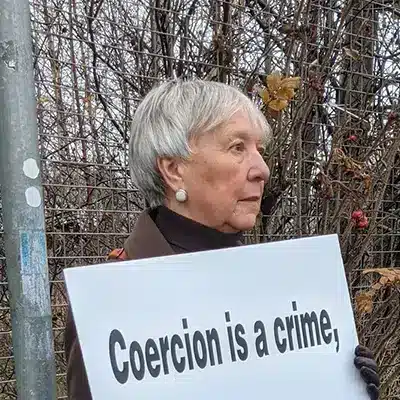
In August, 75-year-old grandmother Rose Docherty became the first person to be arrested under the abortion “buffer zones” law after she peacefully offered consensual conversation, holding a sign reading “Coercion is a crime, here to talk, only if you want”. The U.S. State Department condemned the arrest as “another egregious example of the tyrannical suppression of free speech happening across Europe.” ADF International is supporting her legal defence as she faces trial in December. 

At the Munich Security Conference in February, U.S. Vice President J.D. Vance criticised the Scottish buffer zones law, summarising that “free speech, I fear, is in retreat”.

Reacting to Harvie’s proposal, Lois McLatchie Miller from ADF International said: 

“It’s unthinkable that Scots should be banned on certain streets from offering hope and encouraging someone to choose life, not suicide.  

How will this impact a doctor’s choice to have a suicide-prevention charity’s poster in their window? How will this impact important conversations between loved ones, eager to convince an elderly wife or a parent that they are not a burden, but a valuable member of the family? 

“Once the principle of a censorial ‘buffer zone’ is approved for one issue, it can easily multiply to more and more issues. We’ve already seen loosely worded abortion ‘buffer zone’ rules be used to arrest a grandmother simply for offering to chat. Now the government seeks to apply the same vague, broad rules to ban speech about assisted suicide. What could be next? Banning parents from “influencing” their child outside a gender clinic? Banning dissenting speech about foreign regimes around certain embassies? Censorship is always a slippery slope.” 

Images for free use in print or online in relation to this story only

PICTURED: Rose Docherty, Lois McLatchie Miller

U.S. State Department: Arrest of Scottish Christian Grandmother is “Tyrannical”

  • Christian grandmother arrested a second time; criminally charged for holding a sign reading “Coercion is a crime, here to talk, only if you want” within 200m of a hospital
  • “The arrest of Rose Docherty is another egregious example of the tyrannical suppression of free speech happening across Europe”, warns U.S. State Department 

GLASGOW (29 September 2025) – The U.S. State Department has expressed concern over the arrest of 75-year-old Rose Docherty, as seen in a viral video over the weekend. 

The Glasgwegian grandmother has been criminally charged for holding a sign within 200m of the Queen Elizabeth University Hospital, reading: 

“Coercion is a crime, here to talk, only if you want.” 

In Scotland, “buffer zones” are enforced within 200m of every hospital, forbidding harassment, intimidation, and “influencing” of anyone seeking to access abortion services 

"The United States will always speak out against these violations of fundamental rights."

Responding to the arrest, the U.S. State Department told the Telegraph: 

“The arrest of Rose Docherty is another egregious example of the tyrannical suppression of free speech happening across Europe. 

“When 75-year-old grandmothers are being arrested for standing peacefully and offering conversation, common sense and basic civility are under attack. 

“The United States will always speak out against these violations of fundamental rights.” 

Despite only having offered consensual conversation and not having approached any individual, nor making any statement on abortion – Docherty has been charged with breaching the “buffer zone.” 

Reacting to her arrest, Rose Docherty said: 

“Everybody has the right to engage in consensual conversation. I held my sign with love and compassion, inviting anyone who wants to chat, to do so – and stood peacefully, not approaching anyone.  

“I should not be treated as a criminal for inviting people to chat with me – lending a listening ear. Conversation is not forbidden on the streets of Glasgow. And yet, this is the second time I have been arrested for doing just that.” 

In August, Scottish authorities dropped their case against Docherty for holding the same sign in the same place after a global outcry against the 75-year-old grandmother’s arrest, including concerns raised in an online post by the U.S. State Department. 

After her arrest this week, Docherty was held in custody for several hours. She was refused a chair to sit on in her cell, despite making it known that she had a double hip replacement. 

Docherty has been charged and released on bail. Stringent bail conditions prevent her from attending an area marked out to be wider than the initial “buffer zone” area, in a move the legal team at ADF International call “disproportionate”.  

Legal Counsel for ADF International, Lorcan Price commented: 

“It’s deeply concerning that Scottish policing resources are being ploughed into arresting and prosecuting a peaceful grandmother offering to speak to people in public, rather than focusing on the problems caused by real crime in Glasgow. 

“This is not a case about harassment, intimidation or violent protest – this is simply a grandmother, who held a sign offering to speak to anyone who would like to engage.” 

The law’s architect, Gillian Mackay MSP, admitted on BBC Scotland earlier this year that the vague prohibitions in the buffer zones law could criminalise someone for praying visibly from a window in their home within the zone, “depending on who’s passing by the window.” 

U.S. Vice President J.D. Vance highlighted this law as a particular matter for concern in his Munich Security Conference speech in February of this year. 

Images for free use in print or online in relation to this story only

Pictured: Rose Docherty, Lorcan Price (ADF International)