Europe’s Top Court Rejects Case of Christian Parents in Sweden Seeking Reunification with Daughters after 3 Years Separation

  • The daughters have been separated from their parents, and each other, since December 2022, absent any evidence of abuse, and despite deteriorating health conditions in foster care and repeated wish to be reunited.

  • European Court of Human Rights deems case inadmissible on the grounds of failure to exhaust legal remedies in Sweden.

STRASBOURG (10 March 2026) – The European Court of Human Rights (ECtHR) has ruled a case brought by Christian parents Daniel and Bianca Samson against Sweden as inadmissible. The parents were seeking justice before the court to regain custody of their daughters, claiming a severe violation of their parental rights. The decision of inadmissibility is final and cannot be appealed. ADF International lawyers are now reviewing the decision together with the parents and assessing possible next steps.

The two eldest daughters of the Samson family were taken by the state in December 2022 after the eldest made a false report at school over her parents’ refusal to give her a phone and allow makeup, prompting allegations of “religious extremism,” even though she promptly retracted. The daughters have been separated from their parents, and each other, since December 2022, even though the state found no evidence of abuse. 

“Parents have the primary responsibility and right to raise their children. When the state interferes with family life based on values-based parenting choices or discrimination on the basis of faith, fundamental freedoms are at stake."

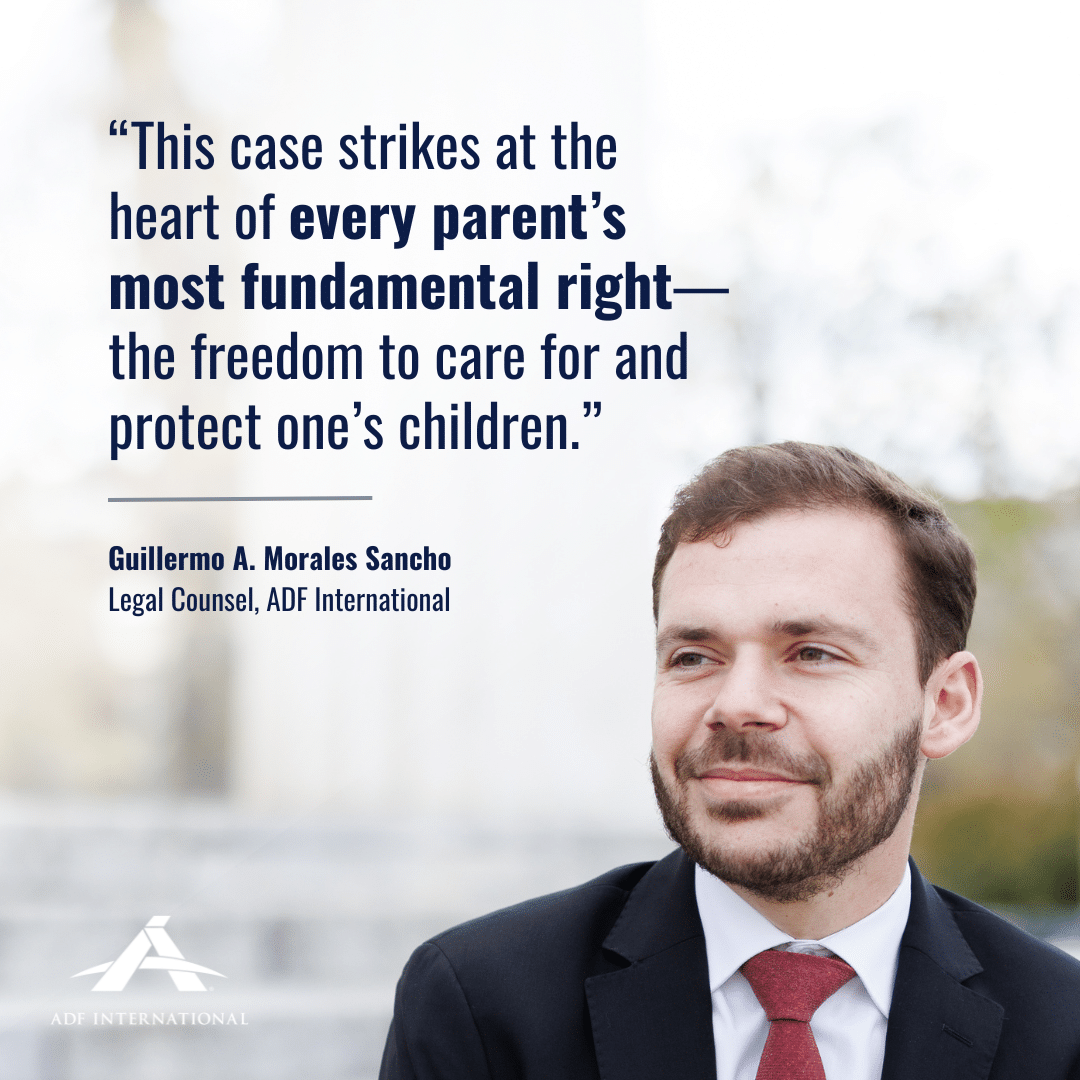
We deeply regret the Court’s decision to reject this case, considering that this family has been torn apart for over three years despite a full investigation that cleared Mr. and Mrs. Samson of any abuse and the fact that the Social Services certified their capacity and fitness for parenting after they successfully completed an official training. Families should be free to live according to their convictions without fear of losing their children to the state, said Guillermo A. Morales Sancho, Legal Counsel for ADF International. 

The European Court of Human Rights deemed the case inadmissible on the grounds of failure to exhaust legal remedies in Sweden, despite the legal team’s assessment that there were no further options for domestic recourse. 

Specifically, the Court indicated that it did not consider there to be an apparent violation of the right to respect for private life under the European Convention on Human Rights. It further suggested that questions relating to freedom of religion may be raised before national courts, an option the Samsons may now pursue. 

Background 

The couple of Romanian origin, who had been residing in Sweden for close to a decade, claim that Swedish authorities ignored the best interests of their children by refusing to reunite the family. The forced separation continued even after all allegations against the parents were dropped and prosecutors found no evidence of abuse. The case raises serious concerns about delays, overreach, and possible discrimination against Christians in Sweden’s child welfare system. The state has cited the family’s regular attendance at church three times a week to corroborate accusations of “religious extremism,” despite the fact that this simply reflects their religious beliefs and is a protected action under international human rights law. 

The Samsons currently are only allowed one supervised visit per month. This is complicated by the fact that the girls are placed in different foster care homes far away from each other. 

See our case page for more information: https://adfinternational.org/cases/samson-family  

Images for free use in print or online in relation to this story only

Turkish Government Denies Targeted Deportation of Christian Missionaries; Accuses European Parliament of ‘Interference’  

  • Turkish Foreign Ministry dismisses overwhelming 502–2 vote as “baseless,” despite mounting scrutiny over expulsions of Christian missionaries from the country 
  • European Parliament voted to condemn use of Turkish security codes to expel Christiansthis followed European Court of Human Rights recent decision to take 20 cases of missionaries expelled from Türkiye; the majority of which are legally supported by ADF International 

Strasbourg (17 February 2026) — The Turkish government has formally rejected the European Parliament’s recent resolution condemning targeted expulsions from the country “carried out under unsubstantiated national-security pretexts and without due process” for foreign Christians, in addition to journalists. 

In a statement issued on 13 February, a day after the vote, Türkiye’s Ministry of Foreign Affairs dismissed the resolution as containing “unfounded allegations” and characterized it as interference in the country’s internal affairs. 

The European Parliament adopted the resolution by an overwhelming margin (502 votes in favor and 2 against) signaling broad cross-party concern over what lawmakers described as the misuse of national security frameworks to restrict fundamental rights, including freedom of religion. The resolution followed the European Court of Human Rights’ decision at the beginning of February to take up 20 cases involving foreign Christians who were expelled or banned from re-entering Türkiye. 

These cases, the majority of which are supported by ADF International, stem from the Turkish government’s use of security codes, typically reserved for terrorist activity, to designate peaceful foreign Christian residents as threats to national security and block them from entering or remaining in the country despite longstanding lawful residence. The missionaries deported come from several countries across Europe, including the United Kingdom, Switzerland, and Germany. More than a dozen are originally from the United States.  

“The Turkish government’s rejection of the European Parliament’s vote shows a clear lack of respect for its human rights obligations.When a government weaponizes national security mechanisms to target peaceful missionaries and faith communities, they must not be allowed to act with impunity.”

European Parliament addresses expulsion of missionaries

The European Parliament resolution specifically addresses the expulsion of foreign Christian missionaries, all legally residing in the Türkiye and many of whom were long-term residents of the country, through security codes that have resulted in deportations, re-entry bans, and loss of residency status. Lawmakers raised concerns about the lack of transparency, limited judicial review, and restricted access to evidence in these cases. 

During the debate on the resolution European Member of Parliament Sokol (EPP) stated:  

“These deportations of Christians in Türkiye for reasons of national security are one more attack on Christians, the most persecuted religious minority around the world. (…) The EU cannot talk of human rights and then remain silent when Christians are facing problems in Africa or persecution in a neighboring country. We must stand up for freedom of religion everywhere without any double standards. (…) Türkiye must put a stop to these deportations of Christians.”  

Cases of Expelled Christians Now Before the European Court of Human Rights 

The 20 pending cases before Europe’s top human rights court challenge the compatibility of the security-based expulsions with human rights protections for religious freedom, family life, and due process under the European Convention on Human Rights. 

The government’s use of these codes effectively labels individuals as a “threat to public order and security,” a classification normally reserved for terrorism suspects. However, those targeted have no criminal records and no evidence of unlawful conduct—the only thing that they have in common is openly practicing and sharing their Christian faith. 

The 2024 Human Rights Violation Report presented by the Protestant Church Association records 132 people who have been arbitrarily branded with an entry ban code, preventing them from entering Türkiye solely on the basis of their Christian faith. The total number of those affected is 303, according to the report. 

ADF International provides legal support to affected individuals seeking justice before the European Court of Human Rights and calls on Turkish authorities to ensure that security measures are applied consistently with international human rights obligations. 

Images for free use in print or online in relation to this story only