Iraq’s Court of Cassation affirms woman’s right to be classified as Christian in state’s official database
- Country’s highest court for civil, criminal, and family matters affirms right of Iraqi Christian to freely choose her religion, sets persuasive precedent for scores of Christians in Iraq facing serious legal and personal consequences of state-assigned religion.
- Decision furthers protections for Christians and other religious minorities who are erroneously classified as Muslims in the government’s database; ADF supports the case.
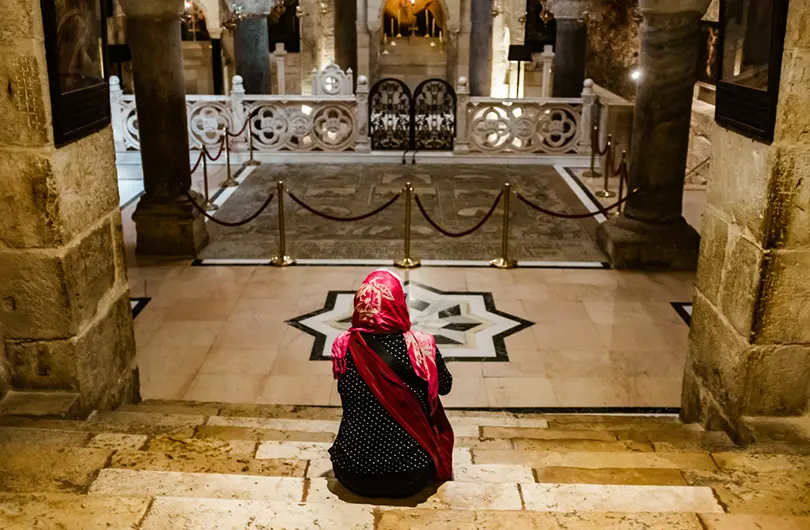
BAGHDAD, IRAQ (30 JULY 2026) — Iraq’s Court of Cassation has affirmed a previous ruling in favor of a young Christian woman, Maryam*, allowing her to have her official religious status corrected in the government’s database after she was automatically registered as Muslim under Iraqi law. The ruling from the country’s highest appellate court on personal status matters ordered the correction of Maryam’s religious classification and marks a strong step forward for religious freedom in cases of state-assigned religion, where Christians are inaccurately classified as Muslims in government-issued documents.
“We commend Iraq’s Court of Cassation for affirming this ruling and granting Maryam the freedom to have her Christian faith accurately reflected in her state-issued documents. Christians and other religious minorities across Iraq and the broader Middle East suffer real harm when governments assign them a religion that is not their own. In countries where religious affiliation is recorded by governments and has legal consequences for matters such as marriage, inheritance, burial, and education, individuals must have the authority to determine the religious designation reflected in official state records.”
— Kelsey Zorzi, Senior Counsel and Director of Advocacy for Global Religious Freedom at Alliance Defending Freedom
Background
Despite being raised in a Christian household, Maryam and her sisters were forcefully converted to Islam by law after their mother separated from their father and remarried to a Muslim man, in accordance with Article 26(2) of the Iraqi National Card Law No. 3 of 2016, which provides that “minor children shall follow the religion of the parent who has converted to Islam.”
Upon reaching the age of legal majority, Maryam filed a legal claim in January 2025 to have her religious status corrected in the government’s database to reflect her Christian beliefs. In May 2026, a lower court ruled in Maryam’s favor, affirming her right to choose her religion and have it accurately reflected in the government’s database.
Maryam’s two younger sisters remain legally registered as Muslims. Similar legal actions will be pursued for each of them once they reach the age of majority.
State-assigned religion: a pervasive religious freedom restriction in the Middle East and Asia
Maryam’s case highlights a pervasive problem in many parts of the Middle East, South Asia, and Southeast Asia: the practice of state-assigned religion, in which governments record a citizen’s religion in official databases or on identification documents and make it difficult or impossible to change. In many countries, these designations are imposed without an individual’s consent—whether through clerical errors, inheritance from a parent’s conversion, or coercive government policies—and can carry severe consequences for daily life.
In Iraq and other countries such as Egypt, Pakistan, Malaysia, and Bangladesh, inaccurate or imposed religious designations can result in mandatory enrollment of children in religious education programs not of their faith, barriers to marriage, automatic assignment of children’s religion based on parental records, inheritance complications, family law conflicts, and exposure of non-Muslims to Sharia court jurisdiction. In some cases, parents assigned an inaccurate religion in government databases are forced to leave their names off their children’s birth certificates to prevent the incorrect designation from being passed down, creating additional legal issues for those families.
Even where religion is not printed on a physical ID card, as in Iraq where religion is tracked in the government’s internal database, the designation can still create significant legal and personal consequences. These systems turn a person’s belief into a fixed, state-certified label, making it extremely difficult to freely change one’s religion or live according to one’s faith.
In Iraq, Article 26(2) of the National Card Law with constitutional guarantees of religious freedom and conflicts with Iraq’s obligations under international human rights treaties, including Article 18 of the International Covenant on Civil and Political Rights, which guarantees that “everyone shall have the right to freedom of thought, conscience and religion,” including the freedom to adopt a religion of one’s choice.
Alliance Defending Freedom supported Maryam in securing legal recognition of her Christian faith and continues to advocate for broader reforms to protect religious freedom across the Middle East.