This report addresses the situation of freedom of religion or belief and freedom of expression, and the rights of persons belonging to religious minorities in Kyrgyzstan. In particular, it addresses concerns with the Law on Freedom of Religion and Religious Associations and related legislation, as well as cases of rights violations perpetrated by both state and non-state actors.
Continue readingAlgerian pastor convicted of “illegal worship” shares his story, advocates for re-opening churches
- Christian convert and pastor Youssef Ourahmane shared the story of his arrest, conviction, and court appeals for “illegal worship” this week in Washington, DC, and called for the re-opening of evangelical churches in Algeria.
- An Algerian appeals court earlier this year upheld Pastor Youssef’s conviction and prison sentence for the so-called crime of “illegal worship” for leading his church.
- ADF International is advocating for his acquittal, supporting the legal defence of the persecuted across the globe.
WASHINGTON, DC (18 October 2024) Pastor Youssef Ourahmane, a Christian convert and pastor in the Protestant Church of Algeria, has been sentenced to heavy fines and a prison sentence for the so-called crime of “illegal worship” for leading his church.
This week, Pastor Youssef was in Washington, D.C. to share his story and advocate for religious freedom and the re-opening of evangelical churches forcefully closed in Algeria. In an event hosted by ADF International in Washington, D.C., Pastor Youssef appealed to the audience, saying “We have had a lot of opposition… by 2019 most of the Evangelical churches in our country had been shut down. When the churches were closed, a lot of the Christians felt that something was gone in their Christian faith because the building had been part of their identity.”
When asked about why he is willing to go to prison for his faith, Pastor Youssef responded “God knows the number of my hairs on my head, and none fall without His will.” He continued, saying “We have to accept God’s will, and God’s sovereignty… I try by my best, by His grace, to be a good testimony to others.”
In May 2024, the Court of Appeal in Tizi Ouzou, Algeria upheld the conviction of “illegal worship” against Pastor Youssef for leading the Emmanuel Church in Algeria. This was his second appeal in the case.
Pastor Youssef, who was born into a Muslim home but converted as a student to Christianity, was sentenced to 2 years’ imprisonment and a fine of 100,000 Algerian dinars on 2 July 2023 for his involvement as the leader of his church, although authorities could provide no evidence of a crime. In November 2023, his prison sentence was reduced from 2 years to 1 year. Upholding his conviction in May of this year, the court added an additional 6 months of suspended prison time to his sentence of 1 year imprisonment and fines of 100,000 Algerian dinars.
Also speaking at the event, Kelsey Zorzi, Director of Advocacy for Global Religious Freedom for ADF International, said “Despite their small numbers, Algeria has systematically been working to prevent the Evangelical community from being able to simply worship together…. Pastor Youssef’s case is one of roughly 50 spurious cases against Christians in the past few years…. His advocacy throughout the years on behalf of the entire evangelical church in Algeria, even in the face of potential imprisonment, is an inspiration.”
Zorzi continued, saying “We stand with the persecuted Christians around the world, and especially those who are under such dire threat as the Evangelical community in Algeria. The United States and the international community must take a strong stand against the unlawful church closures and unjustified arrests and imprisonments of pastors.”
ADF International is coordinating with other NGOs to support Pastor Youssef and his right to worship freely with international advocacy and to raise his case with government officials from over 40 countries.
Video: remarks from Kelsey Zorzi
Background
Pastor Youssef Ourahmane, who has been leading Christian congregations in Algeria for over 30 years, appealed his conviction for illegal worshipping in his church on 26th March 2024, the date of his 36th wedding anniversary.
Pastor Youssef is one of the leading figures in the Èglise Protestante d’Algérie (EPA), the Evangelical Protestant group whose 43 churches have been forcibly closed by the Authorities since 2019, leaving only one with its churches open today. Over the past five years, security police in Algeria, with orders from the Ministry of Interior, systematically alleged that the denominations’ church buildings were in violation of various “health and safety” codes. These alleged building code violations, they claimed, justified putting locks over the doors and declaring worship inside the buildings to be illegal. In one case, they physically beat a Pastor in front of his young child because he was peacefully protesting the closure of his church.
Pastor Youssef has faced baseless criminal prosecutions for his peaceful Christian activities since 2008. He is only the latest person out of 50 Christians to have been convicted by the Courts over the past few years, under the vague offenses of “shaking the faith” of Muslims, illegal worship, or embezzling of tithing donations. The convictions are thought to be a reaction to the large numbers of local Christian converts in the country. “In the 1970s”, Pastor Youssef said at the event, “the government gave out licenses to churches which were largely full of expats. Today, the government is concerned that our churches are almost entirely filled with large numbers of Algerian converts”.
On 27 March 2024, a different Pastor and four Elders from the church also appealed their three-year prison sentences and fines of 200,000 Algerian dinars.
Pictured: Pastor Youssef’s church in Algeria
Religious persecution in Algeria
Algeria is home to nearly 43 million people, with 99% of the population identifying as Sunni Muslim. Christians fall into the 1% of religious minorities. Islam is the official state religion, but Algeria’s constitution recognizes the right of all to worship and speak freely. The Algerian government limits religious freedom and expression through the enforcement of laws, including egregious blasphemy and anti-proselytism laws, which intentionally target and violate the religious freedom rights of Christians and other religious minorities.
Algeria’s penal and information codes criminalize blasphemy, with punishments including imprisonment for up to five years and fines. The Criminal Code also censors publications by prohibiting content that is “contrary to Islamic morals”. In particular, the government has systematically cracked down on the Evangelical Protestant Church through church closures and raids.
Violations of the rights of religious minorities are in violation of both international and domestic law. Algeria is a signatory to major human rights treaties, committing it to upholding the rights to freedom of religion and expression.
Governments and the international community have highlighted the ongoing plight of religious minorities in Algeria. The U.S. Department of State has placed Algeria on its “Special Watch List” since 2021 for its severe violations of religious freedom, and USCIRF advised in its 2024 Annual Report that the country be once again included on the State Department’s “Special Watch List”. In 2021, several U.S. Senators sent a letter to Secretary of State Antony Blinken calling on him to address the increased persecution of religious minorities in Algeria.
In addition to Pastor Youssef, ADF International also advocated for the release of Hamid Soudad, a Christian-convert in the Evangelical Church of Algeria, who was finally released from prison following a five-year ordeal. In January 2021, Soudad was arrested, convicted, and sentenced in an expedited trial to five years in prison for allegedly insulting Islam and the Prophet Muhammad in 2018. He was finally released from prison in 2023 following advocacy from religious freedom leaders from across the globe, including ADF International.
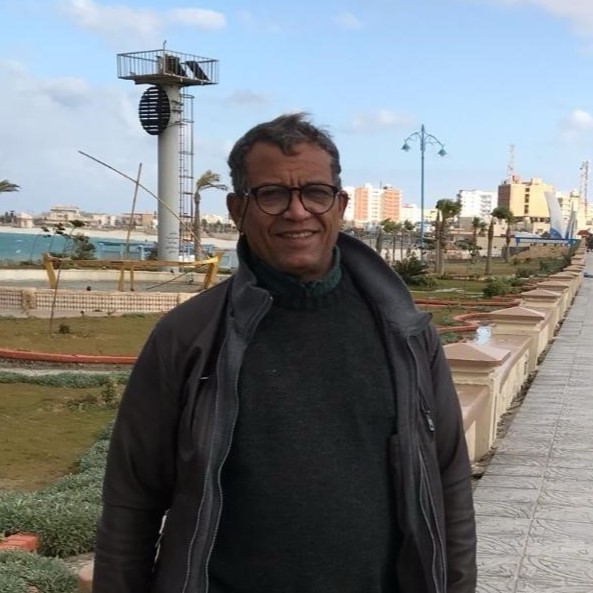
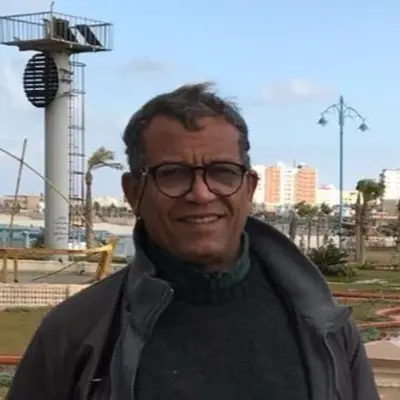
Pictured: Pastor Youssef
Images for free use in print or online in relation to this story only.
Collegiate and Olympic athletes, global human rights leaders call on UN to protect safety and fairness for women in sports
- Olympic swimmer Sharron Davies, U.S. collegiate athlete Lainey Armistead, Alliance Defending Freedom CEO Kristen Waggoner and global leaders appeal to UN to keep women’s sports fair and female-only.
- ADF International convenes UN event alongside Paraguay, Cameroon, Morocco and Malaysia to advocate for human rights of female athletes across the globe.
NEW YORK CITY (17 October 2024): At United Nations Headquarters in New York City yesterday, female athletes and international leaders called on the international community to preserve and protect fairness and safety in sports for women and girls.
Olympic swimmer Sharron Davies, U.S. collegiate athlete Lainey Armistead, and ADF CEO Kristen Waggoner, UN Rapporteur Reem Alsalem, were among those that addressed government and UN officials during an event convened by ADF International as part of the ongoing 79th session of the UN General Assembly on Wednesday, 16 October.
In her address, Armistead, a former West Virginia collegiate athlete represented by Alliance Defending Freedom, shared: “West Virginia has a law that ensures that only biological women can compete in women’s sports. Yet during my time as WVSU, I began to hear stories of women getting sidelined – and even getting hurt – while competing against males in women’s sports. In just the last three years, the one male athlete who has been allowed to compete against girls in West Virginia has already displaced nearly 300 girls. And that’s just one athlete.” Armistead’s lawsuit to defend West Virginia’s protections for women in sports has been appealed to the U.S. Supreme Court.
Armistead continued, saying “I’m here today because we’ve all seen what happens when males are allowed to compete on women’s teams… it’s demoralizing and unfair, and just plain wrong.”
“Females are at a physical disadvantage. This doesn’t mean that we’re worse or better, it just means that we’re biologically different,” said Davies, who competed as a swimmer at three different Olympic games and addressed the gathering virtually. “I don’t know a single person that wants to exclude anybody. However, we do want to see women have fair and safe sport. And we cannot wait until a woman is seriously injured or worse still, killed, to be able to deal with the science and the obvious and the common sense.”
Video: Sharron Davies’ virtual remarks
The U.S. and International playing field
Kristen Waggoner, CEO, president, and general counsel of Alliance Defending Freedom and ADF International, joined the athletes on the panel, testifying to the work being done by the organizations to protect women’s sports: “International law has long recognized equality and non-discrimination – including on the basis of sex – as a fundamental pillar of human rights. Unfortunately, many countries have fallen short of their human rights obligations toward women and girls in sports. We’ve learned the hard way that if female sports aren’t protected, it does grave harm to women and girls.”
Waggoner continued, saying “Our hope at ADF is that the international community will turn its attention to this critical issue – ensuring women and girls can pursue sporting opportunities should they desire AND protecting female athletes from harm and indignity. Our plea to the world is to learn from the mistakes that have been made – and that are now being corrected – so that your daughters can walk into a future of fair and safe sports.”
In addition to advocacy in the international community by ADF International, Alliance Defending Freedom is representing Lainey Armistead and other female athletes who are looking to protect women and girls from having to compete against males. The Alliance Defending Freedom is also challenging the Biden-Harris Administration’s rewrite of Title IX protections for women and girls.
Pictured: Lainey Armistead & Kristen Waggoner
Global protections for women and girls
Reem Alsalem, the UN Special Rapporteur on Violence Against Women and Girls, joined the calls to protect female-only sports at the event, remarking that,“Women and girls in sport are experiencing new forms of discrimination based on their sex. One glaring example is the opening the female category of sports to males, further undermining their access to equal opportunities and the right to participate in safety, dignity and fairness. In fact, I do not hesitate to say that the failure to protect the female category is one of the most egregious forms of violence against women and girls as the essence of being ‘female’ is willfully pushed aside and ignored resulting in distress, pain, humiliation, frustration, and anger at the loss of dignity and sheer injustice confronted.”
In December 2023, Alsalem publicly warned the Biden Administration that altering the definition of women in “Title IX” would result in “loss of privacy, an increased risk of physical injury, heightened exposure to sexual harassment and voyeurism, as well as a more frequent and accumulated psychological distress due to the loss of privacy and fair and equal sporting and academic opportunities.”
Giorgio Mazzoli, Director of UN Advocacy for ADF International, said:
“Female sports and spaces belong to women and girls. Under international law, States have an obligation to prohibit and prevent discrimination on the basis of sex. The voices of women and girls whose achievements have been directly affected by male participation in female sports categories can no longer be ignored. It is past time for States and sports bodies across the globe to follow the science and uphold safety and fairness in female sports.”
Images for free use in print or online in relation to this story only.
Evangelical church in Rome, deemed a “shop” by authorities, appeals to top human rights court – Italian state demands 50,000€
The Italian Supreme Court ruled against Christian community Breccia di Roma after lower courts affirmed that Evangelical places of worship “can look different” than other denominations.
Continue readingSwiss Supreme Court suspends threat of criminal charges for parents who refuse to enable daughter’s “transition”, following appeal filing
- In July, Geneva’s highest court demanded parents, under threat of criminal charges, enable child’s legal “sex change” by handing over her identity documents
- Swiss Supreme Court has “frozen” threat of criminal charges following parents filing appeal in court last week, pending outcome of case
- ADF International backs parents’ legal challenge, which can be supported HERE
Basel (25 September 2024) – The Swiss Federal Supreme Court has suspended the threat of criminal charges against parents separated from their daughter for refusing to enable her gender “transition”.
The decision was made following the parents filing an appeal at the court (Schweizerisches Bundesgericht) last week. The parents, with the legal support of ADF International, are appealing a ruling ordering them to facilitate their 16-year-old teenager’s legal “sex change” by handing over her identity documents.
“As a parent you want to protect your children. The state should not have the power to criminalise loving parents who want the best for their child."
- Father
The parents, whose identity is being kept anonymous, were separated from their daughter over a year ago by court order after they objected to their child’s “transition”, in a case that has garnered worldwide attention. A video of the parents explaining their harrowing story has been viewed over 66 million times.
Speaking about the appeal, the father said: “Our hope lies now with the Swiss Federal Supreme Court.
“As a parent you want to protect your children. The state should not have the power to criminalise loving parents who want the best for their child.”
The parents are appealing a July ruling from the highest court in the canton of Geneva, the Court of Justice.
Before the intervention of the Supreme Court, the ruling meant the parents could have been criminally charged if they did not hand over their daughter’s identity documents for her recorded sex to be changed from female to male in the civil registry records, in a legal “sex change”.
A legal “sex change” could lead the daughter down the path of harmful physical interventions of puberty blockers, “cross-sex” hormone drugs, and, ultimately, body-altering surgeries.
Case background
The case centres on parents who responded to the mental health struggles of their daughter, who expressed “gender confusion”, with care and support, including obtaining mental health care for her.
Concerned their daughter was being pushed to make hasty and potentially irreversible decisions, the parents declined puberty blockers and explicitly rejected her school’s attempt to “socially transition” her.
The school disregarded the parents’ wishes, “socially transitioned” the daughter and liaised with the state child welfare agency Service de Protection des Mineurs (SPMI), in a situation which led to a court ordering that the daughter be separated from her parents.
The daughter now lives in a government shelter and the parents’ access to her is regulated by the state.
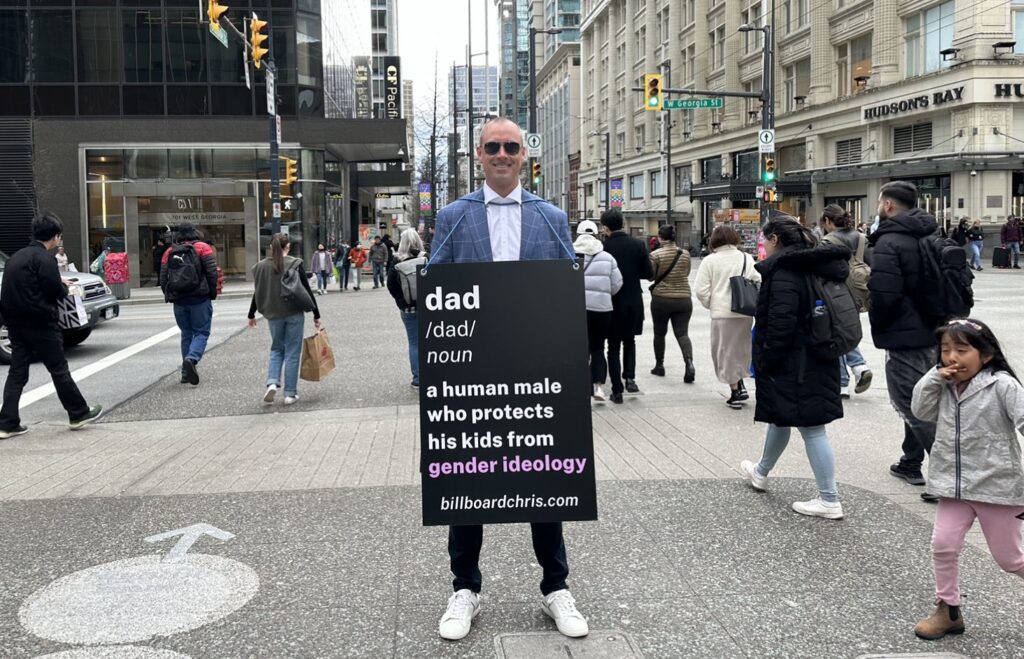
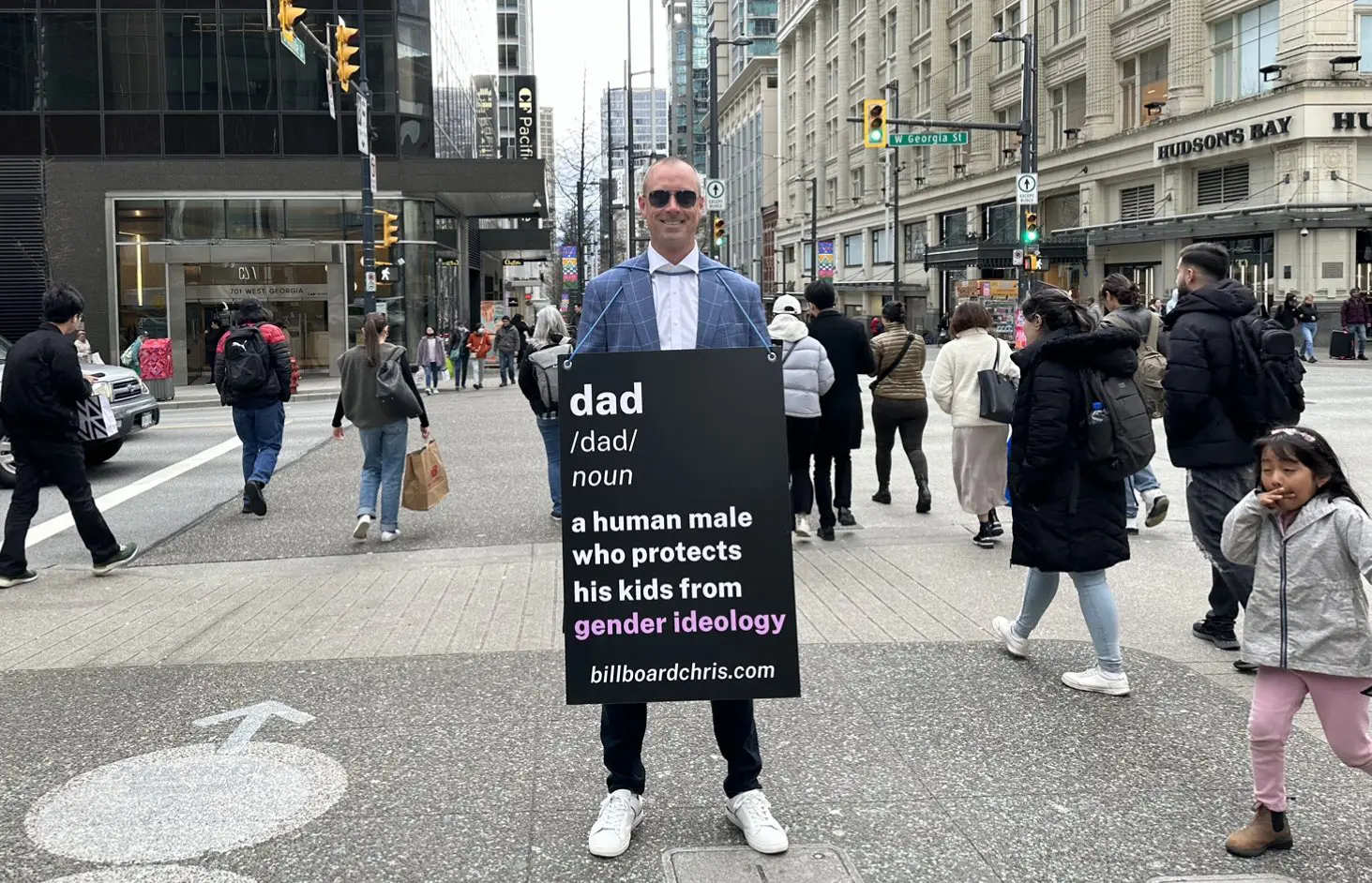
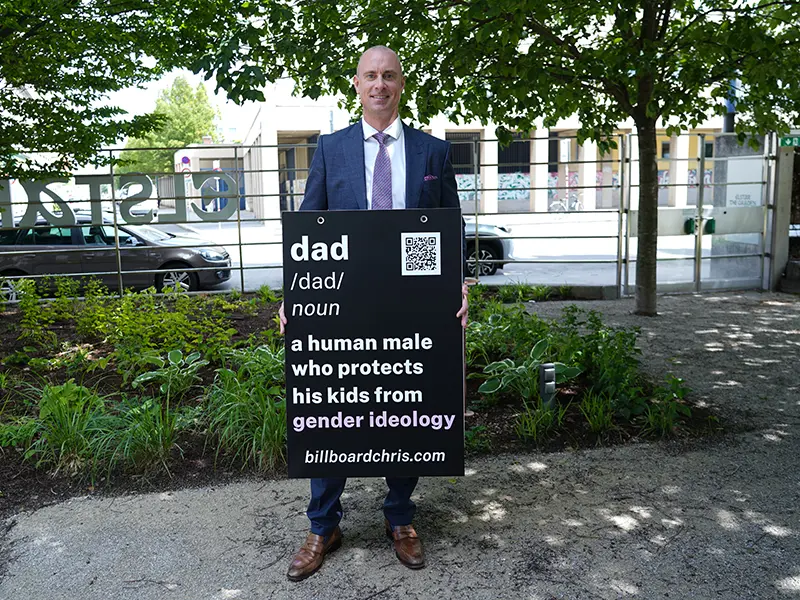
Billboard Chris, a father of two who campaigns to defend children from gender ideology, today mentioned this case in a speech he gave at the UN, where he was hosted by ADF International, about the harms of gender ideology on children.
Further case details can be found here.
Appeal filed at Supreme Court
In the appeal filed with the support of ADF International, the parents argue their daughter is not able to discern the implications of a so-called “sex change” under the law, which would make her vulnerable to an array of dangerous physical interventions, including puberty blockers and surgeries.
Furthermore, they argue the long-term health consequences of “transitioning” cannot be fully assessed by a teenager, especially considering the outside influences, including from her school, to which she continues to be subjected.
According to the parents, no psychiatrist or other medical professional has provided a conclusive assessment of their daughter’s ability to understand the consequences of her decisions, which is a fundamental requirement under the law.
Additionally, they highlight that the daughter’s state-appointed lawyer failed to submit any medical certification regarding her capacity to discern the implications of her decision.
The parents believe their daughter’s well-being, both mentally and physically, is in danger as she continues to reside in the government youth shelter.
“Children who experience discomfort with their biological sex deserve to be treated with dignity and need compassionate mental health care, which these parents have gone to great lengths to provide.
“Not only have these parents not had their concerns addressed by the court, but they have also endured a severe violation of their rights as loving parents, with the court transferring authority over their daughter’s medical care from them to the state, in addition to ordering that she reside in a government shelter. It is the responsibility of the Supreme Court to correct this grave injustice,” commented Dr Felix Boellmann, lead lawyer on the case for ADF International.
The court is expected to take up to six months to reach a decision.
Lower court judgment
The decision in July by the Court of Justice confirmed a lower court’s ruling that the parents must hand over documents to enable their daughter’s “sex change” under the law.
The Court of Justice based its ruling on Article 30b of the Swiss Code Civil, which does not require parental consent when a child capable of discernment is over 16 years of age.
During the trial, the state child welfare agency failed in its duty to raise concerns about the child’s decision-making capacity.
The court held a legal “sex change” could be considered in isolation from other steps to physically “transition”. However, the recent Cass Review in the UK demonstrated there is a clear path from “social transition” to irreversible medical interventions.
Protecting children requires respecting families
The parents’ legal team asserts that the ability to withhold the personal documents required for the daughter’s legal “sex change” is crucial to protect her from further harm posed by so-called “gender affirmative treatment”.
The Swiss Federal Supreme Court is the last domestic recourse for the parents.
Dr. Boellmann stated: “Safeguarding children from harmful agendas requires respect for the rights of parents. No child should be separated from their loving parents by the state. It is imperative that the Court recognizes, clearly and decisively, that the parents are the primary decisionmakers when it comes to the best interest of the child.
“Now the court needs to step in to defend the wellbeing of this child, and in so doing, all other children in Switzerland. The Court must abide by Switzerland’s international human rights obligations to protect both the child and parental rights.”
Read more about the background of the case here.
Freedom of expression upheld in Peru: TikToker faced criminal prosecution for speaking out against gender ideology
A transgender activist in Peru filed a criminal complaint against Olga Izquierdo for discrimination after she took to TikTok to criticize Lima airport signs that opened the women’s restroom to “anyone with a female identity,” prompting investigation by state prosecutors.
Continue reading“Hate Speech” Element Dropped from Censorial Irish Bill
Inform yourself about the Irish “hate speech” bill, and you’ll find the censorial truth.
UPDATE 21 September 2024: In a win for free speech, the Irish government dropped “hate speech” from proposed legislation. ADF International briefed Irish lawmakers on the dangers and, in June, gathered free speech advocates in Dublin to oppose the draconian “hate speech” bill.
Censorship. It’s an elusive term animated throughout history with growing relevance today. “Hate speech” laws loom large over Western political and social conversations. Blasphemy laws criminalize faith-based speech and belief in countries like Nigeria and Pakistan. By now, almost everyone is aware of censorship.
Some may think of George Orwell’s 1984; others, Ray Bradbury’s Fahrenheit 451. Censorship takes many forms – like book burning and imposing “newspeak” – but Ireland now leads the dystopian cause with its hotly debated “hate speech” bill.
And so, as the state-driven tide of censorship sweeps the world, Europe stands at the forefront of the ongoing conversation. Why? Because almost every Western nation has introduced “hate speech” laws enabling authorities to enforce penalties for certain speech they deem unpopular or unorthodox.
These laws are introduced under the guise of combatting “a rise of hate”, or offensive speech that can make people feel insulted or uncomfortable. But criminalizing speech is not the answer. Rather, allowing more robust speech that facilitates open debate instead. That’s why we stand against so-called “hate speech” laws like the proposed one in Ireland.
“Hate Speech” Dropped From New Law – What It Means
Thankfully, the Irish government has indicated it will not proceed with the most censorial elements of the proposed “Hate Speech” Bill.
With the world watching, the people of Ireland said ‘no’ to state censorship, and it’s working.
The Incitement to Violence or Hatred and Hate Offences Bill 2022, currently stuck in the Irish Senate, will proceed without the draconian speech elements that had previously been advanced. Remember, incitement to hatred remains illegal under existing law.
Minister for Justice Helen McEntee has recognized that there is a lack of consensus on the proposed bill’s “hate speech” restrictions.
The Minister for Justice is reported as saying: “The incitement to hatred element [of the bill] does not have a consensus, so that will be dealt with at a later stage.”
Pro-censorship actors may seek to bring in a separate new law in the future.
You are currently viewing a placeholder content from YouTube. To access the actual content, click the button below. Please note that doing so will share data with third-party providers.
More InformationThe Irish “hate speech” bill seeks to criminalize the possession of material “likely” to incite hatred. This includes memes and photos saved on devices, with up to five years of jail time. Yes, photos on personal devices. Yet, there is no clear definition of what “hate” entails.
Therefore, this is a dangerous trajectory. ADF International highlights the dangers of the “hate speech” bill while briefing Irish lawmakers on how to uphold freedom of speech.
What are “Hate Speech” Laws?
So-called “hate speech” laws are ambiguously worded laws that criminalize certain speech beyond what is acceptable in a democratic society.
Despite having no basis in international law, all European Union Member States have vague and subjective “hate speech” laws. The United Nations, EU, and Council of Europe concur that “hate speech” lacks a universally agreed-upon definition. Nonetheless, the European Commission seeks to make “hate speech” an EU-wide crime on the same list as trafficking and terrorism.
These laws, with the wrong police and prosecutor, can be weaponized against any person and any form of speech. Thus, explicitly violating the state’s obligation to protect free speech.
Do “Hate Speech” Laws Deter Hate?
The short answer is no. But because “hate speech” laws rely on vague terms such as ‘insult,’ ‘belittle,’ and ‘offend,’ they are inconsistently interpreted and arbitrarily enforced. Oftentimes, the threat of serious criminal penalties accompanies charges.
Rather than combat hate, the criminalization of speech based on subjective criteria creates a culture of fear and censorship.
An offence is considered hateful in reference to the hearer or reader, making it subjective with little to no regard for the content of the speech itself. They are incompatible with free societies.
How the Proposed Irish "Hate Speech" Law is Different than Others
The Irish “hate speech” bill would move the needle further. If passed, we could expect commonplace prosecutions like Päivi Räsänen’s for posting a Bible verse on “X” in 2019 about her biblical worldview on marriage and sexuality. In fact, Ireland’s censorial law would go even further than Finland’s.
We’re ramping up public advocacy to expose the unprecedented dangers of what the Irish government is doing. All have the right to live and speak the truth without fear of censorship or retaliation. That’s why we’re asking Irish lawmakers to uphold their obligation to protect free speech under international human rights law.
Consequently, the Irish “hate speech” bill has two major facets that other laws like Finland’s do not include. For example:
- It leaves the issue of gender open-ended by including a list of “protected characteristics” allowing for unlimited “gender identities” like ‘non-binary’ and ‘two-spirit’. These self-identities would receive protection supported by criminal law.
- It allows authorities to criminalize private possession of memes or any content “likely” to incite violence or hatred “…against a person or group of persons on account of their protected characteristics”.
This means “misgendering” someone could land you a criminal prosecution, fine or worse. If the Irish “hate speech” bill becomes law, Irish police would have the power to search phones, camera rolls, and emails for prosecutable content.
It’s paramount that we all spread awareness about the dangers of this bill.
Why Ireland is Pushing This Now
The Irish government claims that the law is necessary following rising incidents of violence in the country, which many tie to uncontrolled migration. But peace and security on the streets do not require “hate speech” laws suppressing peaceful speech.
With key terms deliberately undefined, how are we to know what kind of speech could be subject to prosecution? “Hate speech” laws are Western blasphemy laws by another name; both are state driven.
The thought of Irish police raiding homes and phones to seize banned books and memes invokes thoughts of Orwell and the darker moments of the last century.
Our right to freedom of expression is protected by numerous international human rights treaties. The European Court of Human Rights even affirmed that the right to freedom of expression protects not just popular ideas but also those that shock, offend, and disturb.
Yet, some argue that unpopular speech should be censored by the state. But where is the logical stopping point?
Have We Learned Nothing From Finland?
“Hate speech” laws are detrimental to a society seeking to protect freedom of speech or thought. In Finland, we’ve supported Päivi’s defence for almost five years with two unanimous acquittals. She was charged with three counts of “hate speech” because of her “X” post, a pamphlet she authored for her church, and comments she made during a radio programme.
In January 2024, the state prosecutor appealed her case to the Finnish Supreme Court. On 19 April, the high court agreed to hear the appeal, so Päivi will face her third criminal trial in three years. However, the legal process is Päivi’s punishment because the state has unlimited funds to prosecute offenders of their “hate speech” laws. Prosecutions cost taxpayer funds, while reputations sometimes become irreparably harmed.
If Päivi’s now famous “hate speech” case took place in Ireland, she could be prosecuted for simply possessing the pamphlet she wrote for her church congregation on the biblical definition of marriage, even if it was never published online.
Ireland should be a place where important conversations about issues that matter – even about controversial and sensitive topics thrive. When these conversations are shut down, we all lose out.
Conclusion: Ireland Must Reject Its New “Hate Speech” Bill
In summary, “hate speech” laws leave the door wide open to state censorship and oppression. And yet, the Irish government has been moving forward with a new bill to criminalize “hate speech” since 2022.
This could be one of the most far-reaching clampdowns on free speech by a modern democracy. It implicates memes, jokes, and books. Instead of protecting free speech and public safety, this law is poised to set a draconian precedent of intolerance against those who express beliefs outside the state-approved orthodoxy.
Unpopular speech needs the most protection, and in a free society, free speech is required. Individuals should be able to express their beliefs without fear or oppression. The Irish “hate speech” bill is a far cry from the liberal democratic ideals the Irish government claims to profess.
The Irish government has chosen to uphold freedom of speech.
Brazil, Elon Musk, X, and Censorship: What You Need to Know
The Brazilian Supreme Court blatantly violated free speech rights by banning X after the company’s chairman, Elon Musk, declined to censor disfavored views.
This story originally appeared in Alliance Defending Freedom on 6 September 2024
When Elon Musk bought Twitter (now known as X) in 2022, he did so with the stated purpose of restoring free speech on a platform that had been credibly accused of censoring disfavored views. And no matter whether one agrees with everything Musk has said or done since then, it is clear he has taken meaningful steps toward achieving that goal.
Unfortunately, many in the United States and around the world have opposed Musk’s attempt to advance free speech. This opposition has become painfully apparent in Brazil, where the country’s highest court is engaging in blatant and unacceptable censorship against Musk and X.
Brazil’s highest court violates free speech rights
In 2019, the Brazilian Supreme Court gave itself the power to carry out criminal investigations into “fake news,” defamation, slander, and threats against the honor of the Court. This was a dangerous abuse of power, and the consequences of such a draconian measure have now been laid bare.
Fast forward five years, and Brazilian Supreme Court Justice Alexandre de Moraes and Musk have been engaged in a dispute stemming from de Moraes’s demands that X censor messages the justice disfavors. On Aug. 28, 2024, de Moraes gave Musk 24 hours to name a legal representative for X in Brazil.
Musk declined to name a representative because Brazil had threatened the previous representative with jail time. On Aug. 30, de Moraes officially suspended X nationwide in Brazil. In addition, he froze the bank accounts of Starlink, another company partially owned by Musk that provides internet via satellite.
In his order suspending X, de Moraes said the platform presented a “real danger” of “negatively influencing the electorate in 2024, with massive misinformation, with the aim of unbalancing the electoral result, based on hate campaigns in the digital age, to favor extremist populist groups.”
In other words, the suspension was not solely motivated by X’s lack of legal representation. It was motivated, at least in part, by de Moraes’s fears that allowing certain speech on X might lead to an electoral result he personally would not like.
Despite de Moraes’s clear violation of free speech, the full Brazilian Supreme Court upheld the order on Sept. 2. Under the ruling, Brazilians who attempt to access X using a VPN will face a fine of around $9,000.
Supreme Court order flouted multiple laws
It takes only a basic understanding of free speech to see the major problems with this order. Once the government begins censoring or pressuring others to censor messages based on vague criteria and subjective terms like “misinformation,” it opens the door to widespread suppression of any views the government doesn’t like.
For this reason, national and international law protect free speech in Brazil, and the Brazilian Supreme Court clearly violated both.
First, Article 13 of the American Convention on Human Rights states, “Everyone has the right to freedom of thought and expression. This right includes freedom to seek, receive, and impart information and ideas of all kinds, regardless of frontiers, either orally, in writing, in print, in the form of art, or through any other medium of one’s choice.”
X is certainly a medium through which many Brazilians wish to express, think about, and discuss ideas. Recent estimates prior to the shutdown said roughly 40 million Brazilians use the social platform. By suspending X because it refused to censor information that they disliked, de Moraes and the rest of the court violated those users’ rights to engage in free expression on the platform.
In addition, Article 220 of the Brazilian Constitution states that “any and all censorship of a political, ideological, and artistic nature is forbidden.” But given de Moraes’s reasoning that X could “negatively” affect elections in 2024 to “favor extremist populist groups,” it’s hard to read the justice’s order as anything other than censorship of a political and ideological nature.
Brazilians, just like Americans, have the fundamental right to free speech, which is why ADF International did not sit idly by when the Brazilian Supreme Court issued its dangerous decision.
ADF International takes action
Following the illegal order, ADF International worked around the clock to respond. Within 24 hours, attorneys submitted a petition asking the Inter-American Commission on Human Rights (which has jurisdiction over Brazil) to intervene and defend free speech.
“The state of censorship in Brazil is severe and worsening to an extreme degree, positioning the country as among the worst for restrictions on speech in the Americas,” said Tomás Henriquez, ADF International’s Director of Legal Advocacy for Latin America. “Intervention by the Inter-American Commission on Human Rights is key because without free speech, all human rights are jeopardized.”
Musk himself even thanked ADF International for the quick and important work to defend free speech.
While Brazilian officials may claim to protect democracy, they are actually undermining it by manipulating what information citizens can share and access. Free speech is a fundamental right for all people worldwide, and we must continue defending it when it comes under attack.
RELEASED FROM PRISON: Nicaraguan authorities release fraudulently convicted pastors, ministry leaders
11 pastors, ministry leaders with Puerta de la Montaña now safe in Guatemala after being sentenced to millions in fines and 10+ years in prison on sham charges.
Continue readingAcross The Globe, Pointing Out Men Can’t Become Women Could Land You In Court
This story originally appeared in The Federalist on 8 August 2024
Legal Communications Director
The world has been shocked to see riots erupt throughout the United Kingdom following an appalling stabbing in Southport, England, last week, where three children died.
But we should be alert to how the response of Britain’s new Labour government to the disorder is creeping beyond a crackdown on violence. Home Secretary Yvette Cooper said on Monday that social media companies should address “misinformation,” which suggests this crisis could be exploited to censor peaceful speech online.
The fear is that the unrest in the UK will be used as an excuse to further infringe on free speech online in the country. In fact, there are many parts of the world where a perfectly peaceful tweet could land you criminal charges or even a prison sentence.
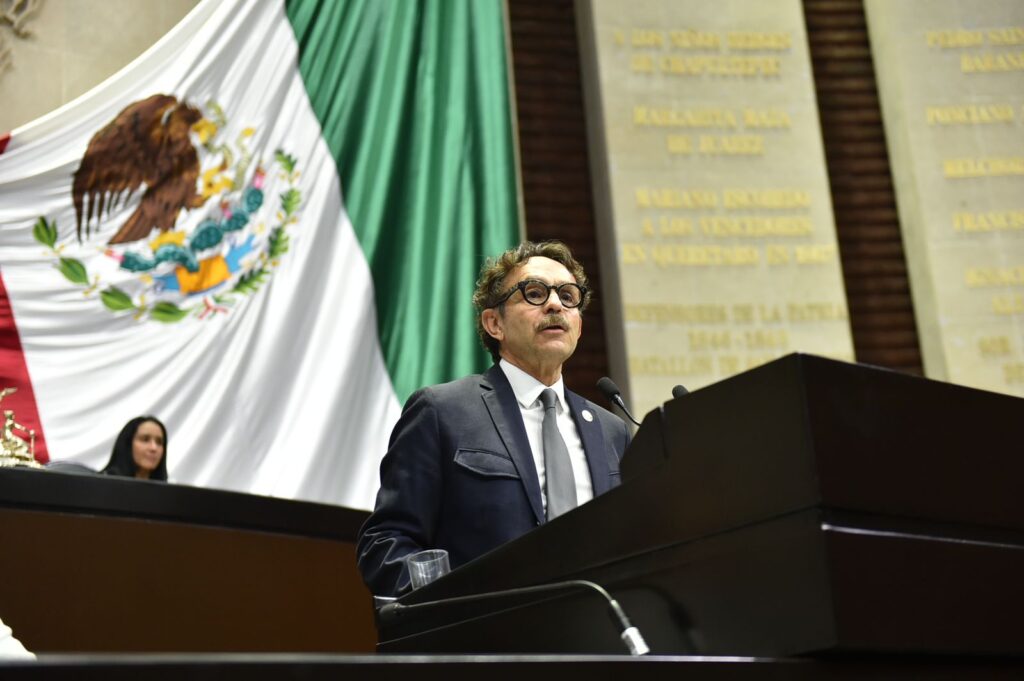
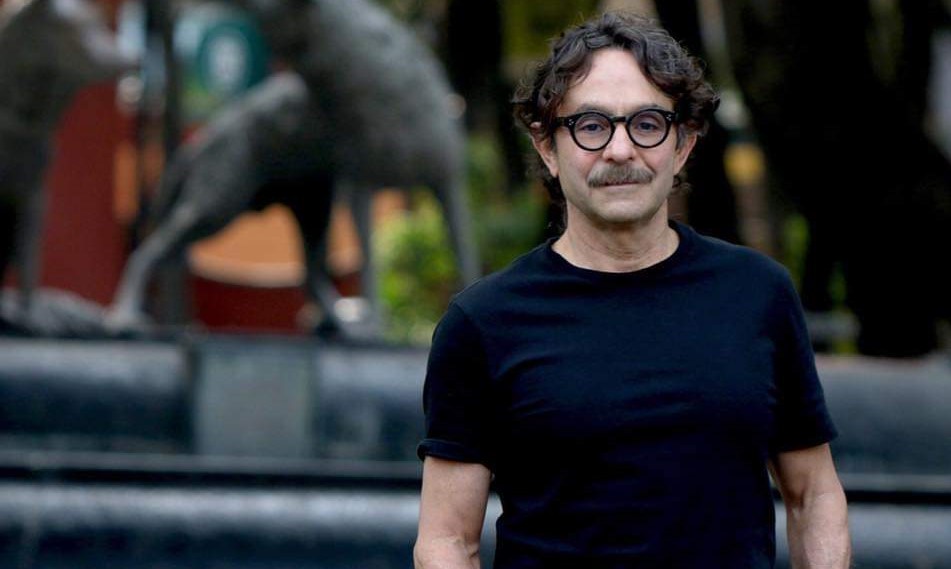
For example, take note of what happened in 2022 to congressman Gabriel Quadri in Mexico. Quadri was prosecuted for his Twitter posts on the dangers of transgender ideology, including comments about keeping female sports safe and fair.
As millions opine freely on the myriad controversies at the Olympics, this should give us pause. Both Quadri and civil society leader Rodrigo Iván Cortés were convicted for “gender based political violence,” including “digital violence,” and punished in an absurd and demeaning manner for peacefully expressing the truth about biological reality online.
A testament to the pound of flesh the state demands from those who dare to speak against its orthodoxies, Quadri and Cortés were ordered to publish a court-written apology on X every day at set times and placed on an offender’s registrar. Having exhausted all avenues for justice in Mexico, ADF International is appealing their cases to the Inter-American Commission on Human Rights.
Prosecution in Finland
Look too to what has transpired over the last five years in Finland, a country with deep roots in the rule of law. Longstanding parliamentarian and grandmother Päivi Räsänen is being criminally prosecuted for a Bible verse she tweeted in 2019.
Quoting from the book of Romans, Räsänen objected to her church’s decision to sponsor a pride parade. For this, she endured hours of police interrogation, three criminal charges, and two onerous trials. Despite being unanimously acquitted at both, she soon will be tried again at the Supreme Court of Finland, where ADF International is backing her legal defense.
Räsänen’s case, in a supposedly free country, demonstrates that the censorial vigor of the state knows no bounds when it comes to silencing expressions of truth that expose the ideological falsehoods of the day.
Räsänen stoked no violence and evinced no hate, and yet she is being prosecuted for “hate speech” under the “war crimes and crimes against humanity” section of Finland’s criminal code, which carries a potential prison sentence of two years. You better believe that if a much loved, and oft re-elected, civil servant of more than 20 years can be tried for a tweet, then the citizens of Finland are going to think twice before they hit post.
Cases in the EU, Australia, Ireland, Scotland, Brazil
In Australia, street advocate Billboard Chris was censored for tweeting the truth that trans-activist Teddy Cook should not serve on a World Health Organization panel for children’s transgender policy given Cook’s aberrant sexual practices.
Chris posted a Daily Mail article on X entitled, “Kinky secrets of UN trans expert REVEALED: Australian activist plugs bondage, bestiality, nudism, drugs, and tax-funded sex-change ops – so why is he writing health advice for the world body?” Australia’s “E-Safety Commission” tried to force X to take the post down.
When X refused, they forced the platform to geo-block it, and now, Chris, supported by ADF International, and alongside X, is suing in defense of his right to speak freely.
The Irish parliament is currently debating a “hate speech” law, which, if adopted, could criminalize the possession of “hateful” material with up to five years in prison. And in April, Scotland passed a law criminalizing “stirring up hatred” against protected categories, including transgender identity, with a possible seven-year prison sentence.
As is always the case where these laws take root, “hate” is undefined. Consequently, it’s open season for a “hate crime” when such a transgression could be literally anything under the sun perceived as hateful by an offended party.
Brazil is undergoing a crisis of extreme censorship, positioning the country as among the worst for restrictions on speech in the Americas. Earlier this spring, a Supreme Court judge threatened to wield his authority to shut down X in the country.
Journalists, including American author Michael Shellenberger, are being criminally investigated for exposing the state’s censorial crimes. Now X is deploying its legal team to preserve free speech on the platform in Brazil.
At the international level, the European Commission is advancing efforts to make “hate speech” an EU crime, on the same legal level as trafficking and terrorism. Most recently, the European Commission has accused X of violating the EU Digital Services Act, triggering the promise of legal action from Elon Musk, who claims that X resisted an “illegal secret deal” to comply with EU rules to censor “misinformation.”
Raising our Voices in Resistance
Everyone must be free to peacefully debate the issues of our time, online or wherever they may find themselves, without fear of government punishment. But across the world state-driven censorship is proving to be one of the most insidious problems of our age. And it is not by accident that the brunt force of the state is often leveraged to silence expressions of basic truth, in particular in the digital space.
Next time you reflexively exercise your free speech rights by firing off a tweet, remember those who have incurred the wrath of the state simply for doing the same. We must vigilantly resist the rising tide of censorship, and also the urge to self-censor, instead raising our voices to advocate for those silenced and sanctioned for nothing more than a tweet.