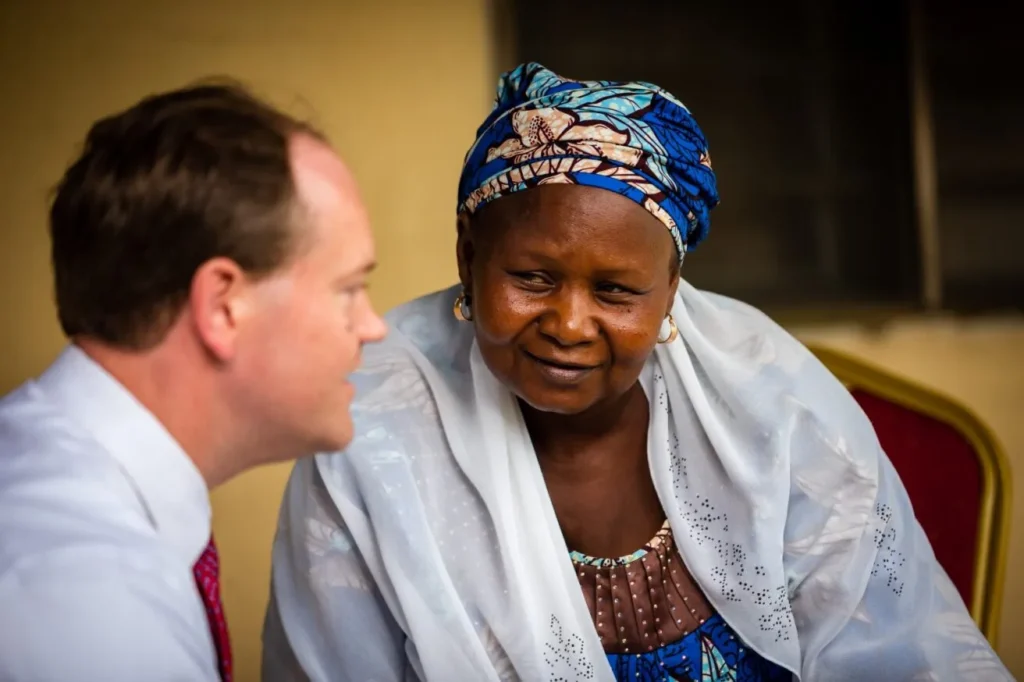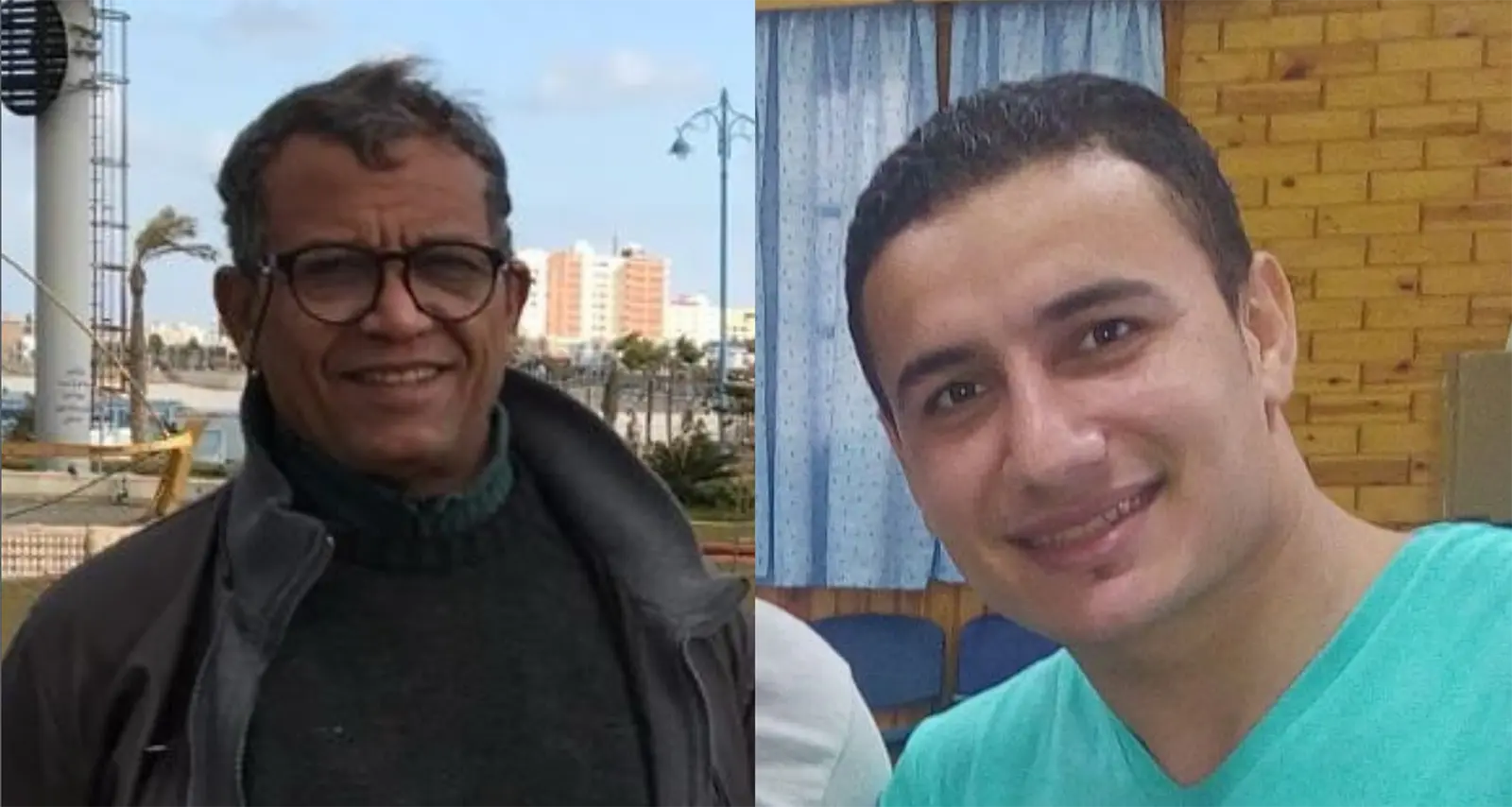
Egyptian Christian who has been denied an ID card that correctly stated his religious affiliation for over 10 years wins case allowing him to engage in Christian activities.
Continue readingFrom Belgium to Canada, Euthanasia Signals a Deep Crisis of Meaning
Nobody should be offered death as the solution to suffering
In 2002, Belgium and the Netherlands became the first countries to legalize euthanasia. Since then, other countries have followed suit, and more countries are considering it.
Whether called “euthanasia”, “assisted suicide”, “medical aid in dying”, or “MAID”, the act involves a medical professional intentionally and prematurely ending a patient’s life.
At the outset, legislators frequently stress that euthanasia should be seen as a last resort, intended to be a compassionate approach to end a person’s suffering.
However, the experience of countries that have legalized euthanasia shows that more and more people seem to be requesting to die than anyone imagined or expected.
This is often because many people lack the social, economic, psychological, and palliative care support they need to live.
In 2016, Canada legalized euthanasia nationwide and has since become the fastest-growing euthanasia regime in the world, posing a somber warning to the rest of the world.
Rising healthcare and social security costs, the widespread reality of cognitive and mental health challenges, and conceits about autonomy and control are just some of the factors that will make euthanasia one of the most dramatic life issues of the 21st century.
Like our other Generational Wins—our core priorities—preventing euthanasia is not only a legal battle but also a cultural one. Advocates like Amanda Achtman in Canada are focused on raising awareness about euthanasia in the public square from a cultural standpoint through her Dying to Meet You project.
How euthanasia gains popularity
Across jurisdictions, public opinion about euthanasia has been driven by court decisions, political campaigns, lobby groups, and media.
When a doctor in the Netherlands euthanized her mother in the 1970s, the physician was treated leniently and given a weeklong probation rather than a long prison sentence. This sparked the erosion of norms surrounding a doctor’s responsibility to do no harm, even upon the patient’s request.
In Belgium, the euthanasia law was ushered in following the political victory of a left-wing coalition in the 1999 federal election that defeated the Christian Democrats.
In Canada, the lobby group Dying with Dignity has campaigned for more than 40 years to promote and expand legal euthanasia. Exerting considerable pressure, this organization has lobbied politicians, mounted legal challenges, and run marketing campaigns to bolster public support for “MAiD”.
Proponents of euthanasia will usually highlight the stories of individuals who are suffering profoundly and who seem to be making the request to die with full consent and even with the support of their family and friends. Similarly, such stories have become the basis for influential movies and even advertisements.
Since all human beings suffer, the prospect of avoiding or eliminating it is a temptation. Without question, a suffering or vulnerable person summons relief and help; killing the person is never the appropriate way to end his or her suffering.
Once euthanasia is legalized, it will not be limited
When the Canadian government legalized euthanasia, they enacted certain so-called “safeguards”. At first, the patient’s death needed to be deemed “reasonably foreseeable.” Only adults capable of consenting could receive euthanasia. They had to make their request in writing before two witnesses and undergo a mandatory 10-day reflection.
Not even five years later, the government began loosening the requirements and expanding euthanasia to broader demographics. This is because if euthanasia is seen to be a reasonable means of ending suffering, then there is no serious basis on which a person should be excluded from having the option.
On the grounds of equality, euthanasia was expanded to persons suffering but not imminently dying, to persons with disabilities and various neurological conditions, and to others. Unfortunately, this has led to a tremendous devaluing of life within the public healthcare system.
A man with disabilities says he’s been offered euthanasia “multiple times.” A woman with disabilities says a nurse accused her of being selfish for not considering euthanasia. One woman says she was offered MAiD instead of cancer treatment. A mother says her 23-year-old son, who has diabetes and partial vision loss, was scheduled to die by MAiD until she intercepted the process and went to the media.
Legal euthanasia is destroying the doctor-patient relationship and eroding trust between healthcare professionals and families. Prematurely ending a patient’s life through killing is completely different than helping a person to live well until their natural death.
Tackling euthanasia and assisted suicide as a new threat to life
Some people do not have strong opinions about euthanasia because they figure that it is a matter of individual freedom and personal decision. That is what Tom Mortier thought until he received the shocking call that his mother had been euthanized. His mother had struggled with depression but was otherwise physically healthy. Her psychiatrist did not think she satisfied the legal requirements for euthanasia under Belgian law. But Tom’s mother was diagnosed with “incurable depression” and then euthanized by an oncologist with no psychiatric expertise.
Robert Clarke, the Deputy Director of ADF International, represented Tom Mortier before the Court of European Human Rights. In October 2022, the Court ruled that Belgium violated the right to life of Tom Mortier’s mother.
ADF International intervened in another recent euthanasia case. In Hungary, a man suffering from ALS challenged his country’s ban on assisted suicide. ADF International argued in favour of Hungary’s existing stance and defended the country’s obligation to protect the right to life because there is no “right to die.” In June 2024, the European Court of Human Rights ruled in favour of Hungary’s right to prohibit assisted suicide to protect life.
While winning legal cases is important, it’s also important to win in the court of public opinion.
Canada and beyond: Dying to Meet You
A glimmer of hope is Canadian Amanda Achtman, and her mission is to prevent euthanasia and encourage hope throughout her home country and beyond. She founded a project called ‘Dying To Meet You’ through which she engages people in conversations on suffering, death, meaning, and hope. A key feature of her advocacy involves giving a platform through short films to those whose voices have been sorely lacking from the euthanasia debates. In one short film, she interviews Christine Nagel, an 88-year-old woman who decided to get a tattoo that says, “Don’t Euthanize Me.”
In another, Achtman interviewed Eulalia Running Rabbit, an Indigenous Canadian woman who says, “I don’t think it’s right for the government to push euthanasia on the Nations. We really believe the Creator is the one who’s going to take us back.” In another, she interviewed Roger Foley, a Canadian man with disabilities who says he’s been offered euthanasia “multiple times” as he fights for the support he needs to live.
In addition to writing, speaking, and appearing on podcasts and in documentaries about euthanasia, Achtman also organizes events to engage diverse faith and culture communities in end-of-life conversations. For example, she recently organized an event at Adath Israel Congregation in Toronto featuring Rabbi Dr. David Novak, a renowned Jewish thinker who wrote his dissertation on suicide.
During his presentation, Dr. Novak stated, “Nobody really lives unless they’re convinced that somebody else wants them to live. […] And this is an indictment of our much-praised Canadian health service: that it is now recommended to people that they would be better off dead than alive.”
Hope for a wounded world
Achtman is committed to advancing a positive and proactive alternative vision to a euthanasia society because, as she puts it, “As long as euthanasia is legal in Canada, my generation cannot grow up properly. Our growth and development are stunted when we lack opportunities to be called out of ourselves.”
To learn more about her and Dying to Meet You, visit the project online.
Conclusion: Every single person has dignity
Euthanasia is one symptom of our wounded world. The person who asks for euthanasia is really wondering whether someone will love them enough to push back.
As euthanasia becomes more of a risk across Europe and throughout the West, it is crucial that we redouble our efforts to protect life. Whether at the beginning, end, or in between, every life has a purpose, and every life is worth defending.
Father imprisoned in Egypt for Facebook comments on religion declares hunger strike
Contributor to Facebook group for Christian converts from Islam has been detained in Egypt without trial for over two years.
Continue readingBillboard Chris: Australia
‘Billboard Chris’ – the advocate known for wearing a sandwich board reading “children cannot consent to puberty blockers” and engaging in street conversations amplified by viral videos across the world – has mounted a legal defence of free speech in Australia, with the legal backing of ADF International.
Continue readingParents forced to hand over documents for daughter’s legal “sex change” by Swiss court
Court fails to uphold parents’ right to protect their child from gender “transition”, demanding they hand over documents for her legal “sex change”.
Continue readingA ‘Culture Conversation’ with Nancy Pearcey
Nancy Pearcey offers a steadfast and courageous witness for today’s Christians, advocating for a conception of the human person as an integrated being, body, and soul, who should be valued accordingly. Our Sophia Kuby sat down with Pearcey to explore how this understanding should inform the Christian response to the issues of our day.
Your generous gift helps us protect religious freedom, free speech, your parental rights and the right to life worldwide. But that’s not all. You’ll help rescue the persecuted from prison and contribute to tackling the root causes undermining these basic freedoms.
Continue readingA ‘Culture Conversation’ with Nancy Pearcey, American Christian Author and Apologist
Nancy Pearcey is a prominent author and Christian apologist who dedicates her scholarship to the intersection of faith and culture. Pearcey explores how Christianity must be lived as a worldview that touches on every area of life.
Pearcey offers a steadfast and courageous witness for today’s Christians, advocating for a conception of the human person as an integrated being, body, and soul, who should be valued accordingly. Our Sophia Kuby sat down with Pearcey to explore how this understanding should inform the Christian response to the issues of our day.
You are currently viewing a placeholder content from YouTube. To access the actual content, click the button below. Please note that doing so will share data with third-party providers.
More InformationWatch the full interview above:
Q: Arguably, your book Love Thy Body is more relevant today than even when you wrote it in 2018. You identify the dualistic, fragmented view of the person as the key to understanding where we are headed as a society. Why is that?
A: This dualism, this split, may be the most important key to understanding what happens in our culture today. We tend to treat euthanasia, abortion, transgenderism, the hookup culture etc., as individual issues. But if we can recognize the underlying worldview, it will be so much easier to respond because we’re digging deeper as to what’s really driving the secular culture on these issues.
What’s under the surface translates into a split about the human person such as body and mind or values and facts, science and morals, all of these splits. Once you understand that, there really is no surprise anymore, no matter how radical it gets.
Once you split the body from your mind and your identity you have something entirely disincarnated. And the body has no significance. Like everything makes sense in a way. It’s not right, but Christians need to understand this worldview because that way you are not surprised by secular conclusions.
Q: You explain how [dualism] it’s the same secular worldview that drives euthanasia. How so?
A: For proponents of euthanasia, if you are mentally disabled, if you no longer have a certain level of cortical functioning, then you are no longer a person, even though you’re obviously still human. And at that point, in this view, you’re not a person anymore. You’re only a body.
And so, you can be unplugged—your treatment withheld, your food and water discontinued, and your organs harvested. So, once again, you see how being human is no longer enough for human rights. You have to achieve a certain level of awareness or cognitive ability in order to earn the status of personhood. And anyone who falls short is considered a non-person. So, we are seeing the emergence of a new category now which is the human non-person.
On the other hand, the pro-life view is inclusive. If you are a member of the human race, you’re in, you count. You have the full rights as a member of the moral community.
What’s under the surface translates into a split about the human person such as body and mind or values and facts, science and morals, all of these splits. Once you understand that, there really is no surprise anymore, no matter how radical it gets.
Once you split the body from your mind and your identity you have something entirely disincarnated. And the body has no significance. Like everything makes sense in a way. It’s not right, but Christians need to understand this worldview because that way you are not surprised by secular conclusions.
Q: There is a worldview thread connecting abortion and euthanasia to questions of sexuality. Can you explain?
A: The connecting thread is the division of the body from the person. We see this in the hookup culture. The entire premise is that sex can be purely physical, cut off from the whole person.
The mistake people make is to assume that there are two very distinct elements in a relationship: one emotional and one sexual, and they pretend like there are clean lines between them. There is a fundamental despair stemming from the belief that the body doesn’t mean anything. [It’s] no wonder the hookup culture is leaving behind a trail of wounded people.
People are trying to live out a secular ethic that does not fit who they really are. The Christian ethic is incarnational. And science is on our side. Science has shown the interconnection of body and person, for example, with the discovery of hormones like oxytocin. We are designed to bond. And Scripture teaches that we are embodied spirits. Both body and spirit are part of our identity.
And so, you can be unplugged—your treatment withheld, your food and water discontinued, and your organs harvested. So, once again, you see how being human is no longer enough for human rights. You have to achieve a certain level of awareness or cognitive ability in order to earn the status of personhood. And anyone who falls short is considered a non-person. So, we are seeing the emergence of a new category now which is the human non-person.
On the other hand, the pro-life view is inclusive. If you are a member of the human race, you’re in, you count. You have the full rights as a member of the moral community.
What’s under the surface translates into a split about the human person such as body and mind or values and facts, science and morals, all of these splits. Once you understand that, there really is no surprise anymore, no matter how radical it gets.
Once you split the body from your mind and your identity you have something entirely disincarnated. And the body has no significance. Like everything makes sense in a way. It’s not right, but Christians need to understand this worldview because that way you are not surprised by secular conclusions.
Q: How do you respond to those who hold the view that you can be born into the wrong body?
A: What we need to realize is that it is a profoundly disrespectful view of the body to pit the mind against the body and then say it’s only the mind and feelings that count.
Would God create people to be torn in two conflicting directions like this? Not the Christian God. Things like conflict, self-division, and self-alienation are results of the fall, not creation. And yet today, it’s widely accepted that if somebody feels that sense of inner division, a conflict between the body and the mind, then it is your feelings and desires that count.
The Christian ethic is holistic. The mind and emotions are meant to be in tune with our body. And so, it’s an ethic that overcomes self-division and self-alienation, and ultimately leads to a sense of internal unity, wholeness, and self-integration.
Q: So how does this apply to the worldview driving the transgender movement?
A: This involves the same split view of the person, the same devaluing of the body. Transgender activists argue explicitly that your gender identity has nothing to do with your physical body, with your biological sex.
I watched a BBC documentary that said that at the heart of the debate is the idea that your mind can be at war with your body, and it is the mind that wins. So, in this view, your body has been reduced to a meat skeleton. I recently came across a Kickstarter page for a documentary titled “I Am Not My Body.” That title says it all. My body is not part of my authentic self.
This is a radically separate, divided, fractured, fragmented view of what a person is. That’s the core of what’s being taught to young people all the way down to kindergarten—that your body has no meaning at all.
Q: How should Christians respond to this extreme devaluation of the body?
A: Even secular people are saying that transgenderism involves body hatred. So what this means is that Christians have a wonderful opportunity to show that a Biblical ethic expresses a positive view of the way God made us as physically embodied beings, that the biological correspondence between male and female is not some evolutionary accident. It’s part of the original creation that God pronounced very good.
There is a turning point for people who identify as transgender when they can say: “I finally came to trust that God had made me my sex for a reason, and I wanted to honor my body by living in accord with the Creator’s design.” This is a beautiful language. This is not guilt, shame, and self-loathing. This is positive: I want to honor my body.
So, number one, we must learn how to use positive language. “Live in tune with your body. Live in harmony with the Creator’s design.” Let’s face it, Christians are known for having a negative message. We have to start with a positive message that our body is God’s creation, and that a Biblical ethic shows us how to honor and respect it.
Next, we have to be proactive. I’ve told Brandon’s story. Brandon was sort of the classic case before he was even walking. His babysitter told his mother, “He’s too good to be a boy,” by which she meant he was gentle and sweet-natured. By elementary school, he was coming to his parents weeping, saying: “I don’t fit in anywhere,” because he didn’t feel like a boy.
By his early teens, he was scouring the internet for information on sex reassignment surgery. So, what did his parents do? They made sure he knew they loved him just the way he was. They did not try to change him.
They said it is perfectly acceptable to be a gentle, sensitive boy. It does not mean you are really a girl. His parents said it may mean that God has gifted you for one of the caring professions like counselor or healthcare worker. His parents’ favorite line, which they said over and over again, was: “It’s not you that’s wrong. It’s the stereotypes that are wrong.”
Brandon did not transition. He did finally accept that it is scientifically impossible to actually change your sex.
Q: As we assess the toll that these ideologies are taking across the world, is there hope? What does the future hold?
There is good news. First, there are an increasing number of people who are “de-transitioning.” People who have gone through this are turning around and accusing the clinics of fast-tracking them. Some are bringing the clinics to court.
There are a couple of cases working their way through the courts in the US, and some states are banning medical interventions for minors. European countries are changing their policy. They are pulling back in England, Sweden, Finland, Denmark, Norway, France, Wales, Scotland, Germany, and the Netherlands.
We must continue to assert the revolutionary nature of Christianity, which teaches that the material world is made by the supreme deity, who is a good God, and therefore it is intrinsically good. Yes, the world is fallen, but the fall is like a beautiful masterpiece that a child takes a magic marker and scribbles on.
Yes, it’s defaced, but the original beauty still shines through. And that’s what we need to help people see—that the world still shows the original beauty of God’s creation. The Incarnation is the ultimate affirmation of the dignity of the human body. And what’s more, when Jesus was executed on a Roman cross, he did escape the physical world, as Gnosticism teaches we should aspire to do. But what did he do then? He came back in a physical body—a bodily resurrection.
God is not going to scrap the material world as if He made a mistake the first time around.
He’s going to restore it. The resurrection of the body, as affirmed in the Apostles Creed, is an astonishingly high view of the physical world. There’s nothing like it in any other religion or philosophy.
Kazakhstan (48th Session)
This report outlines how the enjoyment of human rights, particularly freedom of religion
and expression, continues to be contingent on state permission under the pretext of
strengthening religious tolerance and dialogue.
Iraq (48th Session)
This report addresses the situation of religious minorities in Iraq, including particularly the impact of laws criminalizing religious offenses, as well as discriminatory legislation on legal identity and personal status on their enjoyment of freedom of religion or belief and freedom of expression. The report also highlights the continued displacement of many Christians and Yazidis as well as acts of targeted violence perpetrated by militias and other armed groups.
Continue readingIslamic Republic of Iran (48th Session)
This report addresses the adverse impact of laws criminalizing blasphemy and the prohibition of proselytism and apostasy on the enjoyment of the human rights to freedom of religion and freedom of expression in the Islamic Republic of Iran.
Continue reading