This report draws attention to the deteriorating situation of freedom of religion or belief in Belarus.
Continue readingAustralian tribunal to rule on whether using biologically accurate pronouns online is grounds for censorship
- CASE CONTINUES: Musk’s “X” and Canadian campaigner “Billboard Chris” challenge Australian “eSafety Commissioner” for censoring online post criticizing gender ideology
- Testifying, campaigner “Billboard Chris” tells Tribunal: “It’s damaging to teach children they are born in the wrong body”
- Post referred to controversial WHO “expert” appointee Teddy Cook by her biologically accurate pronouns
MELBOURNE (2 April 2025) – The Australian eSafety Commissioner has argued that a post using the biologically-accurate pronouns of a transgender activist was “likely …intended to have an effect of causing serious harm” and should therefore be subject to state-enforced censorship, before the Administrative Review Tribunal in Melbourne this week.
The post in question, which was subject to a “removal notice” at the hands of the eSafety Commissioner in April 2024, shared a Daily Mail article headlined “Kinky secrets of UN trans expert REVEALED: Australian activist plugs bondage, bestiality, nudism, drugs, and tax-funded sex-change ops – so why is he writing health advice for the world body?” and which included pictures posted on social media by transgender activist, and WHO expert panel appointee, Teddy Cook.
The takedown order is being legally challenged by Elon Musk’s platform “X”, and by the author of the post, Chris Elston, known as “Billboard Chris” online.
ADF International and the Human Rights Law Alliance are supporting Elston’s legal case.
“It’s damaging to teach children they are born in the wrong body…Children are beautiful just as they are. No drugs or scalpels needed.”
- Chris Elston ("Billboard Chris")
“I want everyone to think for themselves”
In February 2024, Canadian internet sensation and children’s safety campaigner “Billboard Chris” (Chris Elston), took to U.S. social media platform “X” to share the article, adding the comment:
“This woman (yes, she’s female) is part of a panel of 20 ‘experts’ hired by the @WHO to draft their policy on caring for ‘trans people.”
“People who belong in psychiatric wards are writing the guidelines for people who belong in psychiatric wards.”
In his evidence this week, Elston told the Tribunal that while the first sentence of the tweet was a specific comment to the Daily Mail’s story on Teddy Cook, his second sentence was intended more broadly, to make a political comment about the ideological bias present amongst those in positions of power and influence when it comes to writing gender policy around the world.
Speaking on the witness stand, Elston added:
“It’s damaging to teach children they are born in the wrong body…children are beautiful just as they are. No drugs or scalpels needed.”
Asked further about why he chose to post on this matter, Elston explained: “Because the World Health Organisation has global influence. We should have evidence-based care.”
Under cross-examination, Elston responded, “My goal is not to provoke outrage. My goal is to simply try to educate people, and encourage discussion. I want everyone to think for themselves.”
Freedom of political communication is protected as an implied right under the Australian Constitution.
Defining “serious harm” to justify censorship
In accordance with Australia’s Online Safety Act 2021, the eSafety Commissioner seeks to prove that Chris Elston’s post constitutes “cyber abuse material directed at an Australian adult”, including that it “was likely that the material was intended to have an effect of causing serious harm”.
Counsel for the eSafety Commissioner has suggested that Elston’s post could meet this threshold.
Expert witness, consultant medical psychiatrist Dr. Jill Redden, testified that using biologically-accurate pronouns for somebody identifying as transgender could cause “irritation” and upset, but would not likely cross the statutory threshold to constitute “serious harm”.
When asked how long one might expect to experience serious psychological symptoms of that severity, Dr. Redden answered “several months”. Elston’s counsel pointed out that Teddy Cook had professed on an Instagram post to be “living my best life” just nine days after the X post at the centre of this case was published.
Media professor testifies that biologically accurate pronouns are “anti-science”
The eSafety Commissioner called Professor Rob Cover of the Royal Melbourne Institute of Technology, a Professor of Digital Communication, as an expert witness.
Professor Cover testified that he believes it is “harmful”, “offensive”, “untruthful”, “rude” and “anti-science” to use biologically accurate pronouns when referring to a person who identifies as transgender.
He added that using sex-based language “adds to a kind of anti-trans rhetoric which is a common kind of misinformation…online and offline”.
Cover considers his personal view to be “informed by science” and by “the truth of the person which wishes to be identified in that way in accordance with their reality.”
Robert Clarke, Director of Advocacy for ADF International, which is backing Elston’s legal defence, said:
“The decision of Australian authorities to prevent Australian citizens from hearing and evaluating information about gender ideology is a patronizing affront to the principles of democracy.
“The confidence of the Australian eSafety commissioner to censor citizens of Canada on an American platform, shows the truly global nature of the free speech crisis.
“Speaking up for free speech is critical at this juncture, and we’re proud to be backing Billboard Chris as he does just that.”
Members of the public are invited to support Chris’s legal case here: https://adfinternational.org/campaign/support-billboard-chris
Images for free use in print or online in relation to this story only
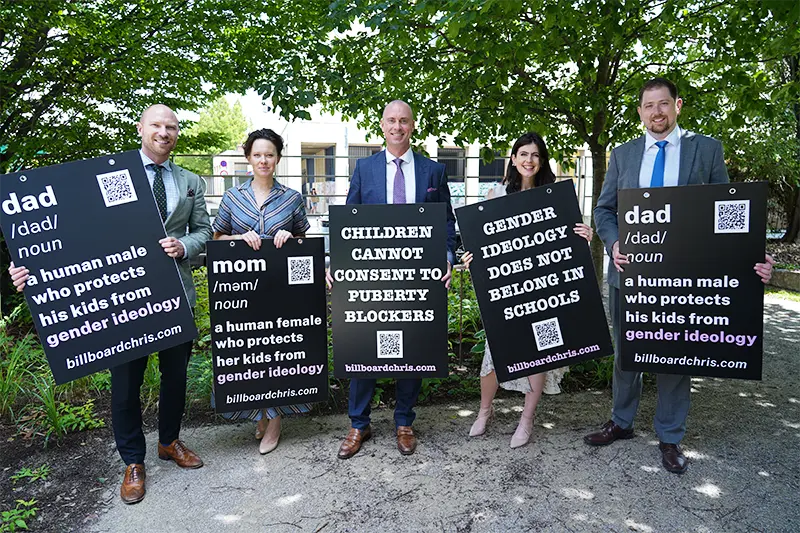
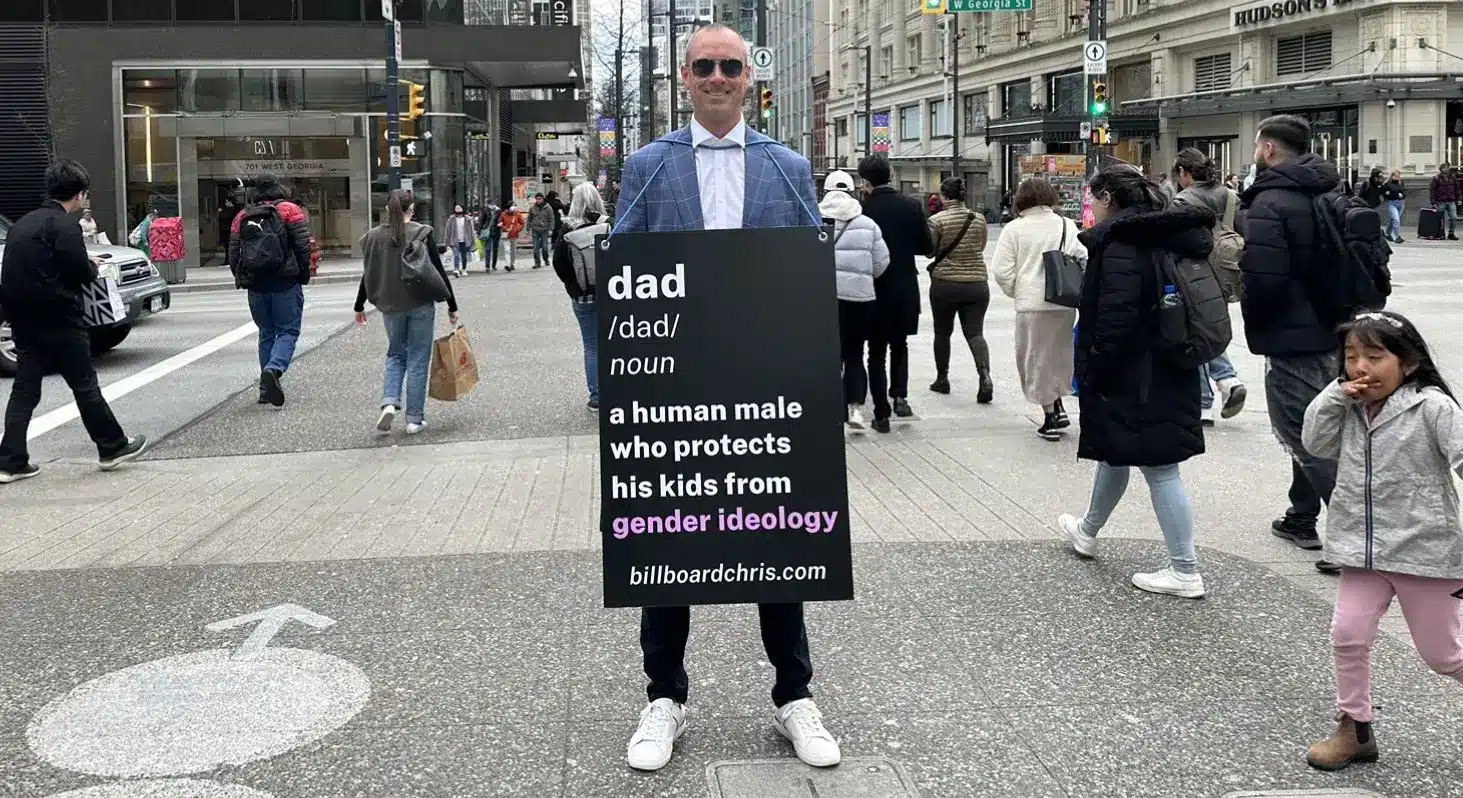
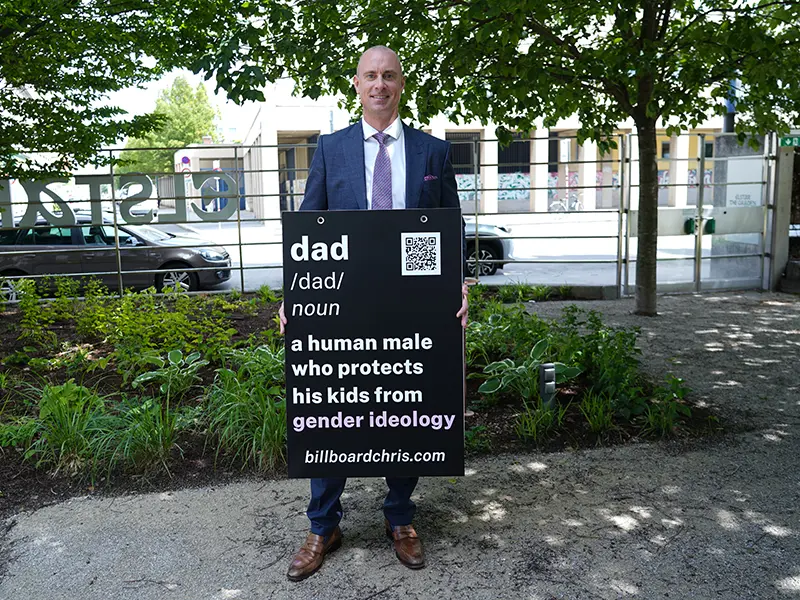
Pictured: “Billboard Chris” (Chris Elston); Chris Elston with the ADF International team supporting his case
“Billboard Chris” fined, threatened with arrest in Brisbane days ahead of “ultimate” court challenge against government online censorship
- Campaigner’s “X” post highlighting unsuitability of transgender activist serving on WHO “panel of experts” currently geo-blocked in Australia
- Musk’s “X” and Canadian “Billboard Chris” to bring case against Australian “eSafety Commissioner” over censored post, March 31st-April 4th
- “Billboard Chris” forcibly moved while having street conversations in Brisbane days ahead of hearing
MELBOURNE (25 March 2025) – Canadian internet sensation and children’s safety campaigner “Billboard Chris” was threatened with arrest, fined 806 Australian Dollars (AUD), and forcibly moved in Brisbane today after conducting consensual conversations with members of the Australian public.
Video footage shows Chris Elston, who has almost 500k followers on social media platform “X”, freely invite conversations with members of the public in an open area in Brisbane city center.
The campaigner wore a sign saying “children cannot consent to puberty blockers” as a means of inviting open conversation and debate on this topic.
Despite the video footage showing that the public could freely move around Elston and choose whether or not to engage in conversation, the Canadian dad of two was nevertheless accused of “obstructing people”, issued the fine, and forcibly removed from the area by police.
The “litmus test” case for international free speech
Chris Elston is currently in Australia for a legal free speech challenge which has been described as a “litmus test” for the international protection of the right to free speech against government censorship.
On 28 February 2024, Elston took to “X” to share a Daily Mail article titled “Kinky secrets of UN trans expert REVEALED”.
The article, and accompanying tweet, criticised the appointment of Australian transgender activist Teddy Cook to a World Health Organization “panel of experts” set to advise on global transgender policy.
Cook complained about the post to Australia’s eSafety Commissioner, who requested that “X” remove the content. The social media platform owned by free speech advocate Elon Musk initially refused, but following a subsequent formal removal order from the Commissioner, later geo-blocked the content in Australia. X has since also filed an appeal against the order at the Administrative Review Tribunal in Melbourne.
Billboard Chris, with the support of ADF International and the Australian Human Rights Law Alliance, and alongside Elon Musk’s “X”, is appealing the violation of his right to peacefully share his convictions.
The case will be heard in Melbourne for five days on the week beginning March 31st.
Members of the public are invited to support Chris’s legal case here: https://adfinternational.org/campaign/support-billboard-chris
Chris Elston, a.k.a “Billboard Chris”, commented:
“No child has ever been born in the wrong body. As a father, I have grave concerns about the impact of harmful gender ideology on our children’s wellbeing. This reality is being increasingly recognised around the world, with government after government ordering a review into the use of toxic puberty blockers. This is a serious issue with real world implications for families across the globe and we need to be able to discuss it.
“Children struggling with distress regarding their sex deserve better than ‘guidelines’ written by activists who only want to push them in one direction.”
Ahead of the court date, Robert Clarke, Director of Advocacy for ADF International, who is serving as part of Billboard Chris’s legal team, said:
“This significant legal showdown with Australian authorities represents a litmus test for free speech in a world seeing increasing push back against global censorship.
“We’re used to hearing about governments silencing or punishing citizens for their ‘wrong’ speech in parts of the world with strict blasphemy laws – but now, from Australia, to Mexico, to across the EU, we see Western governments increasingly take authoritarian steps to shut down views they don’t like, often by branding them as “offensive”, “hateful”, or “misinformation.”
“In a free society, ideas should be challenged with ideas, not state censorship. For years, Chris has been speaking an important truth to which many in Australia are now waking up – children cannot consent to puberty blockers.
We’re proud to stand with Billboard Chris in defending the right to live and speak the truth.”
Images for free use in print or online in relation to this story only
PICTURED: Chris Elston (x2); Robert Clarke (ADF International); Elston with the ADF International team supporting his legal defence
Elternrechte in Gefahr: Der Kampf um den Schutz der Kinder [German only]
In diesem bewegenden Panelgespräch berichten zwei betroffene Mütter von einem Vorfall, der zeigt, wie Kinder in der Volksschule mit nicht altersgemäßen Inhalten konfrontiert wurden – und wie der Staat darauf reagiert hat.
Continue readingPakistani Christian girl’s forced marriage annulled in win for religious freedom
- Christian 18-year-old Shahida Bibi’s forced conversion to Islam and forced marriage to her stepfather’s brother have been annulled by a court in Pakistan.
- Minority women and girls, often Christian, in Pakistan face dual threat of forced conversion and marriage; ADF International supports their defence to end this human rights abuse.
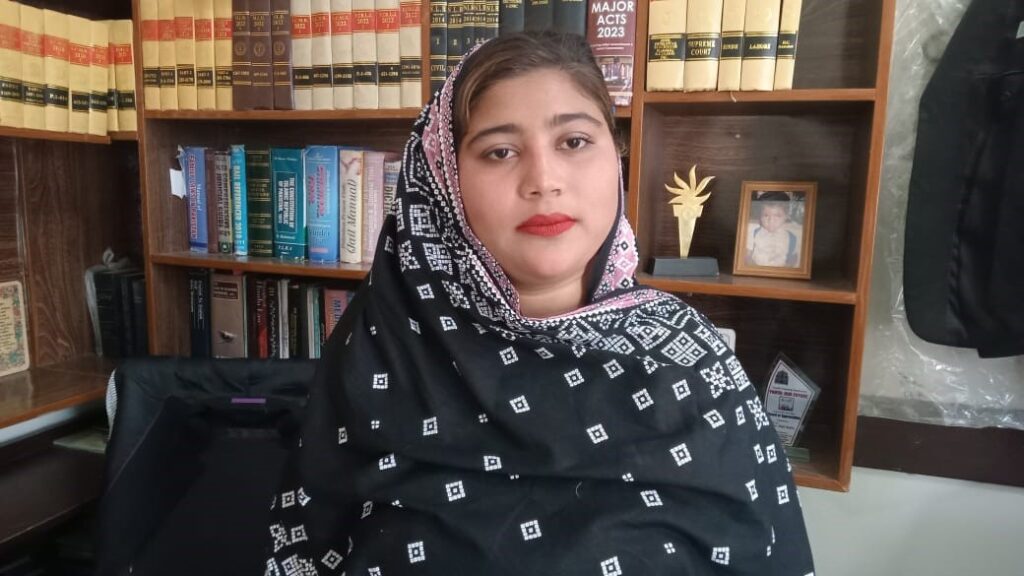
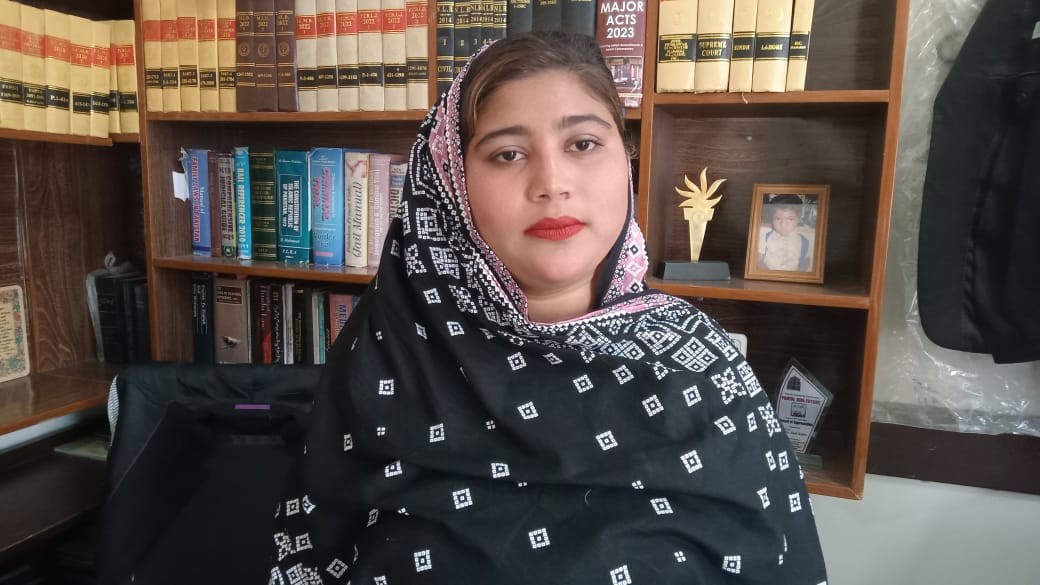
Pictured: Shahida Bibi
PAKISTAN (10 March 2025) – Shahida Bibi is now free to return home to her father and to her Christian faith after a court in Pakistan annulled her forced conversion and marriage to her stepfather’s brother. Bibi was 11 years old when her mother eloped with a Muslim man, who then “gave” Bibi to his brother. Bibi went on to give birth to two children, and the brother contracted Islamic Nikah, or a marriage union, to Bibi when she turned 18 in order to escape prosecution under the anti-child marriage law.
In February 2025, a civil court in Bahawalpur, Pakistan issued a decree in favor of Bibi and ordered that Bibi’s forced marriage be dissolved on all identification documents. Bibi was issued new documents that correctly state her religion as Christianity. ADF International and allied attorneys supported Bibi’s legal defence.
Globally, 100 million girls are at risk of being forced into child marriage over the next decade, according to UNICEF. The threat for girls from religious minorities, particularly in certain parts of Asia and Africa, of also being coerced into changing their religion in connection with a forced marriage is particularly acute. In Pakistan, for example, more than 1,000 girls from religious minorities are forced into conversion and marriage every year.
“Nobody should suffer the horrors of abduction and forced marriage, further being forced to give up their faith,” said Tehmina Arora, Director of Advocacy, Asia for ADF International. “We are grateful that Shahida Bibi has received justice over her captor. Shahida is now free and able to begin the process of healing from this ordeal. These cases are a tremendous violation of these young women’s basic human rights, including their religious freedom.”
ADF International and allied lawyers are engaged in supporting women and girls suffering from forced marriage in light of the recurring issue where women and girls, often Christian, are forced to convert to Islam for their marriage to be validated by a Sharia court.
Girls from minority religions face acute risk globally
Under Sharia law, which permits marriage at the age of puberty, the marriage age is lower than the official marriage age, which varies between 16 and 18 years in different Pakistani states. When girls are forced to convert, their parents often are unable to stop the violation from happening. These women and girls often are fearful for their lives and those of their families, preventing them from denouncing their captors.
“While these forced conversion and marriage abuses happen across the globe, they are especially prevalent in Pakistan. In coordination with our allied lawyers in the country, we are taking every step possible to prevent these situations from occurring. The government has an opportunity to make a difference, and they should start by implementing a uniform age for marriage to prevent these forced kidnappings and marriages from happening in the first place. Every person under international law has the right to freely choose and live out their faith without fear of violence. Every state, including Pakistan, must ensure that their laws and policies are in line with their commitments to protect religious freedom under international law, and that the laws they do have in place to protect girls from these violations are enforced,” Arora continued.
International spotlight on Pakistan
The victory in Shahida Bibi’s case comes as human rights leaders from across the globe are turning their attention to Pakistan’s egregious human rights violations.
In January 2025, officials from the European Union issued a warning to Pakistan regarding their human rights violations, including blasphemy laws, forced conversions, and other targeted persecution against religious minorities. If not addressed, Pakistan’s trade relations with the EU could be jeopardized.
In 2024, Senators Chris Coons (D-DE), James Lankford (R-OK), Tim Kaine (D-VA), and Thom Tillis (R-NC) introduced a bipartisan resolution that called for the U.S. to “leverage all diplomatic and sanctions tools available to the United States Government to hold religious freedom violators accountable for their actions”. The resolution specifically points to religious freedom violations, including forced marriages and conversions, in Pakistan, among other countries. The resolution was widely supported by religious freedom advocates and organizations from across the globe.
ADF International has highlighted the testimonies of survivors of forced marriages and conversions in a mini-documentary.
Images for free use in print or online in relation to this story only.
WIN in Pakistan for Christian fraudulently “converted” by employer in attempted enslavement
- Sufyan Masih, a 24-year-old Pakistani Christian, was fraudulently designated as a Muslim on his National Identity Card by his employer to falsely “convert” and enslave him.
- Authorities in Pakistan systemically deny and delay changes to ID cards with significant human rights implications; Backed by ADF International, Masih’s identity card has been corrected to “Christian” after a 6–year legal ordeal.
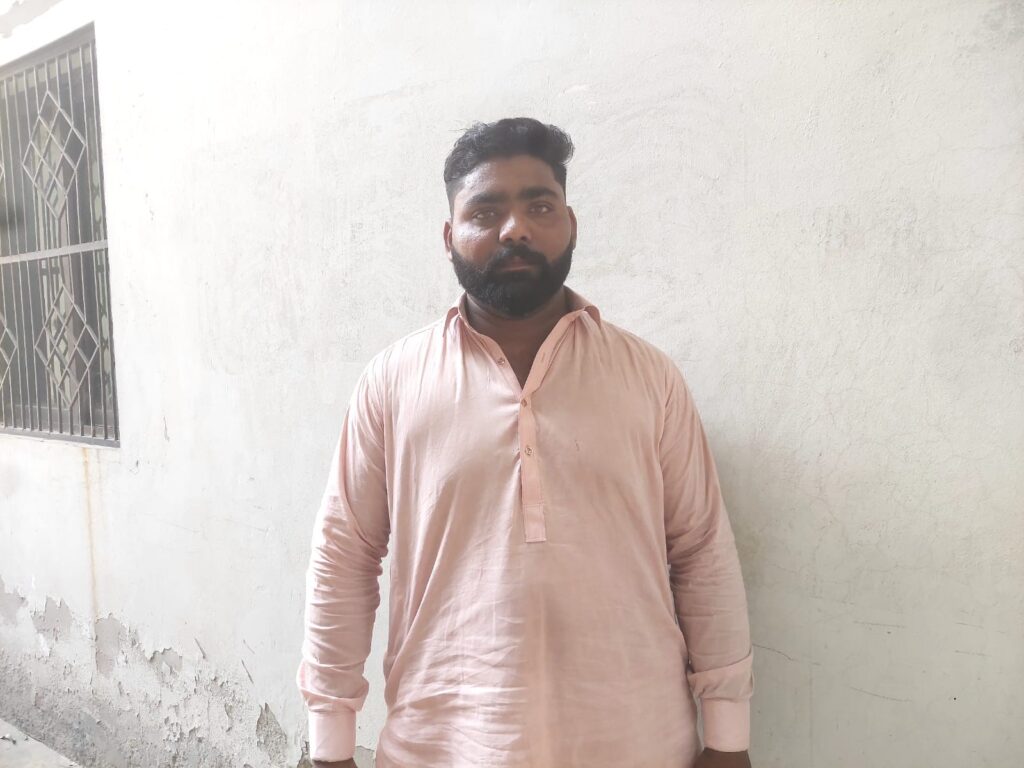
Pictured: Sufyan Masih
Kasur District, Pakistan (04 March 2025) Sufyan Masih, a 24-year-old brick kiln worker and Christian, has been legally allowed to register as a Christian following a 6-year-long legal ordeal in Pakistan. Masih was fraudulently “converted” and registered by his employer as a Muslim on his National Identity Card. The employer registered Masih as a Muslim in an attempt to enslave him, including withholding pay and prohibiting him from returning to his family. The employer claimed that he “adopted” Masih when he fraudulently switched his identity to a Muslim.
Masih and all his family members are illiterate and could not understand the ID form. His case is just one of the many examples of targeted harassment through the National Identity Card system.
In a May 2024 verdict, a civil judge in Pakistan rejected Masih’s petition to change his identity to Christian despite his testimony that he was not practicing the Islamic religion. Authorities in Pakistan deny and delay changes to ID cards once someone is registered as Muslim on the basis of the belief that everyone is born Muslim. Muslims are not allowed to change their religion on the ID cards. A change in religion on ID cards is only allowed when you are able to show that there was an error in the record or when you are converting to Islam. As stated by civil judge Mian Usman Tariq in Masih’s 2024 trial: “Islam teaches that everyone is Muslim at birth but the parents and society cause one to deviate from the straight path”.
Desperately attempting to recover their son, Masih’s family turned to ADF International for legal support. On appeal, a civil judge in Pakistan has now upheld Masih’s right to correct his identity card to reflect his Christian faith, noting that Masih was a victim of false “conversion”.
The end of Masih’s legal ordeal, just one of many examples of systematic religious persecution in Pakistan, comes as officials from the European Union issued a warning to Pakistan regarding its human rights violations, including blasphemy laws, forced conversions, and other targeted persecution against religious minorities. If not addressed, Pakistan’s trade relations with the EU could be jeopardized.
“We are thankful that Sufyan Masih finally is able to freely live and identify as a Christian following so many years of extreme hardship,” said Tehmina Arora, ADF International’s Director of Advocacy for Asia.
“This is yet another example of how laws in Pakistan are weaponized to punish and target Christians. Pakistani authorities make it extremely difficult to “stop” being a Muslim once you are designated as such. This presents a major problem for Christians like Sufyan when they are illegally converted to Islam on their identification documents, which is a pervasive problem and egregious violation of religious freedom. We are grateful for the precedent that is set by this victory, and hopeful that it will go on to protect Christians and other religious minorities in Pakistan who are unjustly persecuted because of their faith.”
Case Background
ADF International allied lawyers filed a petition on Masih’s behalf in September 2022 after the National Database and Registration Authority (NADRA) in Pakistan refused to accept Masih’s requests to correct his religious designation and his name on his national identity card. During the proceedings, allied lawyers submitted evidence, including Masih’s baptism certificate, and presented Masih’s Christian parents in court as evidence of his Christian identity. In addition, Masih himself told the court that he continued to practice his Christian faith and was not a Muslim.
Following the May 2024 verdict in which a civil judge rejected Masih’s petition to identify as Christian, ADF International’s allied lawyers challenged the civil court’s decision in the court of Ahmad Saeed, an additional district judge in Pattoki, who in November 2024 set aside the earlier verdict, holding that Masih was a victim of fraudulent “conversion” by his employers.
Following this court decision, Masih has been able to get his National Identity Card correctly updated to reflect his Christian faith.
Denial of Religious Freedom
Apostasy is considered a sin punishable by death under most schools of Islamic jurisprudence. Although there is no specific law in Pakistan to deny Muslims their right to change religion, apostasy may be punished under Section 295-A of the country’s blasphemy statutes, which imposes up to two years imprisonment for “outraging the religious feelings of any class of citizens.”
In this case, Masih faced the risk of being branded as an apostate or his family members being accused of blasphemy given the appearance that he was converting away from Islam to Christianity, although in reality he was never a Muslim.
International law guarantees the freedom to change one’s religion, along with the right to practice it either publicly and privately. Pakistan is a state party to the International Covenant on Civil and Political Rights, which enshrines the right of every person “to have or to adopt a religion or belief of his choice, and freedom, either individually or in community with others and in public or private, to manifest his religion or belief in worship, observance, practice and teaching.”
“What has happened to Masih and hundreds of others who suffer similar legal abuses in Pakistan is a clear violation of the right to religious freedom guaranteed under international human rights law. Further, Article 20 of Pakistan’s Constitution allows citizens the right to profess, practice and propagate their religion. Masih’s case shows how this fundamental right is being systematically denied, perpetuating a culture where Christians and other religious minorities suffer violations of their basic human rights,” Arora continued.

Images for free use in print or online in relation to this story only.
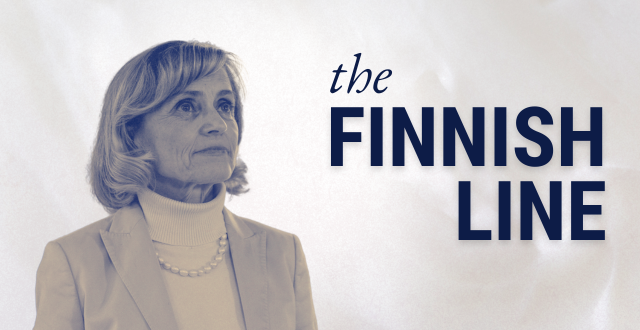
The Finnish Line: The Supreme Case of Päivi Räsänen After 6 Years
A Nation Watches as One of Its Most Respected Leaders Goes to the Supreme Court for Speaking Her Faith
Update Sept. 2025: The Finnish Supreme Court has set the date for an oral hearing on 30th October 2025.
The case of Finnish MP Päivi Räsänen is more than a legal battle; it’s a test of Europe’s commitment to democratic values.
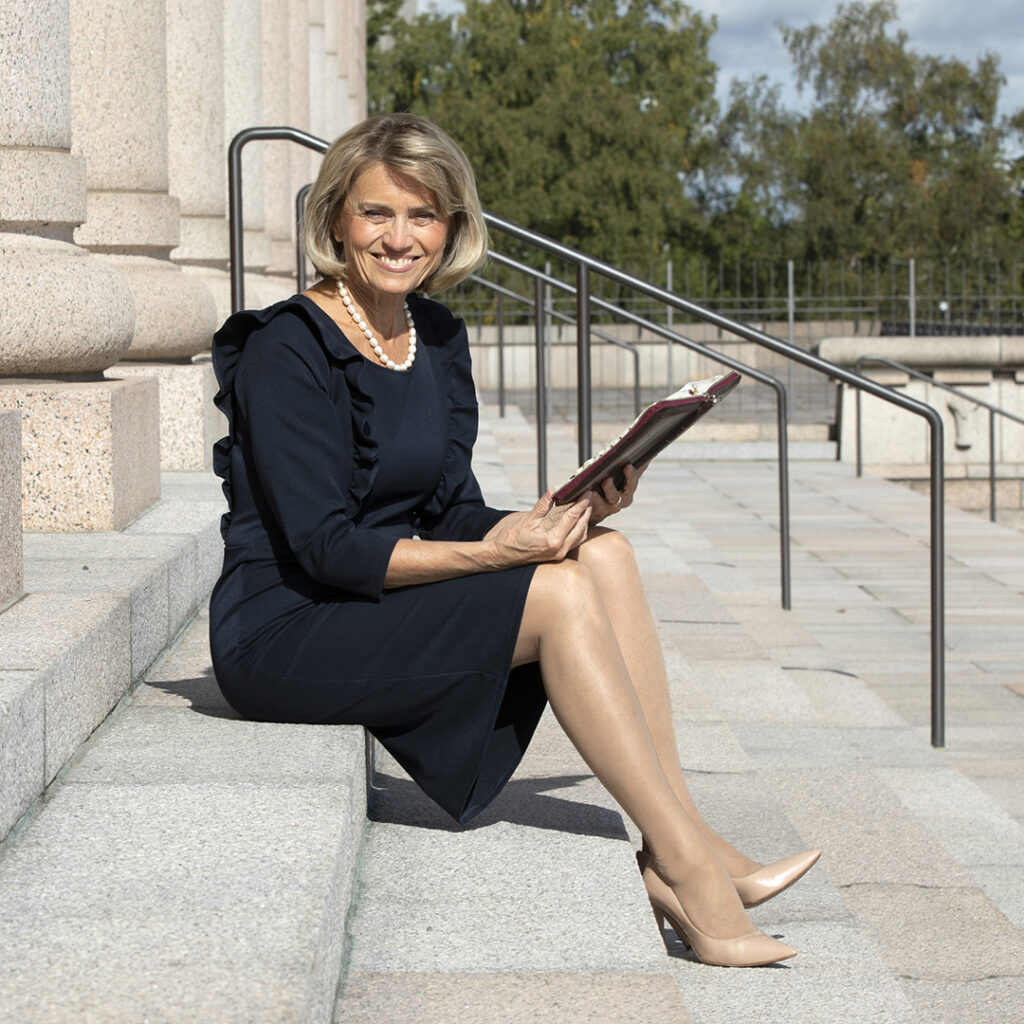
As one of Finland’s most respected politicians, Päivi now faces the Finnish Supreme Court for peacefully expressing her Christian beliefs online.
Her story is a powerful reminder of what it means to be a Christian in today’s pervasive culture of censorship. It also demonstrates unwavering faith in the face of prosecution and punishment for so-called “hate speech”.
ADF International is proud to stand alongside Päivi as her legal ordeal reaches its 6th year.
A Life of Conviction
Päivi was still a very young girl when her parents decided she could go to the church in their small village of Konnunsuo, just inside the Finnish border from Russia. It’s a region known for hundreds of beautiful lakes and one less beautiful prison, where Päivi’s father worked, tending the gardens. While he and his wife were not Christians, they respected the faith and didn’t feel it would do little Päivi any harm to learn a bit of the Bible.
Time would prove them both wrong and right about that, but as a child, Päivi was fascinated with the things she learned in those Sunday morning classes.
“It was very, very affecting and important for me,” she remembers, nearly six decades later. “I was about 5 or 6 years old, and I remember well, even at that age, those talks the teachers shared with us about Jesus.”
Biblical concepts like grace and sin, salvation and judgment, she says, “were so concrete. Even as a small child, you have to think about these issues. And I remember praying that I would have my sins forgiven, and that Jesus would come into my life.”
How seriously Päivi took her new conversion became clear shortly afterward, when the prison warden came riding along the road by her family’s house on his bicycle. She urgently waved for him to stop. He did, looking down into her big, earnest, little-girl eyes to ask what was wrong.
“Do you love Jesus?” she asked. “You can’t get to heaven if you do not know Him.”
Embarrassed, the warden looked around and saw Päivi’s mother, standing nearby. “You should take your baby out of that Sunday school today!” he yelled. “Before she loses her mind!”
If her mother was concerned about her husband’s boss’s opinion, she didn’t show it. Päivi stayed in Sunday school. But it was by no means the last time Päivi spoke up for her faith. Or drew sharp opposition for doing so.
The Start of Päivi’s Career
Although she went to the University of Helsinki to study medicine, Päivi spent at least as much time there sharing her faith. For five years, she led a student missionary group in weekly door-to-door visits around campus, drawing other young people into discussions about moral values and cheerfully engaging them with the Gospel of Jesus Christ.
“It was an important time in my life,” she remembers, “an important schooling. Every week, I was discussing quite difficult issues with students from different backgrounds and areas of study. I had to think very thoroughly about how my faith stands — how the Bible stands — in the face of these difficult questions. I learned to discuss ideas. I learned to debate.”
Her extracurricular evangelism also changed her life in another way. Twice during those years, Päivi joined other Christian students from all over Finland on mission trips to London, led by a tall, smiling young man named Niilo Räsänen.
He and Päivi took a shine to each other, began to date, and soon were married. They went on to raise four daughters and a son, as Niilo became a pastor in the Evangelical Lutheran Church and head of one of the denomination’s seminaries.
Päivi, meanwhile, went into general practice medicine. She quickly developed a reputation as both an excellent doctor and a thoughtful, outspoken defender of life.
“I had decided already during my studies that I would not end the life of a child in the womb,” she says. In her spare time, she wrote books and pamphlets on the subject. That led to television and radio appearances, where she drew on those debate skills she’d honed back in college. Her strong, winsome arguments began to attract wide attention. People asked if she was interested in standing for office — perhaps campaigning for a seat in Parliament.
“At first I refused,” she says. “I thought it was not my place.” But people continued to urge her to run … and one of those urging was her husband.
“Actually, I think I was the first,” Niilo says. “But she wasn’t interested.” One day, though, he drove her through Helsinki, past the building where Parliament met. He pointed at the building. “Look at your future workplace,” he told her.
The 1990s brought a severe economic recession to Finland. Päivi’s patients were hit hard by what was happening and often poured out their worries to her.
“I could see a lot of problems in people’s lives,” she says — problems born of what was happening in her country’s politics and culture. “I thought I would like to try and influence the society and improve the welfare of the people. To not only give them medicine, but to try to heal the consequences of these problems.”
A person in Parliament could do that, she decided. The next time someone suggested she stand for office, Päivi was ready. “I answered, ‘Yes.’”
Päivi as a Parliamentarian
Päivi Räsänen has served continually in the Finnish Parliament since 1995. For 11 of those years, she acted as chairman of the Christian Democrats, a party she chose for its support of her Christian values and unswerving opposition to abortion. For four years, she also served as her nation’s minister of the interior, overseeing internal national security and migration issues.
“I have felt, very deeply, that this has been my calling,” she says. “I’ve been happy to have the opportunity to influence our society, our country, and to try to make better living conditions for people, especially families and children and the elderly.
“In some ways, it is very similar to working as a doctor. People come to you to talk about their problems, and then you try to find some solution. That’s been my work in Parliament.” She’s learned, she says, that “politics is one way to show love to your neighbour.”
You might think that attitude would have enhanced Päivi’s interactions with Finland’s religious leaders — “church affairs” was another aspect of her responsibilities as minister of the interior, and her work brought her into contact with most of the prominent clerics of her country.
Still, even knowing these leaders so well, she was stunned to learn, in the summer of 2019, that the Evangelical Lutheran Church of Finland — her own denomination and the one in which her husband served as a pastor — had pledged its full support for an upcoming Helsinki Pride event.
“I knew that our church at that time was already quite divided,” Päivi says, “and there was a lot of progressive liberal thinking among our pastors.” Still, “that the whole church leadership had decided to support the event, publicly and financially, was a strong disappointment to me — and to many other Christians.”
Many friends confided to her their intention to resign from the church. Päivi seriously considered joining them. “I was praying, ‘What should I do now? Should I leave the church, too?’”
The Tweet That Sparked a Trial
But, on her knees, her Bible open before her, “I received a very clear vision,” Päivi says, “that now was not my time to jump out of this sinking boat — that I should try to wake people up. I was especially worried about our young people losing their trust in the Bible, with the leadership of the church teaching something so much against what the Bible teaches.”
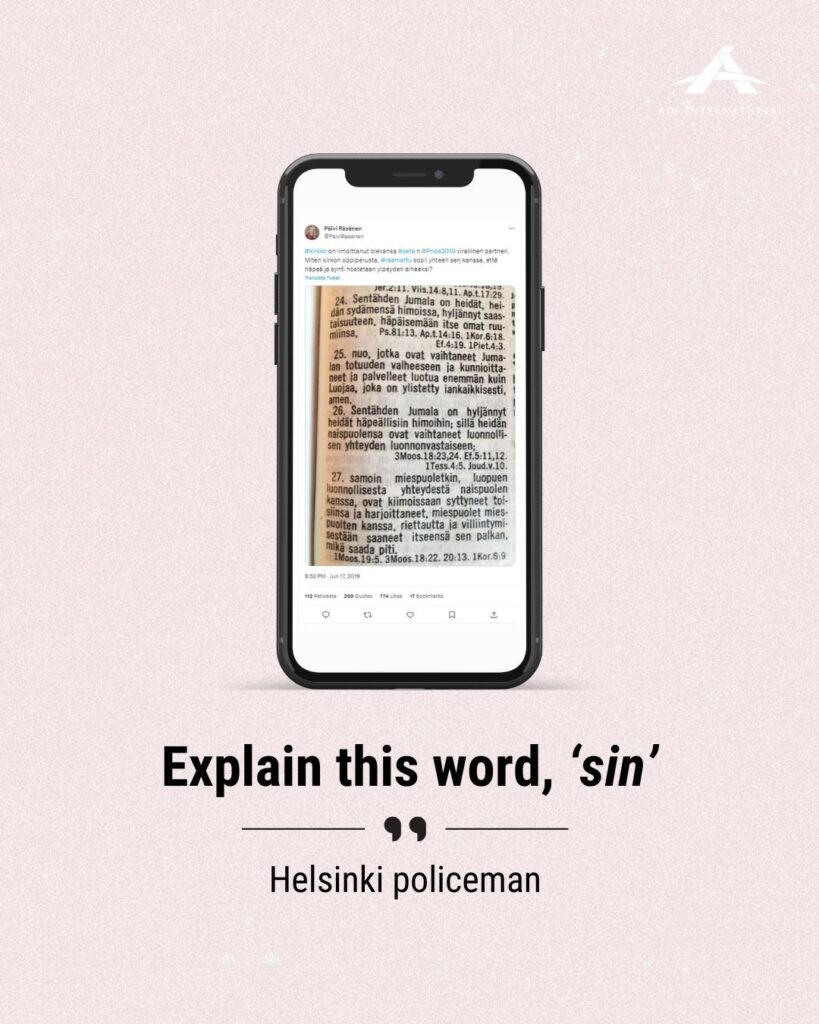
“What the Bible teaches.” After a moment, she reached for her cell phone, turned to Romans 1:24-27, and snapped a photo. She pulled up her X (formerly Twitter) account, attached the picture, called it to the attention of the Evangelical Lutheran leadership, and added one simple question:
“How does the doctrine of the church, the Bible, fit together with the fact that shame and sin are raised as a matter of pride?”
She pressed “Tweet.”
And her life changed, forever.
Päivi’s communique thoroughly rocked “the boat” and woke up everyone in it. Including Päivi.
A few weeks after she had posted the tweet, she opened a newspaper and read — to her astonishment — that local police had received a complaint about her message and were investigating. Their evidence would determine whether the nation’s chief prosecutor would bring her to trial for her beliefs.
“At first, I didn’t believe it,” Päivi says. “I thought, ‘No, no, this must be from a summer intern who doesn’t know what he’s saying.’” But a call to her local precinct confirmed that officers were indeed looking into the matter. When could she come in and speak with them?
Over the next few months, Päivi would be required to sit for a total of 13 hours of police interrogation.
“It was an absurd situation,” she remembers, “sitting there in a small room in the station, being interrogated about my Christian beliefs.” The policeman asking questions kept an open Bible on the table between them. He pointed at it as he probed her theology: “What is Romans about?” “Tell me about the first chapter.” “Walk me through Genesis.” “Explain this word, ‘sin.’”
Päivi found the whole thing almost laughable. “Just a few years before, I was the [cabinet] minister in charge of police, and now I was sitting here, being interrogated.” But the people of Finland understood what was happening: one of the most well-known political figures in their country was being detained at police headquarters for quoting Scripture to bishops.
“Someone joked on social media that maybe we were going to have Bible studies at the police station,” Päivi says, smiling. “But … these discussions were very good. I had the opportunity to [share with] that policeman very thoroughly the teachings of the Bible, from Genesis to the message of the Gospel … because he asked me to.
“Do you really want to hear this?” she asked him. “Because this has been such an important book to me. When I read it, I understand the message of the Gospel: that Jesus has died for my sins.”
“It was lovely,” she says, smiling, “telling that to the policeman.”
She left an impression. “If it were up to me,” he told her, after their last discussion, “you wouldn’t be sitting here. I hope we don’t have to meet like this again.”
Charged With “Hate Speech”
They didn’t. But Päivi had to wait more than a year to learn that the Finnish prosecutor general was formally charging her with three counts of “agitation against a minority group” — one, for publicly voicing her opinion on marriage and human sexuality in a 2004 pamphlet distributed at her church; two, for comments she made on the same topics on a 2019 radio show; and three, for the tweet directed at the leadership of her church.
Under Finland’s criminal code, “agitation against a minority group” falls under the section of “war crimes and crimes against humanity” punishable by tens of thousands of dollars in fines — and up to two years in prison.
Päivi knows better than most the penalty for breaking this particular law. After all, she was a member of the Finnish Parliament when it unanimously adopted these changes to the country’s criminal code 13 years ago.
“In Finland, as in all European countries, you have a law that prohibits so-called ‘hate speech,’” says Elyssa Koren, legal communications director for ADF International. Like most such laws, she says, this one carries with it the possibility of criminal charges. That’s not all the laws have in common.
These laws are often presented, Koren says, as a way “to reduce social tensions, to curb hostility, to foster conditions of peace. It’s a very reductive way of looking at societal problems … the idea that if you have less ‘hate speech,’ you’ll have less hate.” Unfortunately, she says, the laws are also “vaguely worded, overly broad, and don’t define ‘hate.’”
“‘Hate,’ really, is just in the eye of the beholder,” she says. “And what happens is what we’ve seen with this case: people are prosecuted for perfectly peaceful expression in the name of preventing ‘hate.’” When the law was passed in the Finnish Parliament, “nobody was much aware what the consequences would be. Päivi’s case is the litmus test for how the law will be applied to religious speech.”
Päivi says she sees now that she and her colleagues underestimated the implications of the law they all voted for. Many serving with her in the Finnish Parliament, she says, believe that “if I were to be convicted, then we would have to change the law.
“I’m not the only one in Finland who has spoken and taught about these issues,” she says. “There are thousands and thousands of similar writings. If my writings are banned, then [many] sermons and interviews and writings would be in danger. If I were convicted, it really would start a time of persecution among Christians.”
Which, unfortunately, seems to be the idea.
“‘Hate,’ really, is just in the eye of the beholder.”
Päivi Räsänen
Faith Under Fire
Päivi and her co-defendant — Bishop Juhana Pohjola, who is charged with publishing the 2004 pamphlet on marriage and sexuality Päivi shared with her church — were stunned when the prosecutor opened her case against them by showing Bible verses on a courtroom screen. Her ignorance of Christian theology was palpable, and she made no secret of her determination to see Päivi and Bishop Pohjola punished for views so contrary to contemporary secular morality.
“It’s become clear,” Koren says, “that they are not prosecuting Päivi Räsänen … they’re really prosecuting the Bible and Christian beliefs at a very high level. What’s at stake is the fundamental question of whether people — particularly people in the public eye — have the freedom to voice their Christian convictions in the public space.”
“What the prosecutor essentially is calling for,” says Paul Coleman, Executive Director of ADF International, “is the criminalization of the orthodox Christian position on fundamental Christian doctrine regarding marriage, sexuality, sin, and so forth. It’s shocking to see such brazen anti-Christian legal argumentation within a criminal context.”
Even more unsettling, Coleman says, is the fact that “there’s nothing unique about the situation in Finland. It doesn’t have worse law than anywhere else. It has a better legal system than most places. If this can happen in Finland, it can happen in any Western country.”
In fact, he says, “the same censorial sentiments exist in the U.S. — at all heights of power. On almost every college campus. In all of the major companies, particularly Big Tech. They exist in much of the U.S. political system and in the mindset of many law professors.
That line — between what we’re seeing take place in Finland and what could very soon happen in the U.S. — is far smaller than most people realize. Or want to admit.”
A Ruling Due Before the Supreme Court
In March 2022, the Helsinki District Court unanimously acquitted Päivi and Bishop Pohjola of all charges, saying, “It is not for the district court to interpret biblical concepts.” A month later, the prosecutor appealed that ruling — something she is allowed to do under Finnish law. In November 2023, the Helsinki Court of Appeal confirmed the lower court’s acquittal.
The prosecutor then appealed both decisions to the Finnish Supreme Court, which has agreed to hear the case.
What the prosecution has secured, Koren says, “is another year or two during which Päivi is still under this pressure. Her reputation and her integrity as a civil servant are clouded by the fact that she continues to be criminally prosecuted for her peaceful expression.”
Still, Niilo says, “We don’t worry. Whatever happens, we will take it as God’s will and see what comes next.”
“It’s remarkable,” Päivi says, “how God uses this.” From the beginning, she says, “I had a deep, deep feeling this was in God’s hands, that He was opening a door. There’ve been so many opportunities to testify about Jesus … before these courts, in front of police officers, even to those who vehemently disagree with me. It’s given me a lot of joy.
“I’ve received messages from people who’ve told me that, as they’ve followed the trials and listened to my interviews, they’ve started to read the Bible and pray. They’ve found Christ.
“I got a call from a 22-year-old man who told me that he knew almost nothing about Christianity but was listening to a radio interview where I said, ‘If you want to know Jesus, you can pray, He will come into your life.’ He has been a Christian now for over two years. Jesus came into his life.”
As a lawyer who feels called to defend freedom of religion and speech,” Coleman says, “it’s been the great privilege of my career to be [able] to support and defend Päivi. I’m not exaggerating by saying she is, ultimately, the reason why we exist.
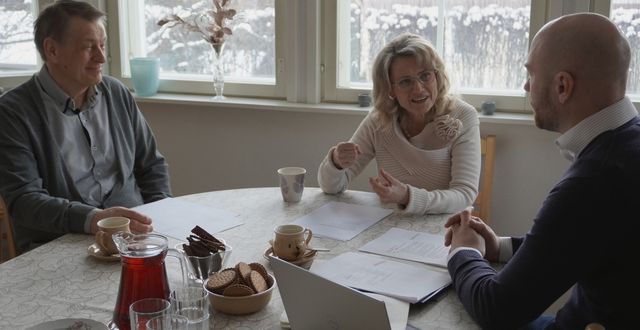
“She’s tough. Really tough. Yet … always smiling, always kind. Over the past five years, I’ve sat through two trials with her, sat around her kitchen table, seen her in every context in between. She’s just such an unbelievably authentic person. The same in every context, whether being cross-examined for her faith, or hosting us for dinner after the hearing.”
During one hearing, Coleman says, “the prosecutor — who, bear in mind, has said horrible things about her and wants to put her in jail — was visibly unwell. And, at one of the breaks, Päivi just went over to sit with her, ask how she was doing, connect with her on a human level.
“She wasn’t doing it for the cameras,” he says. “No one saw it. But I thought, ‘What a remarkable person this is.’ It’s just such a privilege to be called as a ministry to stand alongside her and say, ‘We’ve got your back.’”
“I have received much more during this legal process than I have lost,” Päivi says. “When I was young, I read from those texts where Jesus says that, when they take you in front of courts and kings, you’ll be His witness, and He will provide what to say. I could never have believed I would ever be in this kind of situation. But I think it’s increased my trust in God.
“What I’ve found is that what God has promised, He is faithful [to do]. He really works as He has said. Jesus is alive, and He stands by His word. And He is good.”
Conclusion: The Assault on Freedom of Expression
At the heart of Päivi’s case is a growing trend across Europe: the weaponization of vague and subjective “hate speech” laws to suppress peaceful expression. The implications of this case extend far beyond Finland. What does this mean for ordinary European citizens if a respected parliamentarian can be prosecuted for a tweet?
International law, and that of Finland, guarantees freedom of speech and religion, yet cases like Päivi’s show how these rights are increasingly being violated or reinterpreted to serve ideological ends. If she were to be convicted, it would mark a dangerous shift towards state control over individual freedoms.
The principle at stake is not whether one agrees with Päivi’s beliefs. It’s whether a European democracy can still allow space for diverse opinions in the public square. Once the state decides which views are acceptable and which are not, the door opens to widespread censorship.
Europe’s commitment to democracy demands better. The Finnish Supreme Court now has a decision to make, and the world is watching. Time will tell, but one thing is certain: Päivi Räsänen will not be silenced.
ADF International is honoured to stand by her side, just as we’ve done for the last six years.
Protected: Censored: How European “Hate Speech” Laws are Threatening Free Speech
There is no excerpt because this is a protected post.
Continue readingMexican Government Ignores Inquiry from International Human Rights Body Into Politician Censored and Convicted for Twitter/X posts on Gender
- Former Mexican congressman and presidential candidate Gabriel Quadri was convicted as a “political violator against women” for Twitter/X posts on gender.
- ADF International represents Quadri before the Inter-American Commission on Human Rights; Mexico has failed to respond, prompting expedited consideration before the body.
WASHINGTON, DC (18 February 2025) Gabriel Quadri, a former congressman and presidential candidate from Mexico, was convicted in May 2022 as a “political violator against women” for posts on Twitter/X expressing concerns about gender ideology. Specifically, Quadri commented that it was unfair for men who identify as women to take spaces in Mexico’s Congress reserved for women.
The highest electoral court in Mexico ruled that Quadri’s posts were discriminatory and ordered him to delete his posts, issue a compelled public apology, and be registered as a gender-based political violator—censorship measures that infringed on his civil and political rights as a Mexican citizen and breach his human right to free speech.
Quadri appealed to the Inter-American Commission on Human Rights with the legal support of ADF International, demanding that the Mexican state be held accountable for violating his freedom of expression. In March of last year, the Mexican government was prompted to respond to the case. Failing to do so, the Commission has announced that Quadri’s case will be moving forward without Mexico’s response.
“Mexico’s failure to respond to Gabriel Quadri’s case before the Inter-American Commission on Human Rights evinces a clear disregard for the basic human right to free speech. We are pleased that his case nevertheless will progress, and are hopeful that Mexico will be held accountable for its obvious human rights violations,” stated Julio Pohl, legal counsel for ADF International.
“The Mexican government has seriously violated Quadri’s free expression rights, and it’s time for the Commission to act decisively for justice in his case and in defense of the free speech rights of all Mexicans.”
“Gender based political violence” conviction
Mexico has in place a law requiring equal representation of men and women in Congress. Quadri’s Twitter/X posts made the point that it is unjust for males to take advantage of the law to gain access to political positions designated for women.
On February 8, 2022, Quadri posted on Twitter/X: “We should legislate to prevent that men that make themselves pass as women compete unfairly against women in organized sports, and that they do not usurp the political electoral positions that belong to women…”
On February 16, 2022, he posted: “Let it be clear. In the House of Representatives of the 65th Legislature there is no parity between men and women. There are 252 men and 248 women, thanks to trans ideology and/or gender ideology. Men enter through the back door to (once again) displace women…”
Salma Luévano, a MORENA then-member of Congress who identifies as a transgender woman, filed a complaint regarding the posts before the National Electoral Institute resulting in Quadri’s conviction. Luévano gained notoriety for fomenting unrest within Mexico’s Congress, including an incident where the president of the chamber was physically wrestled from his chair amidst calls to expel Quadri from the chamber.
The Court ordered the following punitive measures following Quadri’s conviction: requirements to (i) delete the tweets, (ii) issue a public apology drafted by the Court and post a summary of the ruling on Twitter/X for 15 days, at two set times per day, (iii) complete two courses on gender-based violence and transgender violence, and (iv) be listed as a “gender-based political violator” on a national registry for two years and nine months.
With the exhaustion of domestic remedies, ADF International petitioned the Inter-American Commission for justice for Quadri in December 2022. In January 2024, more than a year from the filing, the Commission called on the government of Mexico to respond. Now in 2025, after a failure by the Mexican government to respond, the case is moving forward within the Commission.
Former Mexican Congressman Rodrigo Iván Cortés also was convicted for “gender based political violence” for social media posts. His case is pending before the Commission.
Images for free use in print or online in relation to this story only.
As Rumble Returns to Brazil, International Free Speech Expert Investigates Brazilian Censorship Crisis with Visit
- Rumble returns to Brazil just before Special Rapporteur for Free Expression meets with Brazilian lawmakers to investigate Brazil’s free speech violations.
- ADF International is representing five Brazilian lawmakers before the Inter-American Commission, asking the body to hold Brazil accountable for egregious censorship.
You are currently viewing a placeholder content from YouTube. To access the actual content, click the button below. Please note that doing so will share data with third-party providers.
More InformationBRAZIL (17 FEBRUARY 2025): The Inter-American Commission on Human Rights’ Special Rapporteur for Free Expression, Pedro Vaca, conducted an official visit to Brazil this week to investigate ongoing free speech violations by Brazilian authorities. The investigation follows multiple filings with the Commission as a result of escalating state censorship in the country, dating back to 2019, reaching a head in September with the suspension of X (Twitter).
Vaca met with Brazilian lawmakers, whose censorship case is represented by ADF International before the Inter-American Commission. His visit follows the return of Rumble, a free speech video platform, to Brazil on February 9th. The platform had withdrawn its services in the country due to censorship demands.
Julio Pohl, legal counsel for ADF International, stated:
“Every Brazilian has the human right to free speech, but the fact is that millions of Brazilians have been subjected to unlawful censorship. The Special Rapporteur’s visit to Brazil signals that Brazil’s egregious human rights violations have not gone unnoticed. While the return of Rumble is an excellent step, there is significant work to be done. Censorship has no place in a free society, and it’s time for the Inter-American Commission on Human Rights to exercise its authority to hold Brazil accountable for the clampdown on free speech.”
Marcel van Hattem, member of the Chamber of Deputies for Brazil and one of the legislators who filed the petition, commented:
“We must continue to push back against censorship in our country, and put a stop to those who are abusing their power. What we have seen time and again in Brazil is an egregious silencing of political voices, citizens, journalists, or anyone who might share different viewpoints from Judge Alexandre de Moraes, President Lula da Silva, or others in control. We can’t afford to lose Brazil to authoritarianism, and I am grateful to the Special Rapporteur for taking an urgent look at this crisis. These attempts to silence and censor cannot be allowed to stand.”
Left to right: Senator Eduardo Girao, Members of the Chamber of Deputies Marcel Van Hattem, Adriana Ventura, Ricardo Salles and Gilson Marques.
The Commission has jurisdiction over Brazil as a State Party to the American Convention on Human Rights. The American Convention robustly protects freedom of speech.
Images for free use in print or online in relation to this story only.