Finnish MP Päivi Räsänen submits testimony before Canadian Senate Human Rights Committee on C-9 “Hate Speech” Bill

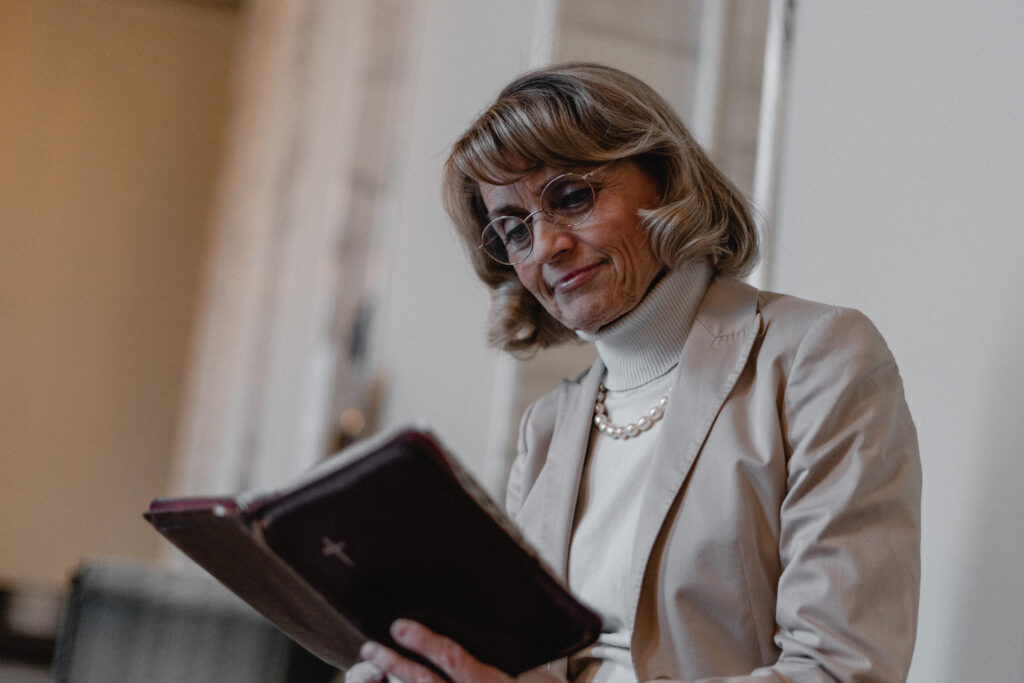
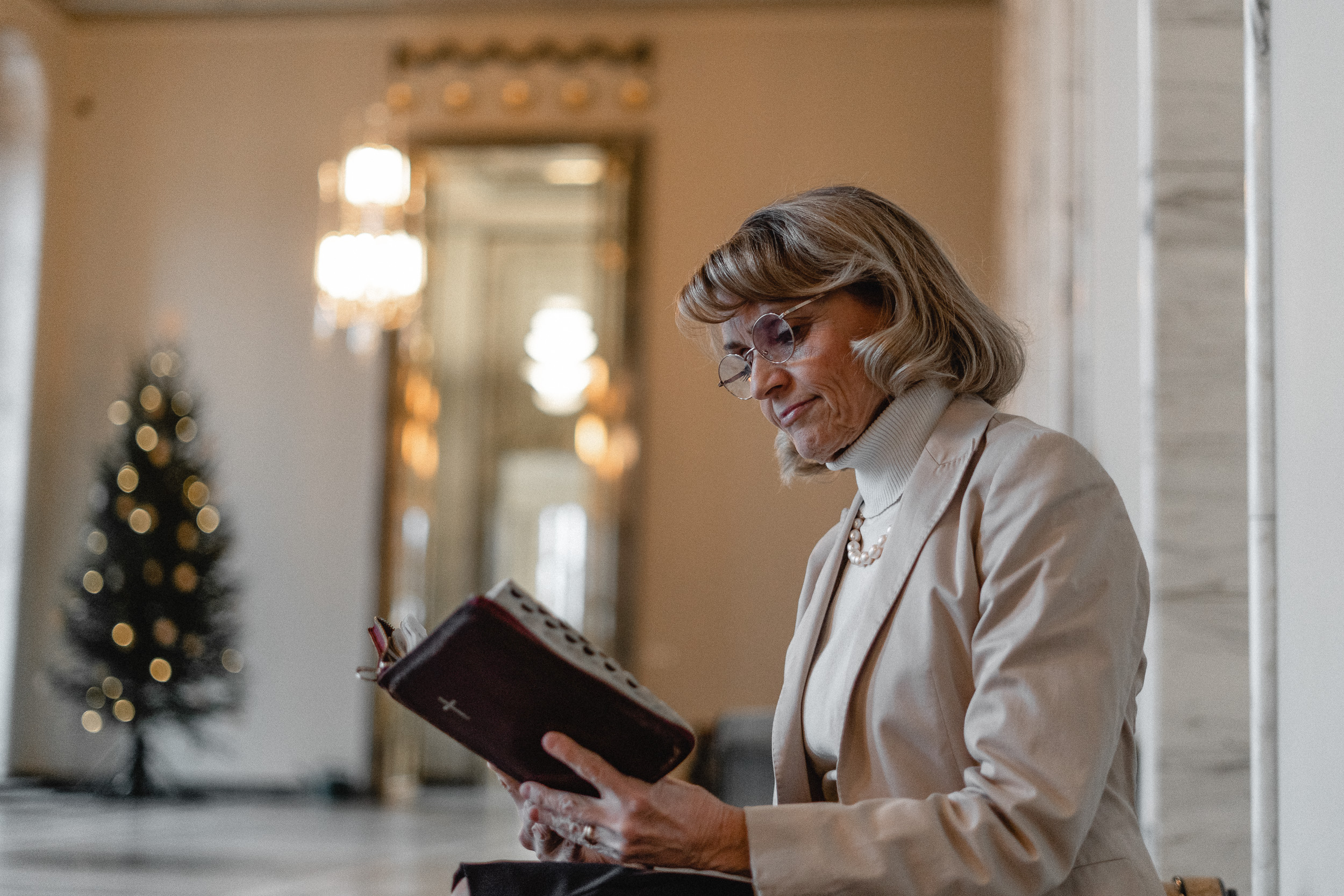
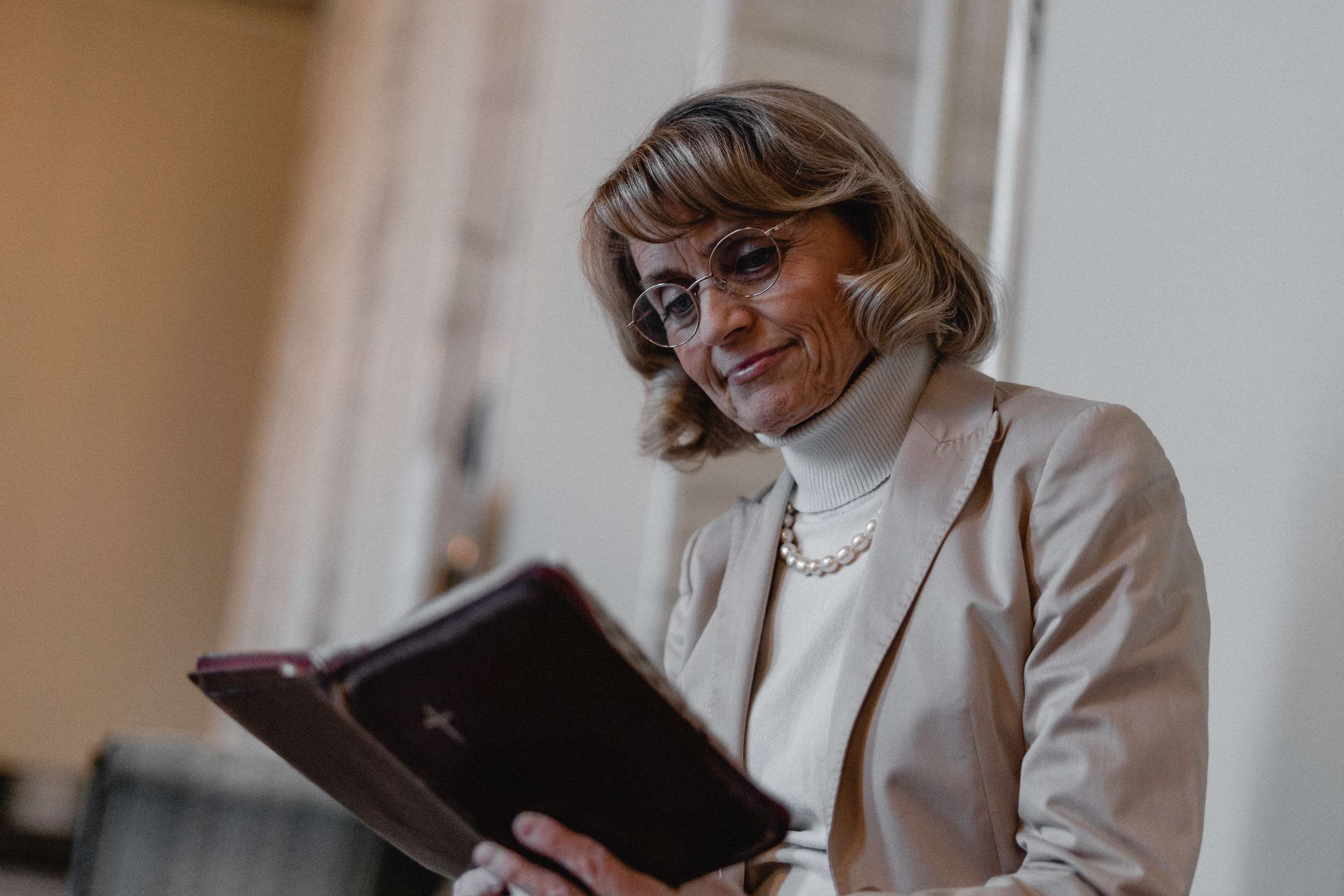
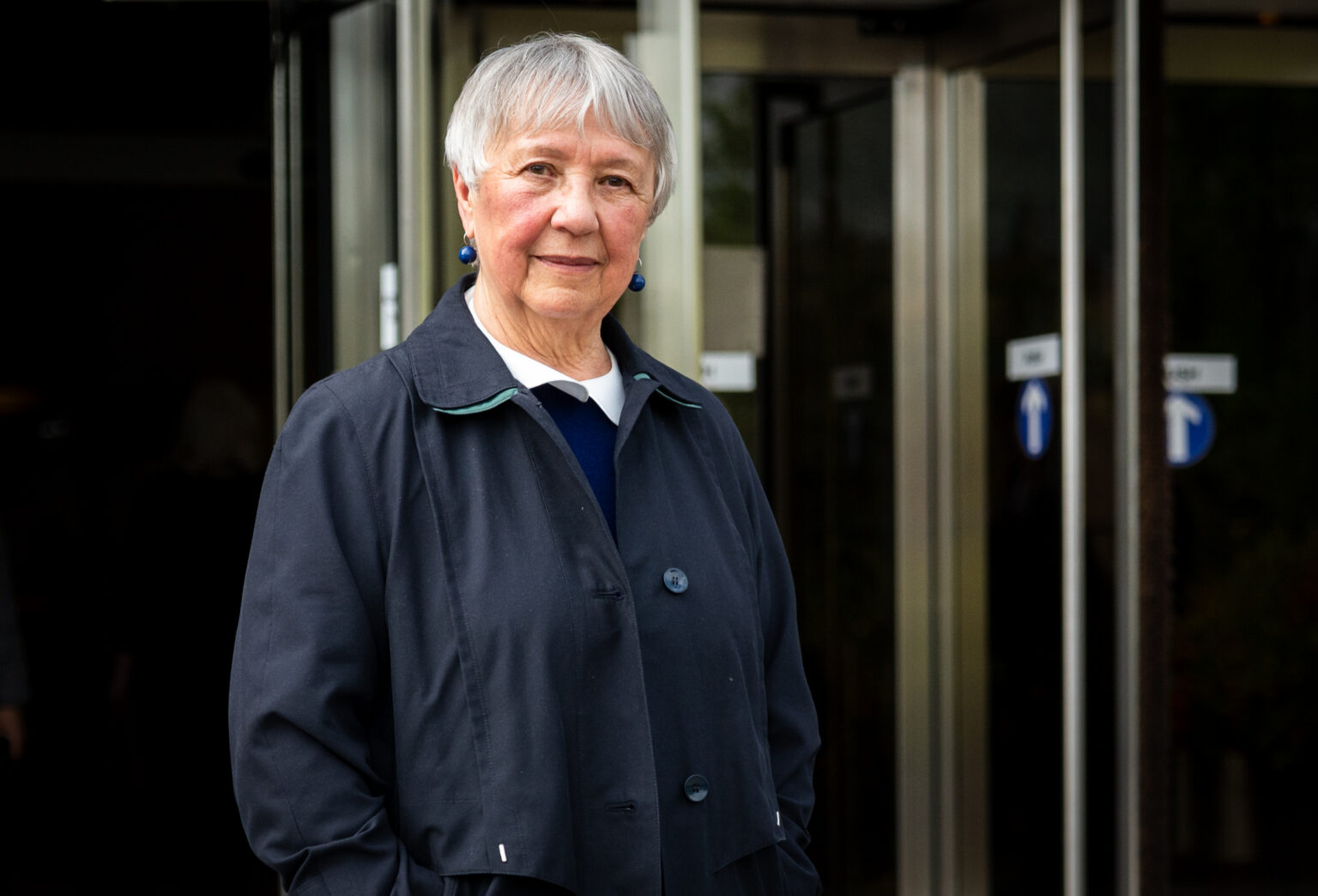
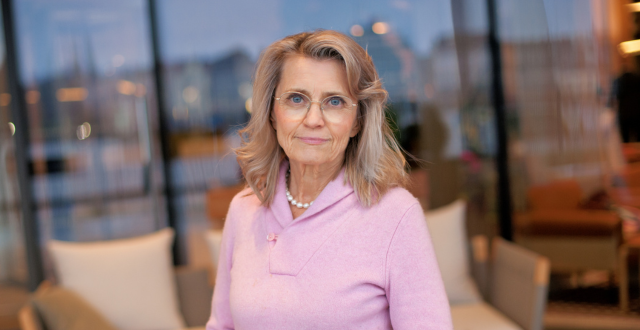
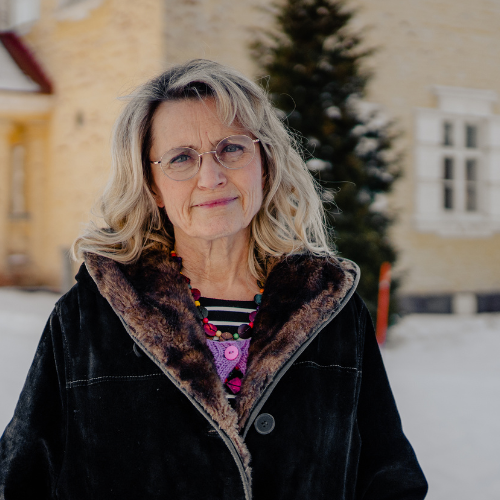
Päivi reads her bible in the Finnish Parliament building.
  • Päivi Räsänen shares her experience of prosecution and conviction by Finnish authorities for peacefully expressing Christian beliefs about marriage and human sexuality
  • Räsänen submitted testimony as Canadian Senate considers amending criminal code to weaken protections for opinions expressed on religious subjects
Päivi reads her bible in the Finnish Parliament building.

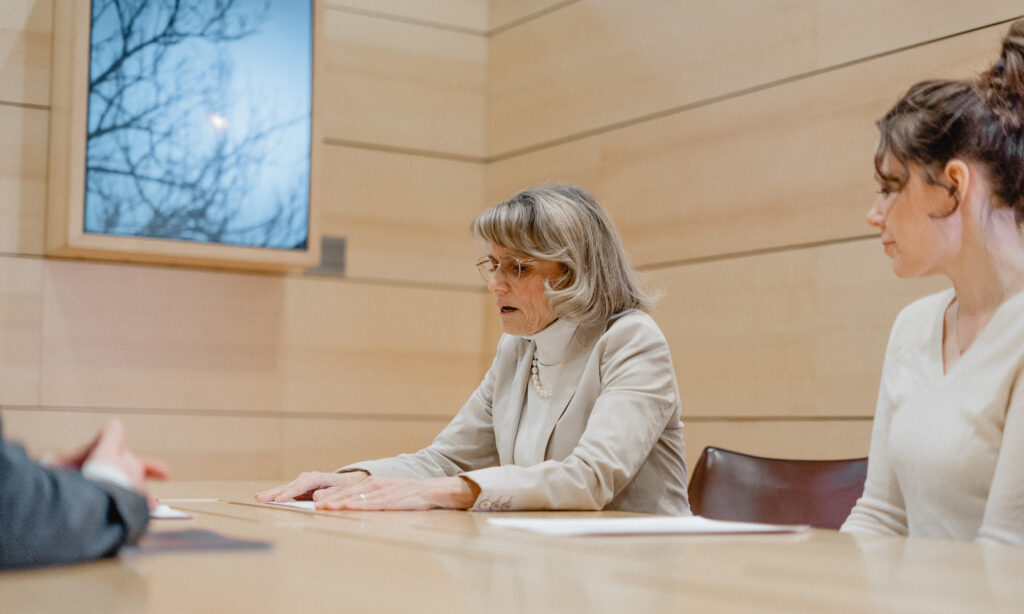
OTTAWA (2 JUNE 2026) – Finnish parliamentarian Päivi Räsänen, who was criminally convicted for a decades-old church booklet about marriage and sexual ethics, was invited to submit a testimony before the Canadian Senate Human Rights Committee on the C-9 bill concerning “hate speech”.

In her testimony, submitted for the hearing on 1 June, Räsänen discussed her experience of facing a seven-year prosecution and three criminal trials for sharing her Christian beliefs about marriage on social media and in a booklet written for her church. Citing her narrow conviction by the Finnish Supreme Court, Räsänen warned the Committee of the dangers of removing protections for religious speech in the public square.

The former Interior Minister’s testimony comes as Canada’s House of Commons considers Bill C-9, which proposes to weaken protections for speech on religious matters in the Canadian criminal code.

The bill, among other things, removes a provision that protects religious statements made in “good faith”, potentially criminalising religious speech that would otherwise be lawful.

If passed, the bill would enable the prosecution of religious speech if the courts consider that it “wilfully promotes hatred against any identifiable group”. It carries a punishment of up to two years’ imprisonment.

“My experience in Finland has shown me that laws which criminalize speech have a very real cost not only to individuals, but also society at large. They encourage law-abiding citizens to censor their speech, and deprive wider society of conversations of critical importance."

In her testimony, Räsänen emphasised the dangers that “hate speech” laws pose for fundamental freedoms and democratic societies:

“Censorship is one of the greatest existential threats to today’s democracies in Europe. You do not need to agree with my beliefs to see the danger of criminalizing peaceful speech. When the state controls which ideas and beliefs may be expressed, democracy becomes fragile. My case reveals where this path can lead.

“My experience in Finland has shown me that laws which criminalize speech have a very real cost not only to individuals, but also society at large. They encourage law-abiding citizens to censor their speech, and deprive wider society of conversations of critical importance.

Räsänen further warned against ambiguous “hate speech” legislation that criminalises the peaceful expression of certain beliefs. She recalled the Finnish Supreme Court’s decision to uphold her conviction despite acknowledging that her booklet “did not contain incitement to violence or comparable threat-like fomenting of hatred”.

She added that censorial legislation has negative consequences both for those prosecuted and others who will no longer feel able to express their views:

“Even when courts ultimately acquit, our story shows how the process itself becomes the punishment. We have faced years of investigation, public scrutiny, and legal uncertainty. This creates a chilling effect, not just for Christians, but for everyone who holds views outside a narrow, state-approved consensus… Through fear, “hate speech” laws undermine public discourse and drive diverse views from the public square.”

Räsänen concluded: “I look forward to the day when the fundamental right to free speech is upheld for all who seek to peacefully express their convictions.”

Background

In March 2026, Räsänen was found guilty of “insult” by the Finnish Supreme Court for expressing her Christian beliefs about human sexuality in a 2004 booklet produced for her church. Lutheran Bishop Juhana Pohjola and the Luther Foundation Finland were convicted alongside her for publishing the booklet.

The long-serving Finnish parliamentarian’s nearly seven-year criminal prosecution began after she shared her Christian beliefs about marriage and sexual ethics in a 2019 tweet, leading to a police investigation that resulted in further charges for expressing her beliefs in a 2019 live radio debate and authoring the 2004 church booklet.

Formally charged with “agitation against a minority group” in 2021, Räsänen was acquitted on all charges by two lower courts in 2022 and 2023. Nevertheless, the state prosecutor appealed the decision concerning the Bible verse tweet and church booklet. In a narrow 3-2 ruling, the Finnish Supreme Court upheld the acquittal for the tweet but convicted Räsänen, the Bishop and the Luther Foundation Finland for the booklet.

In May, Räsänen announced her intention to appeal her case to the European Court of Human Rights, alongside Bishop Pohjola and the Luther Foundation Finland.

Images for free use in print or online in relation to this story only

Crown Office backs down following free speech victory of Scottish Christian grandmother cleared in court for offering consensual conversation in ‘buffer zone’

  • Rose Docherty, 75, was cleared in court on 27 April, following arrest for offering consensual conversation
  • Scottish prosecutor had one week to appeal ruling, which expired earlier this month
  • With ADF International’s support, Mrs Docherty is now considering all options to prevent the recurrence of her arrest and treatment, including legal action against the police

GLASGOW (22 May 2026) – The Crown Office has backed down and refused to appeal the case of a Glaswegian Catholic grandmother, who was cleared in court after offering to speak with people in a “buffer zone”.

Rose Docherty, 75, was cleared at Glasgow Sheriff Court on 27 April, when the judge dismissed two criminal charges of “influencing” against her, in the first ever victory under censorial national legislation introducing abortion facility “buffer zones” in the UK.

In a development that reinforces last month’s free speech victory, the Crown Office and Procurator Fiscal Service, Scotland’s public prosecutor, has refused to appeal the ruling and is now timed out of doing so.

They had one week to appeal the ruling, which expired on Tuesday 5 May. ADF International coordinated Mrs Docherty’s legal defence.

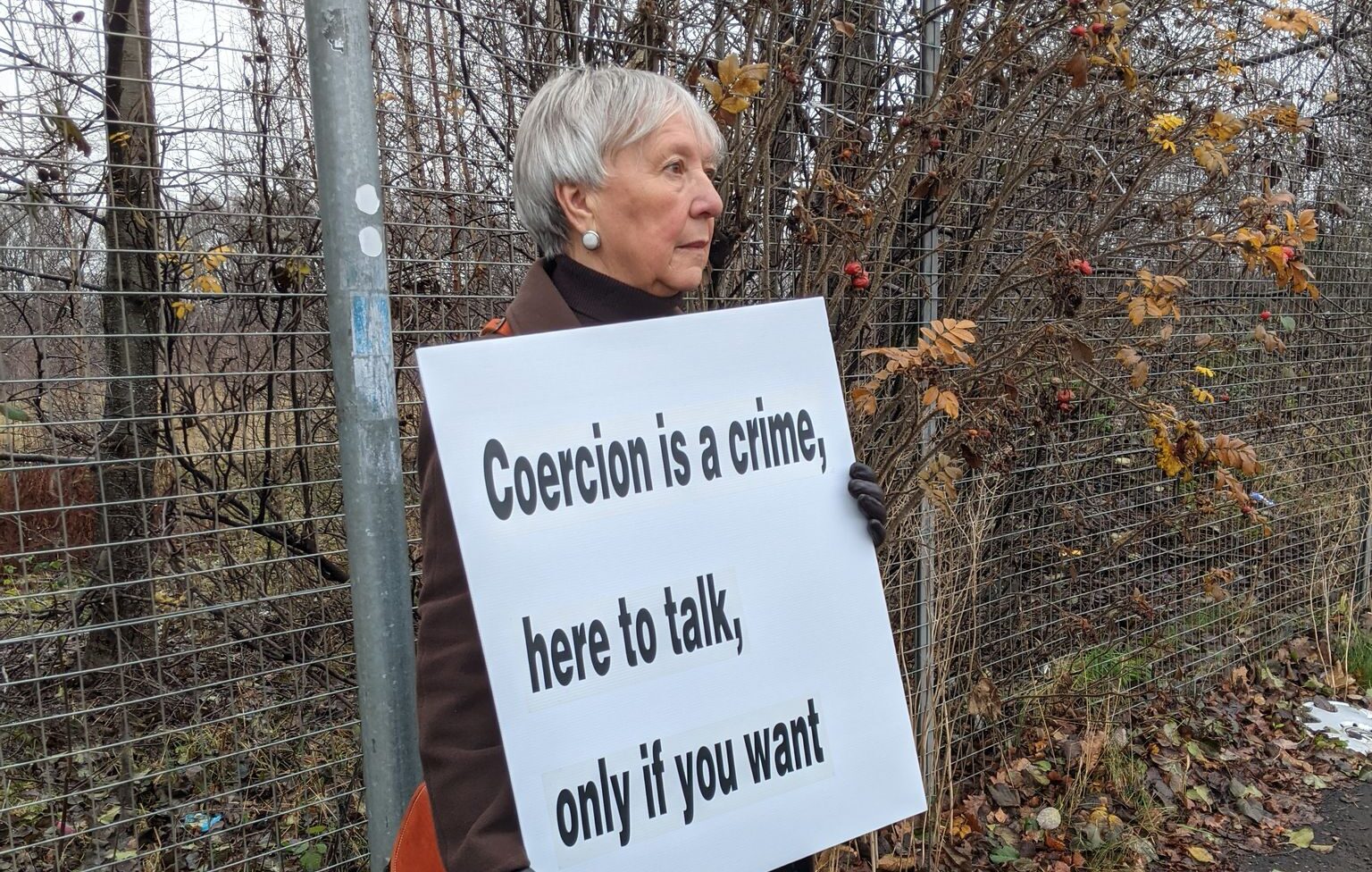
The 75-year-old Christian grandmother was arrested last September merely for offering to speak with people in the vicinity of the Queen Elizabeth University Hospital in Glasgow and holding a sign that read: “Coercion is a crime, here to talk, only if you want”, leading to outcry across the world, including from the US State Department.

She did not approach anyone, did not speak about abortion, did not engage in any behaviour that was obstructing, harassing or intimidating and was not protesting.

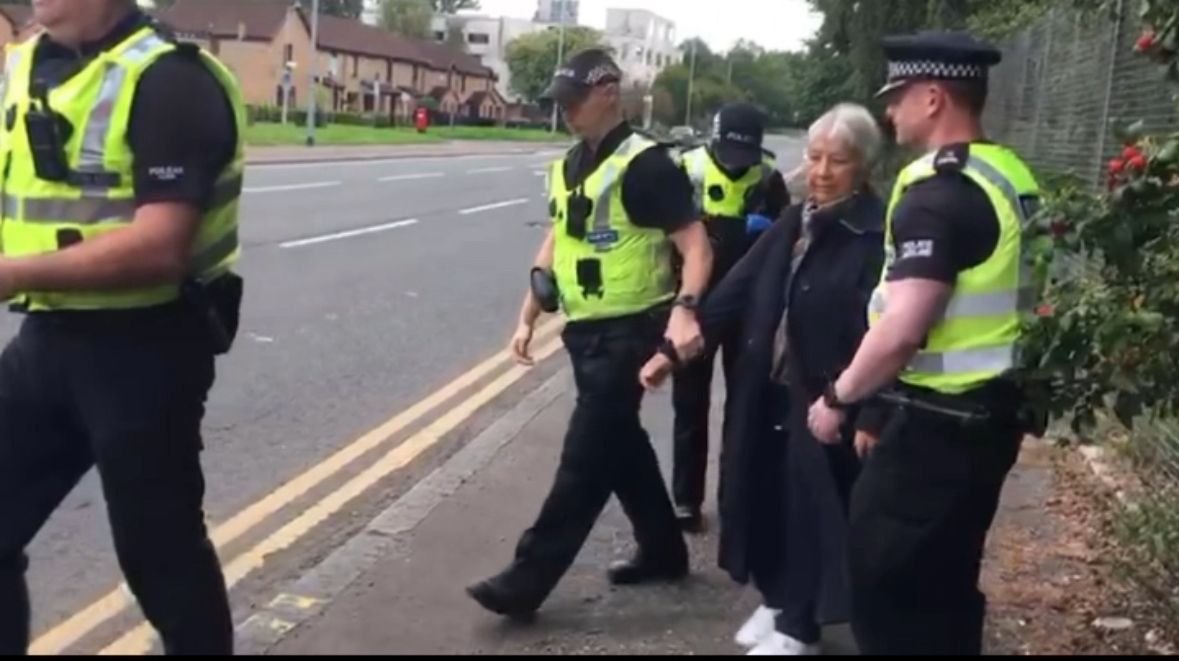
Following her arrest, Mrs Docherty was held in custody for several hours. She was refused a chair to sit on in her cell, despite making it known that she had had a double hip replacement.

With ADF International’s support, Mrs Docherty is now considering all options to prevent the recurrence of her arrest and treatment, including legal action against the police

Last September was the second time Mrs Docherty had been arrested for peacefully offering consensual conversation in a “buffer zone”. Her first arrest for peaceful expression was on 19 February 2025, and the Procurator Fiscal later backed down and decided not to proceed with a prosecution in August, in a free speech win.

“Peaceful expression, which is protected by national and international law, can never be a crime."

Mrs Docherty was the first person to be criminally charged under Scotland’s 2024 “buffer zone” law, which forbids the “influencing” of anyone seeking to access, provide or facilitate abortion and is enforced within 200 metres of every hospital where abortions occur. There are similar “buffer zone” laws in England and Wales and Northern Ireland.

On 27 April, Sheriff Stuart Reid dismissed two charges of “influencing” against Mrs Docherty, ruling that the charges violated her Article 10 ECHR right to freedom of expression.

Sheriff Reid found that the charges were not “prescribed by law”, since they failed to state or identify another person in the “buffer zone” that was present for the purpose of accessing, providing or facilitating abortion, and who was criminally “influenced” by Mrs Docherty’s actions, as is required by the law.

The judge concluded that the Procurator Fiscal had “failed to disclose an offence known to the law of Scotland” and dismissed the case pro loco et tempore, meaning the matter can be brought back if prosecutors bring improved evidence and decide that a prosecution continues to be in the public interest.

Rose Docherty said:

“I am very pleased with this development, which reinforces that offering consensual conversation is not a crime on any public street in Scotland—regardless of whether or not that street is in a ‘buffer zone’. Today, there is sadly an epidemic of loneliness and people experience coercion every day. An offer to speak, which can be freely accepted or refused by any person, could really help someone and should never be criminalised.

“Peaceful expression, which is protected by national and international law, can never be a crime. The authorities should learn from their failed attempts to censor me—a 75-year-old Christian grandmother, who has always lived in Glasgow—and refrain in the future from criminalising me or any person who lawfully expresses their rights in this country.

“I repeat my call for ‘buffer zone’ laws to be repealed in Scotland and across the UK, to prevent them being used to censor peaceful expression like mine.

“I am now consulting with my legal team and considering what actions are necessary, including legal action, to ensure the authorities are not able to repeatedly arrest, imprison and prosecute me for peacefully exercising my right to free speech.“

Barrister and Legal Counsel for ADF International, Jeremiah Igunnubole commented:

“Rose’s free speech win last month has now been solidified by the Crown Office’s decision not to appeal. This is a victory for freedom of expression in Scotland and across the UK.

“Regardless of whether people agree with Rose’s pro-life and Christian views, all should be able to agree that offering to speak with people in a public space is not a crime and must never be treated as one.

“However, ‘buffer zone’ legislation across the UK continues to dangerously undermine the rule of law. It is inconsistent that Rose has been vindicated in Scotland, while our clients Livia Tossici-Bolt and Adam Smith-Connor have been criminally convicted for peaceful expression in ‘buffer zones’ elsewhere in the UK.

“The only way to robustly protect fundamental rights, uphold the rule of law in the UK, and ensure that ‘buffer zones’ are not used as a tool to censor lawful conduct is to repeal the deeply flawed, anti-free speech laws that impose thought-crime restrictions in Scotland and across the UK.

“We have already seen the US State Department strongly criticise the UK’s ‘buffer zone’ censorship and express deep concern over the cases of Rose and our other clients. If politicians do not act to protect free speech, the alarming reality is that Great Britain will cease to be a place where human rights are respected as they once were, and our reputation on the world stage will suffer as a result.

“Although Rose has been vindicated, she should never have been arrested. The process has become the punishment, with a deeply concerning chilling effect on free speech more broadly.

“We are now supporting Rose in considering all her options, including legal action, to ensure such treatment is not repeated or normalised. Standing in a public space offering a consensual conversation is not, as Sheriff Reid put it, “an offence not known to the law of Scotland”. We will continue to stand with Rose to keep the peaceful exercise of free speech rights out of the criminal courts.”

Background

Mrs Docherty’s censorial arrest sparked expressions of concern in the UK and around the world, including from the US State Department, which described it as “another egregious example of the tyrannical suppression of free speech happening across Europe”, and from the Scottish Catholic Bishops’ Conference.

The architect of Scotland’s 2024 “buffer zone” law, Gillian Mackay MSP, admitted on BBC Scotland that the vague prohibitions in the legislation could criminalise someone for praying visibly from a window in their home within the zone, “depending on who’s passing by the window”. 

US Vice President JD Vance highlighted this law as a particular matter for concern in his Munich Security Conference speech in February last year.

Read more about the case here.

Images for free use in print or online in relation to this story only

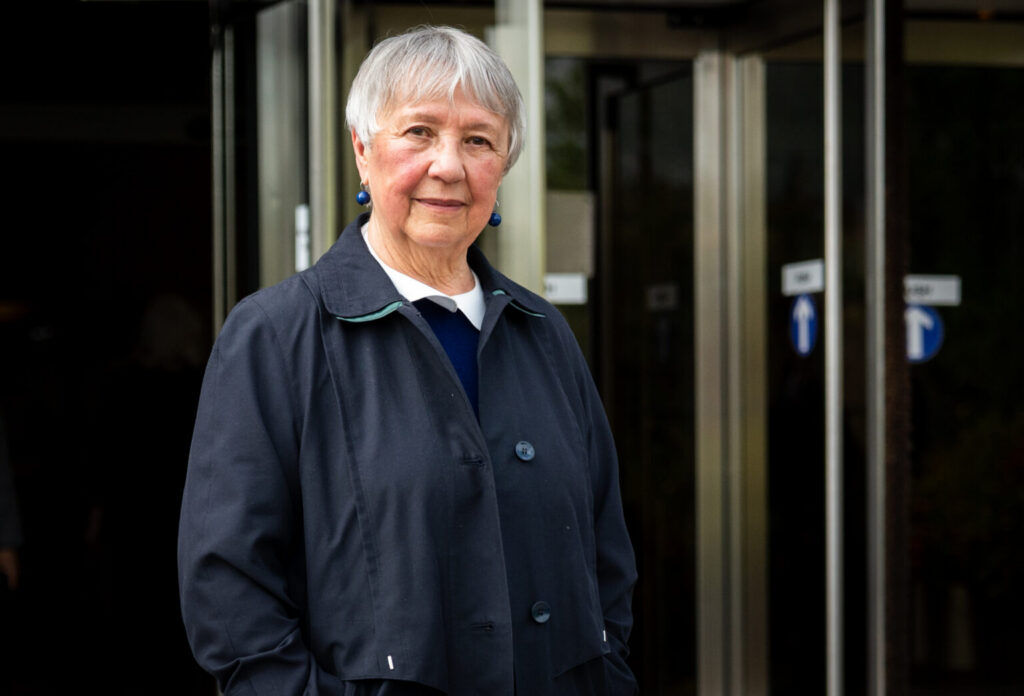
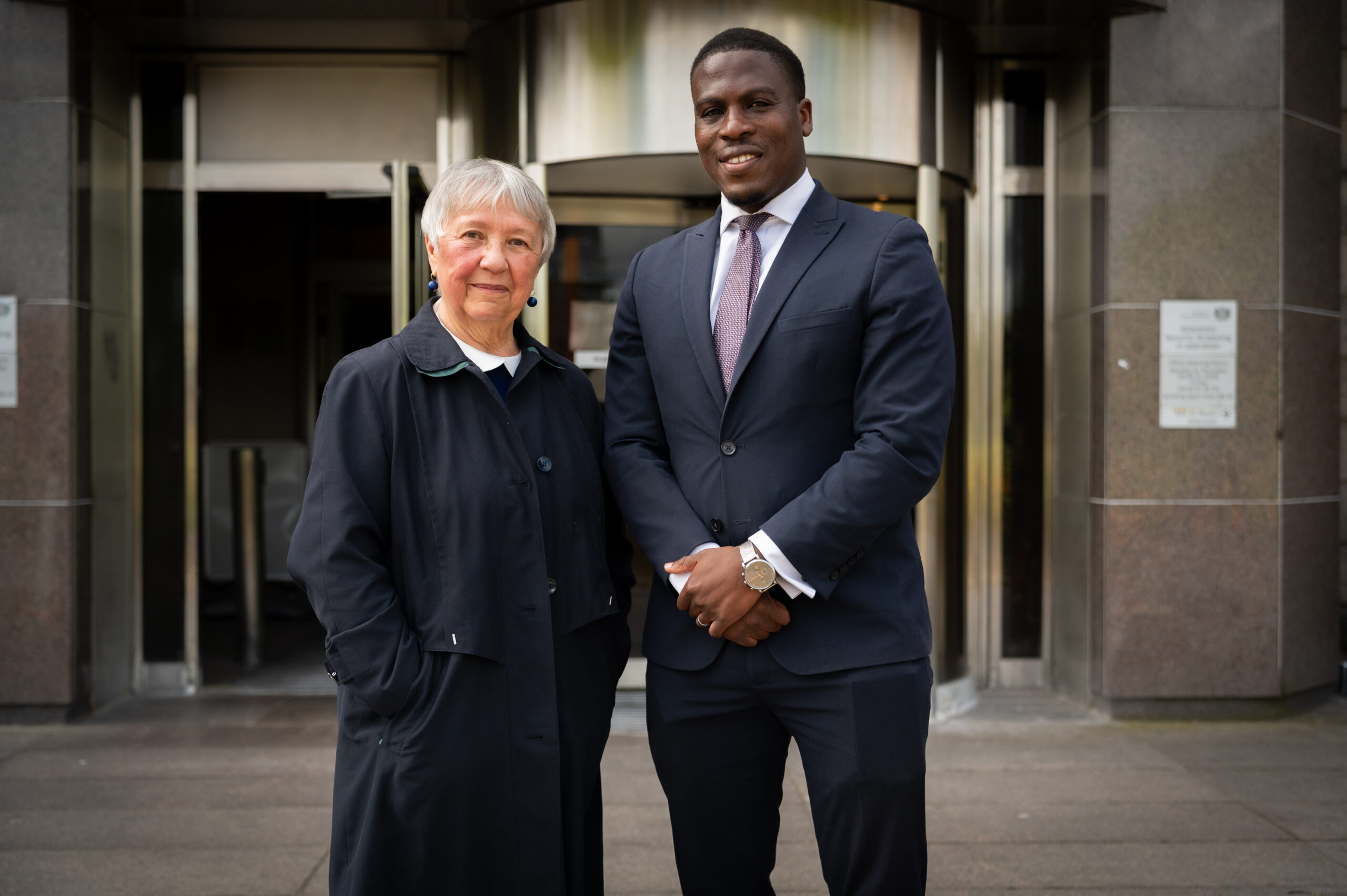
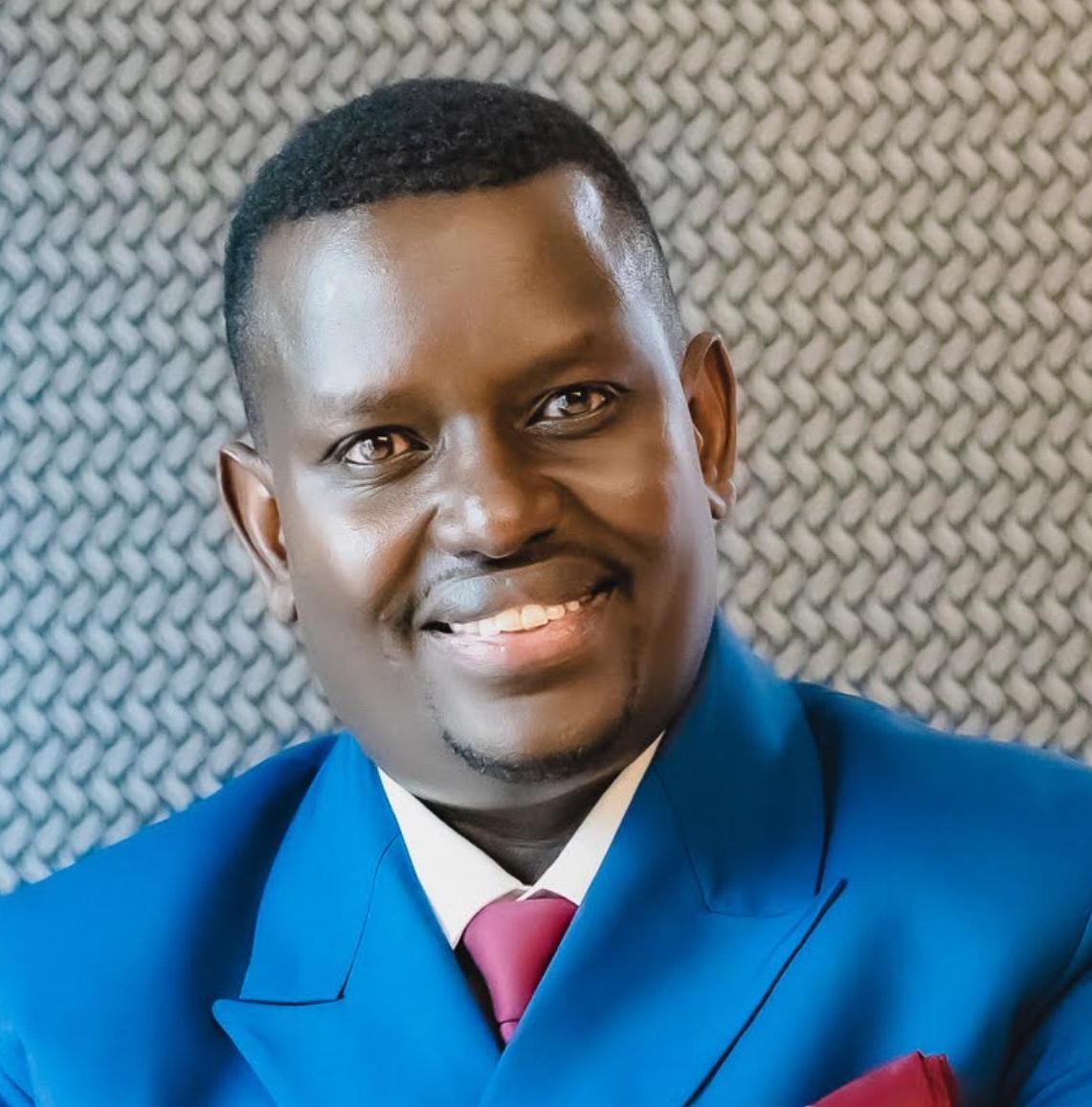
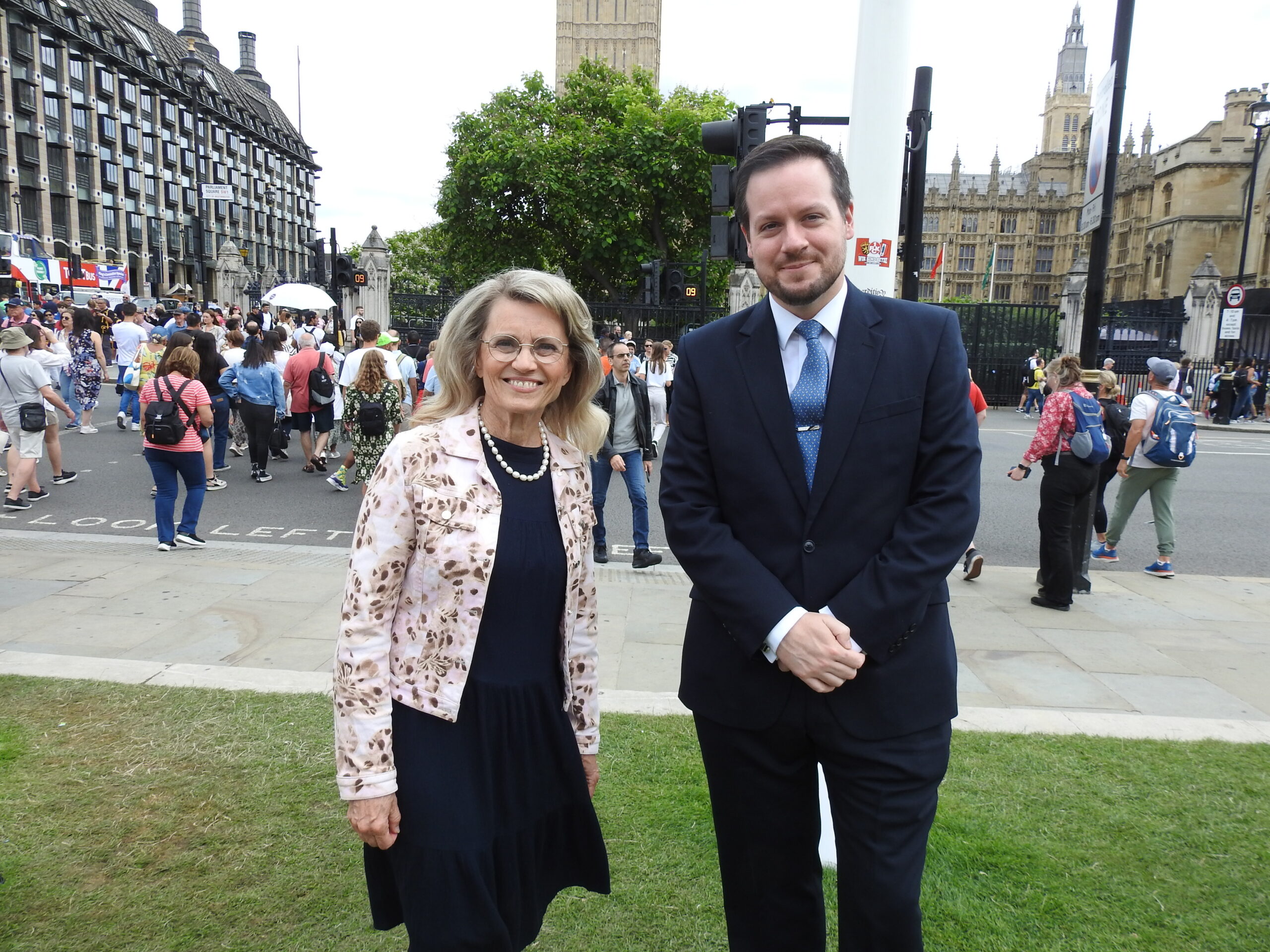
(First and second pictures: Rose Docherty and Legal Counsel for ADF International Jeremiah Igunnubole outside Glasgow Sheriff Court, following the ruling clearing Rose on 27 April; Rose Docherty outside the court)

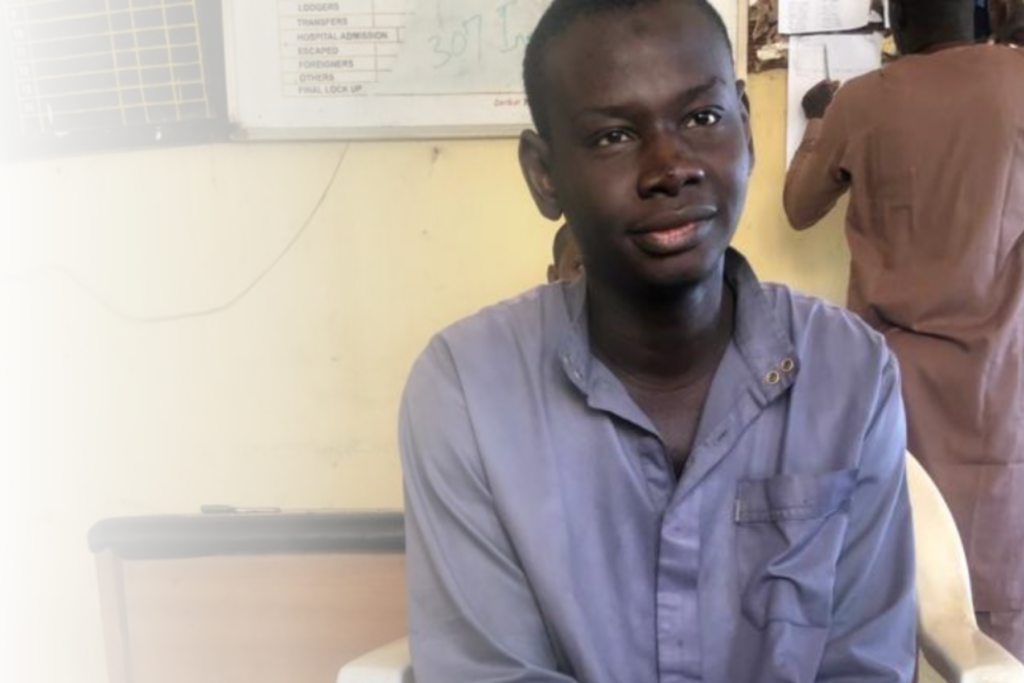
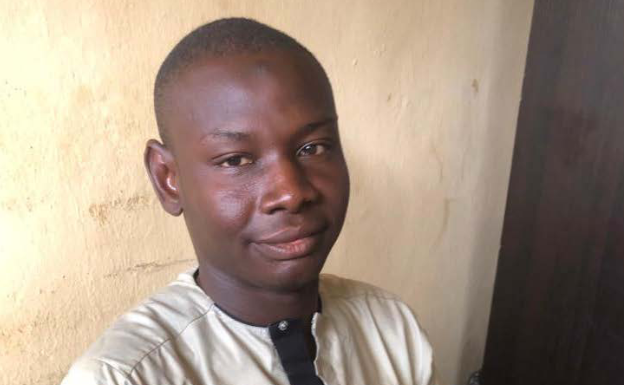
East African Court case filed: Christian communities in DRC left unable to worship after targeted attacks on churches, charities

  • Religious freedom advocates demand a halt to attacks, financial compensation to rebuild destroyed churches; ADF International legally supporting the case.  
  • Continued attacks in the region aimed to destroy the central Christian religious pillars of the Banyamulenge ethnic group. 

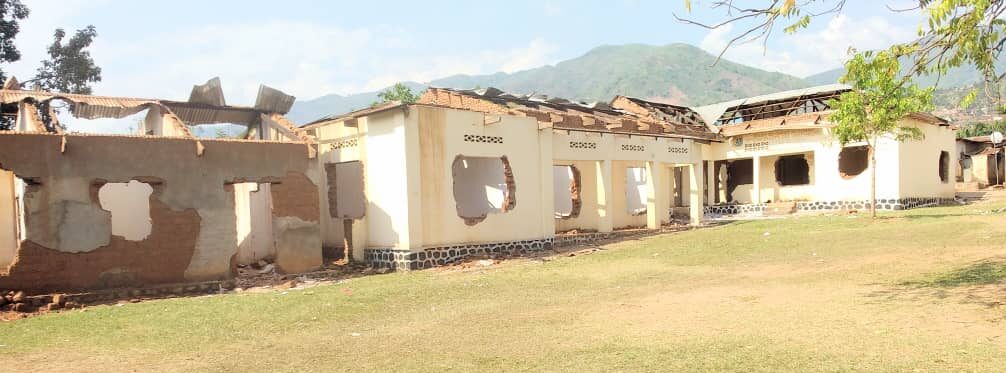
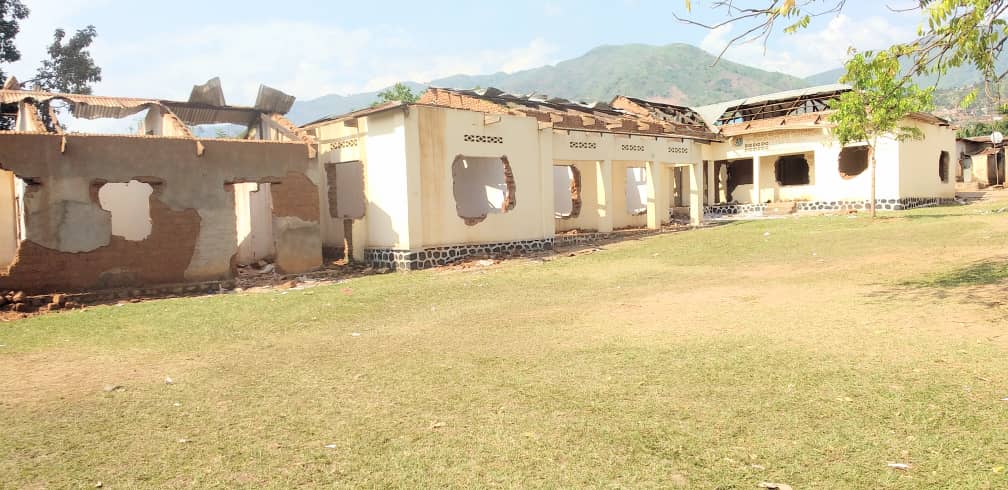
NAIROBI (14 MAY 2026)  – Christian communities in the Democratic Republic of Congo (DRC) have been left unable to freely practice their faith following a series of targeted attacks that have destroyed churches and other religious sites. In a case filed at the East African Court of Justice, advocates are calling for DRC recognition of the damage inflicted during an attack on Banyamulenge Christian sites in the city of Uvira in January 2026, as well as compensation to rebuild places of worship that have been destroyed in these targeted attacks.  

The violence has not only resulted in loss of life and property, but has also undermined their ability to gather for worship. The destruction has left many without safe spaces for communal gathering, prayer, or religious community. 

“This is the often-overlooked aftermath of ethnic and religiously motivated violence. Beyond the immediate devastation, these attacks leave lasting scars on communities. In this case, these Christians from the Banyamulenge community in the DRC are now significantly hindered in their ability to worship, gather and live out their faith."

“This is the often-overlooked aftermath of ethnic and religiously motivated violence,” said Sean Nelson, Senior Counsel for Global Religious Freedom at ADF International. “Beyond the immediate devastation, these attacks leave lasting scars on communities. In this case, these Christians from the Banyamulenge community in the DRC are now significantly hindered in their ability to worship, gather and live out their faith.” 

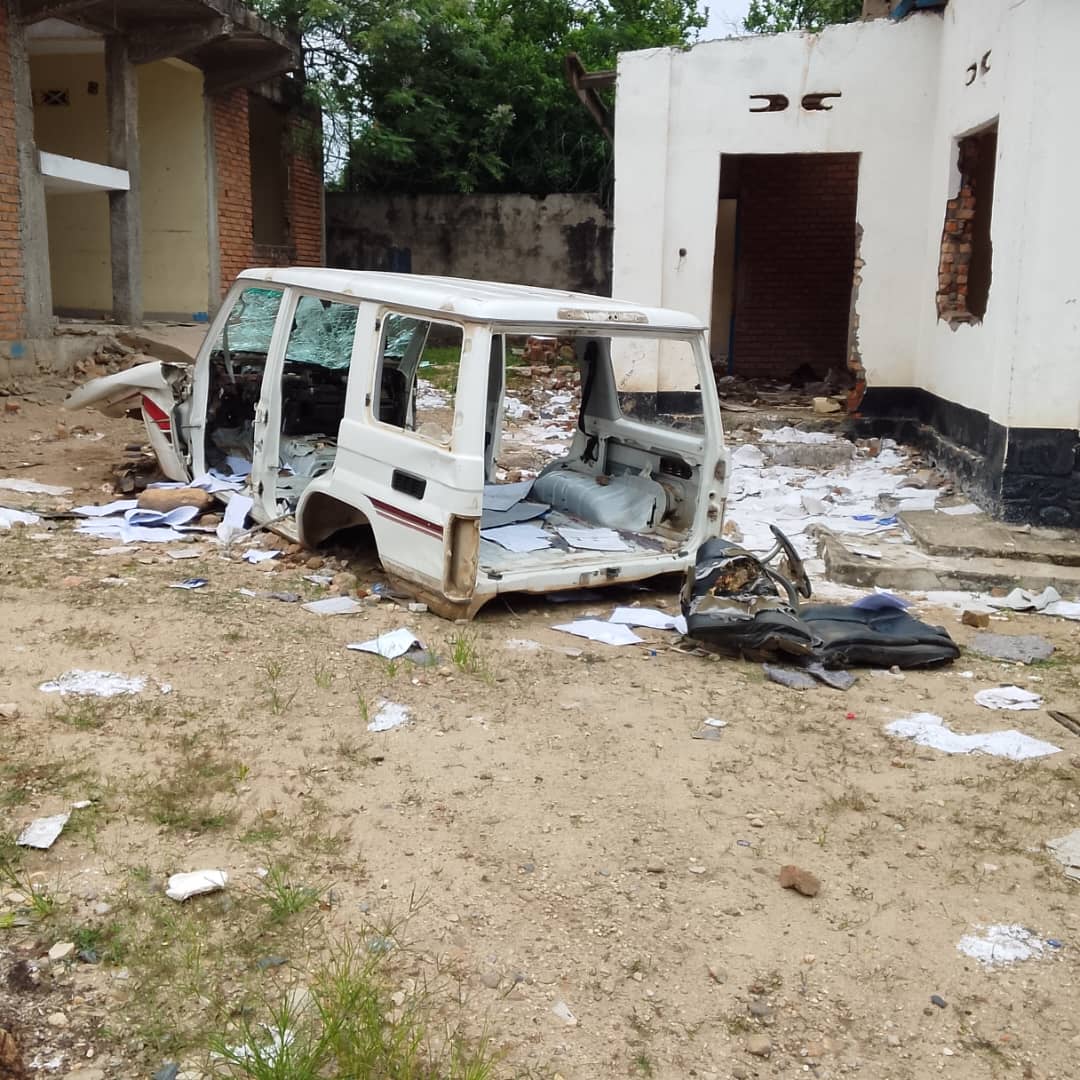
The primary attack took place on 18 January 2026, when the DRC military and aligned militia groups recaptured the city of Uvira from M23 rebelwho had occupied the city for months. However, members within the newly arrived forces then began deliberately destroying five Christian churches and other faith-based organisations held and used by the Banyamulenge community. The Banyamulenge are Congolese ethnic Tutsis that militant and radical ethnic Hutus have falsely accused of sympathy with foreign forces. Additionally, over 70 Banyamulenge homes were destroyed. These attacks were specifically carried out to destroy the central Christian religious pillars of the Banyamulenge in Uvira as a means of erasing their ethno-religious identity.  

Advocates are now calling on authorities in the DRC to take immediate action to halt further attacks and ensure the protection of vulnerable religious communities. ADF International is supporting the case before the court. The case was filed at the East African Court of Justice (EACJ) on 11 March 2026 at the subregistry in Nairobi. The EACJ filing included affidavits from leaders and members of the Uvira church communities affected. 

It is only right that the DRC acts swiftly to prevent further violence, takes responsibility and supports the reconstruction of destroyed churches and religious properties,” said Innocent Nteziryayo, named counsel for the churches and representatives for the Banyamulenge community before the East African Court of Justice. “Banyamulenge communities must be able to rebuild not only their homes, but also the churches and organizations that sustain their spiritual and communal life.” 

Images for free use in print or online in relation to this story only

Finnish Parliamentarian Convicted of “Insulting“ a Group for 20-year-old Church Booklet to Appeal to European Court of Human Rights

  • Päivi Räsänen announces intention to appeal to Europe’s top human rights court following criminal conviction by Finnish Supreme Court for a decades-old church booklet expressing her beliefs on marriage and sexuality
  • ADF International to represent Räsänen in landmark case for free speech across Europe

HELSINKI (7 May 2026) – A longstanding Finnish parliamentarian criminally convicted in March for “insulting” a group by her country’s Supreme Court has announced that she will appeal her case to the European Court of Human Rights, in the final legal juncture for this critical case for free speech in Europe.

Päivi Räsänen was found guilty for expressing her beliefs about marriage and sexuality in a booklet she wrote for her church over 20 years ago. Lutheran Bishop Juhana Pohjola and the Luther Foundation Finland were also convicted for publishing the booklet for the church.

They were criminally convicted under Finland’s 2011 “hate speech” law which prohibits “agitation against a minority group” under a section of the Finnish criminal code titled “war crimes and crimes against humanity”.

The appeal comes after the former Interior Minister’s nearly seven-year prosecution and unanimous acquittal by two lower courts in Finland. In March 2026, a mixed Supreme Court ruling acquitted Räsänen for her 2019 Bible verse tweet, but convicted her and Bishop Pohjola for “making and keeping available to the public a text that insults a group” in the 2004 church booklet on sexual ethics, according to a 3:2 majority.

Commenting on her decision to appeal, Räsänen said: „The failure of the Finnish Supreme Court to uphold freedom of speech has set a dangerous precedent in my country and across Europe. I feel it is my duty to appeal this decision, to reinstate respect for the basic human right that all are free to peacefully express their views in the public square.”

„I know I am not alone in facing unjust persecution under ‘hate speech’ laws that make sharing Christian beliefs a criminal offense. I make my appeal in the hope that the European Court of Human Rights will recognise that peacefully expressing one’s beliefs is never a crime, and ensure that this basic freedom is protected for all.“

Final chance for freedom to prevail

Räsänen, a long-serving parliamentarian, medical doctor, and grandmother of twelve, has been criminally prosecuted for nearly seven years for sharing her Christian beliefs about marriage and sexuality in a 2019 tweet and live radio debate, as well as for authoring the 2004 church booklet, for which she was charged alongside Bishop Pohjola and the Luther Foundation Finland.

In 2021, Räsänen was formally charged with “agitation against a minority group” under a section of the Finnish criminal code titled “war crimes and crimes against humanity”.

Following unanimous acquittals on all charges by two lower courts in 2022 and 2023, the state prosecutor appealed again to the Finnish Supreme Court regarding the tweet and church booklet. The case was heard in October 2025, and in March 2026 the Supreme Court upheld the acquittal for the Bible verse tweet, but convicted Räsänen and the Bishop for the 2004 booklet. The radio show charge was not appealed to the Supreme Court, so that acquittal stands.

The Supreme Court convicted Räsänen under a law that was introduced years after the booklet was published, and did so despite the court’s admission that the booklet “did not contain incitement to violence or comparable threat-like fomenting of hatred”.

In an alarming display of censorship, the Supreme Court fined Räsänen, Bishop Pohjola, and the Luther Foundation Finland several thousand Euros, and ruled that the condemned statements within the booklet must be “removed from public access and destroyed”.  

„The Supreme Court’s decision to convict myself and the Luther Foundation for publishing a booklet for our church was extremely disappointing,” added Bishop Pohjola. „As a Bishop, I have a responsibility to guide those under my pastoral care, and I am deeply concerned by the state’s extensive efforts to censor our publications and decide what can and cannot be taught by religious leaders to members of their own group.

„It is our intention to join Päivi Räsänen in appealing to the European Court of Human Rights in defence of our free speech and religious freedom rights, and those of everyone in Finland.“

An appeal to the European Court of Human Rights is the final legal opportunity for the conviction to be overturned, and marks a seminal moment for the fundamental right to free speech to be upheld in Finland and throughout Europe.

„Hate speech“ laws enabling state censorship

Räsänen’s case has garnered significant international interest, with the prosecution’s extensive criticism of Räsänen and Bishop Pohjola’s beliefs provoking high-profile responses, including from the US State Department.

Senior Finnish officials also questioned the ruling: Justice Minister Leena Meri argued that the legislation is “not sufficiently precise and especially not predictable as required by the principle of legality in the criminal code,” adding that “it is very difficult for people to know what is prohibited and what is permitted”.

The judgment has exacerbated existing concerns about the precarious state of free speech across Europe, where vaguely worded „hate speech“ laws are increasingly wielded to silence dissenting views.

The appeal of Räsänen, who will be represented by ADF International, has significant global implications for freedom of speech.

„The retroactive censorship of a 20-year-old booklet produced by and for a church community is among the most chilling developments in the ongoing attack on freedom of speech across Europe,“ said Lorcán Price, legal counsel with ADF International, serving on Räsänen’s legal team.

„As subjective ‘hate speech’ laws are increasingly being used to silence and criminalise peaceful expression of beliefs, the European Court of Human Rights has a responsibility to decisively protect the freedom of expression that is necessary in a truly democratic society.

„The ‘hate speech’ laws used to convict Päivi Räsänen and Bishop Pohjola clearly contradict international human rights law regarding freedom of speech and freedom of religion. If such laws can be interpreted so broadly as to include a decades-old church booklet, how can anyone in Finland be certain that anything they have said, or will say, will not be prosecuted? It is imperative that the European Court of Human Rights clarify and protect these fundamental freedoms definitively.“

Images for free use in print or online in relation to this story only

Finnish Parliamentarian on Trial for Bible Tweet to Testify Before U.S. Congress on Europe’s Growing Censorship Regime 

  • Finnish Parliamentarian Päivi Räsänen to testify at House Judiciary Committee hearing on her criminal prosecution for “hate speech,” joined by ADF International European legal expert 
  • Räsänen, prosecuted for over six years, is currently awaiting a verdict from the Supreme Court of Finland on criminal charges for tweeting a Bible verse in 2019 

WASHINGTON, D.C. (Jan. 30) – The U.S. House Judiciary Committee will hold a hearing titled “Europe’s Threat to Speech and Innovation: Part II,” examining how European speech laws and censorship regimes are impacting free expression, innovation, and democratic debate. 

Witnesses, including Finnish Parliamentarian Päivi Räsänen and ADF International legal expert Lorcán Price, will warn lawmakers of Europe’s expanding speech restrictions, including criminal prosecutions for peaceful expression. These restrictions pose serious threats to fundamental freedoms and risk being exported beyond Europe to the United States. Graham Linehan, an Irish comedian who was arrested for his X posts in September 2025, will also serve as a witness on the panel.

Räsänen’s case has become one of Europe’s most prominent examples of the criminalization of speech, after she was criminally charged and put on trial for expressing her Christian beliefs online in a 2019 tweet. She is currently awaiting a verdict after facing criminal trial before the Supreme Court of Finland in October. 

Price will offer testimony regarding Europe’s censorship crisis and the European Union’s attack on free speech using the Digital Services Act (DSA), which is one of the most dangerous restrictions on free speech in the digital age. The House Judiciary Committee warned about the DSA’s risks to American free speech in its July report “The Foreign Censorship Threat: How the European Union’s Digital Services Act Compels Global Censorship and Infringes on American Free Speech”. 

When: 
Feb. 4, beginning at 10 a.m. EST 

Where: 
Rayburn House Office Building, Washington, D.C., and via livestream 

Media Attendance: 
Members of the media are encouraged to attend the hearing in person or view the livestream. Interviews with speakers may be requested in advance. 

To schedule interviews or for additional information, contact ADF International Communications Officer, Anna Rose Myrick at [email protected] or (480)-371-7941.

Images for free use in print or online in relation to this story only

UK: Christian woman criminally charged for standing, silently praying  

  • Charitable volunteer Isabel Vaughan-Spruce, who was previously cleared in court and received a payout from police for being unjustly arrested twice for her silent prayers, has been criminally charged again
  • Vaughan-Spruce will appear in court 29th January, supported by ADF International 

BIRMINGHAM (17 December 2025) – West Midlands Police and the Crown Prosecution Service have criminally charged Isabel Vaughan-Spruce because she „stood outside“ an abortion facility, where „influence“ is prohibited. 

The charitable volunteer has been under investigation since January for engaging in silent prayer on a public street near an abortion facility in Birmingham.  

“Silent prayer - or holding pro-life beliefs - cannot possibly be a crime. Everyone has the right to freedom of thought."

This is the first charge under the new national “buffer zones”, which came into force in October 2024, under Section 9 of the Public Order Act 2023.  

The Attorney General confirmed on 16th December, in response to a parliamentary question from former Home Secretary Suella Braverman MP about Vaughan-Spruce’s case, that „The Crown Prosecution Service has issued proceedings under Section 9 of the Public Order Act 2023, in relation to one case, since it was commenced on 31 October 2024.“ 

Vaughan-Spruce had not yet received information about the criminal charge when this written answer was issued, but was informed hours later in a letter from West Midlands Police. 

All previous court cases regarding the status of silent prayer took place in the context of “buffer zones” enforced by local authorities via Public Spaces Protection Orders, rather than through this new law. 

The new national law prohibits “influencing any person’s decision to access, provide or facilitate abortion services” within 150m of abortion facilities, but does not mention silent prayer specifically.  

CPS guidance on the law stipulates that silent prayer on its own is not enough to meet the threshold of criminality unless it is accompanied by “overt” activity. 

Investigated for a “thoughtcrime” 

On 18 March 2025, West Midlands Police informed Vaughan-Spruce she was under investigation for praying silently near the facility on 27th January, as well as several other subsequent dates. Vaughan-Spruce has been peacefully praying in the same public area on a regular basis for two decades. 

Vaughan-Spruce, with legal support from ADF International, sent numerous requests for clarification in proceeding months as to the status of her case, pointing out that the legislation does not function as a ban on her mere presence or on holding pro-life Christian beliefs.  

Repeated injustice over silent “thoughtcrime” 

In 2023, the charitable volunteer was acquitted in court after being arrested for praying in a local “buffer zone,” under a Public Spaces Protection Order that banned “expressions of approval or disapproval” of abortion. The incident occurred while the abortion facility was closed. The prosecution offered no evidence to support a conviction. 

Despite being cleared of any wrongdoing, Vaughan-Spruce was arrested again for her silent thoughts in the same location weeks later in March 2023, opening an investigation that lasted several months. In August 2024, Vaughan-Spruce successfully challenged her two unjust arrests and received a settlement from West Midlands Police of £13,000. 

On regular occasions, she has been approached by officers and asked if she is praying. Once, she was observed by two officers posted to watch her activities. 

Isabel Vaughan-Spruce commented: 

“Despite being fully vindicated multiple times after being wrongfully arrested for my thoughts, it’s unbelievable that I have yet again been charged for standing in that public area, and holding pro-life beliefs. Silent prayer – or holding pro-life beliefs – cannot possibly be a crime. Everyone has the right to freedom of thought.”  

Jeremiah Igunnubole, legal counsel for ADF International, who have supported Vaughan-Spruce’ legal defence, said: 

“’Buffer zones’ are among the most concerning frontiers of censorship in the modern west. We all stand against harassment and abuse, but the ‘buffer zone’ law broadly bans ‘influence‘ which is being interpreted by police officers to target innocent people who happen to stand in a certain place and believe a certain thing. We will continue to robustly challenge this unjust censorship, and support Isabel’s right to think and believe freely as is the right of every person in the UK.” 

Images for free use in print or online in relation to this story only

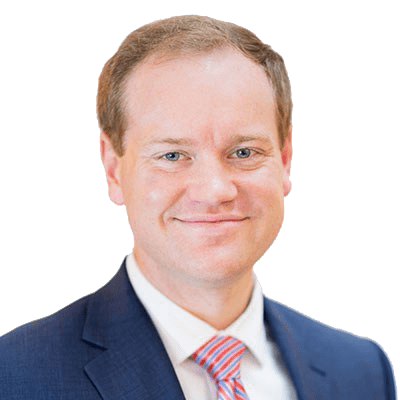
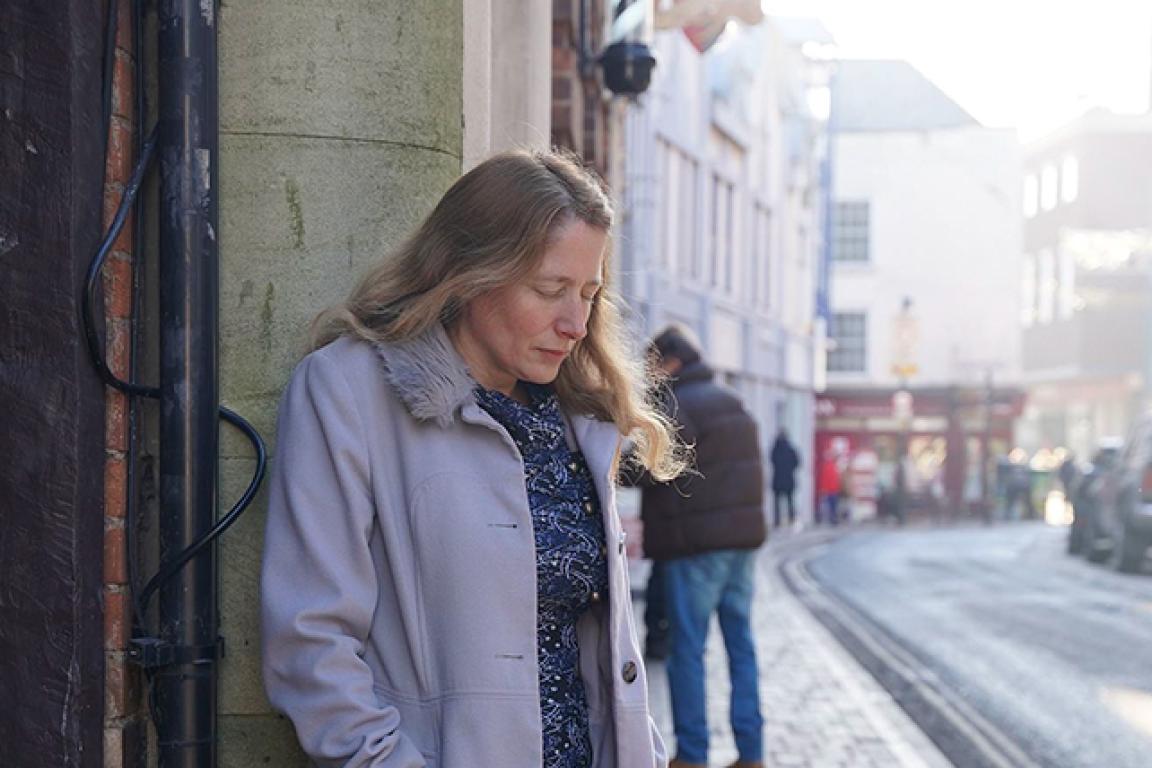
Pictured: Isabel Vaughan-Spruce, Jeremiah Igunnubole

Brussels authorities face legal challenge after arresting individuals expressing concerns about puberty blockers 

  • Demand letter issued to Belgian Police following arrest of campaigner „Billboard Chris“ (Canada) and Lois McLatchie Miller (UK)
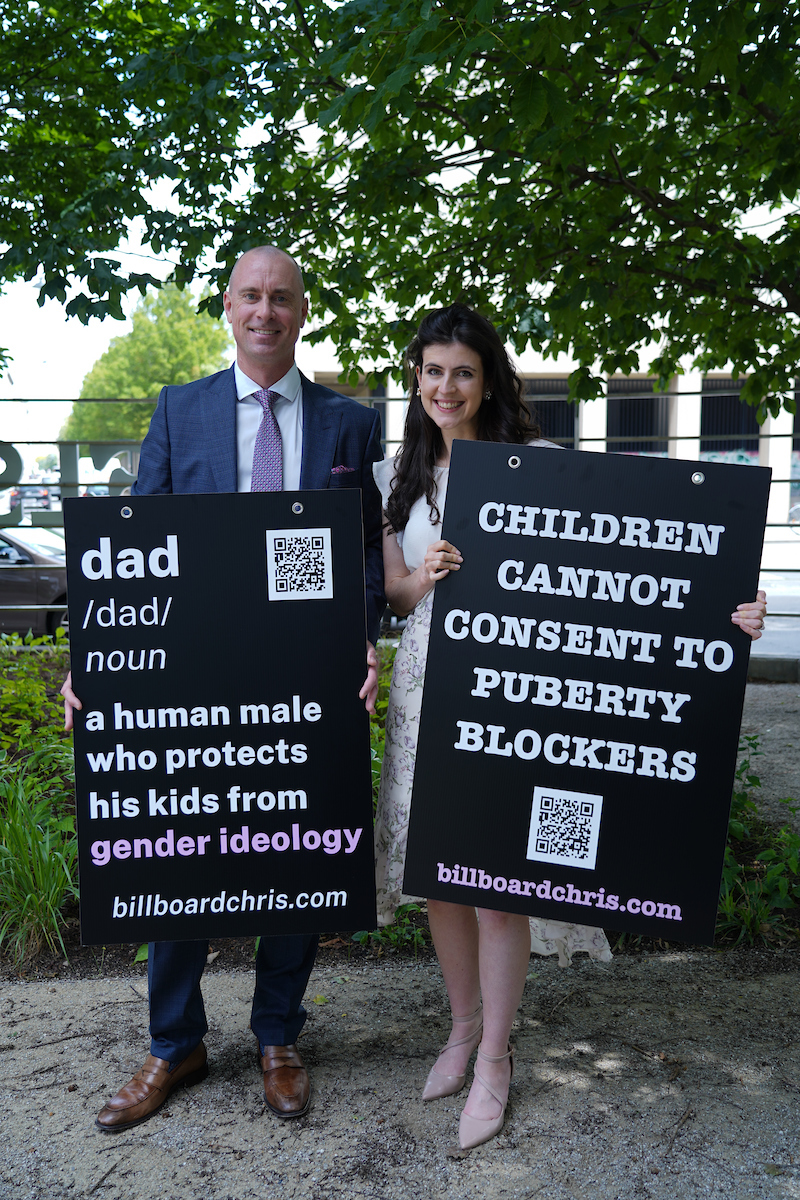
  • Pair were arrested for holding conversations in public space about gender ideology: “children cannot consent to puberty blockers”

BRUSSELS (9 December 2025) – A UK citizen and Canadian campaigner are seeking compensation after they were arrested by Brussels authorities for peacefully expressing views about the harmful effects of puberty blockers on children. 

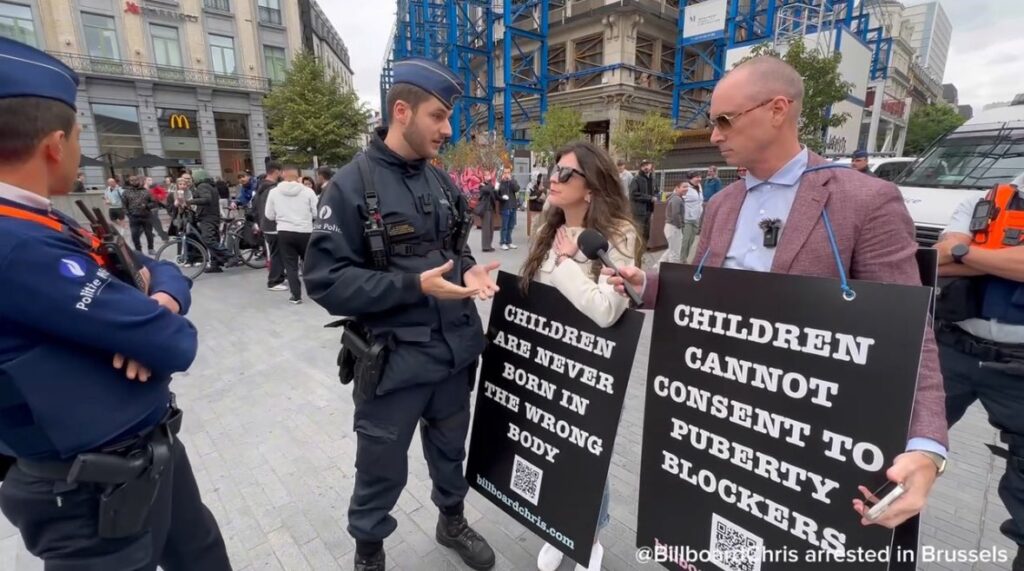
On 5 June 2025, Belgian police detained Chris Elston (known online as „Billboard Chris“) and ADF International’s Lois McLatchie Miller while they were conducting man-on-the-street interviews about gender ideology and the harmful effects of puberty blockers on children. To prompt conversation, they held signs reading: “Children are never born in the wrong body,” and „Children cannot consent to puberty blockers“.  

“It is scandalous to expose children to puberty blockers, and it is scandalous to silence and jail those who speak out about it. No one should fear arrest for defending children's safety.”

McLatchie Miller had initially called the police for help after being harassed repeatedly by hostile men on the street while trying to conduct interviews. An aggressive crowd formed around the pair. Upon arrival, 14 police officers decided to arrest McLatchie Miller and Elston rather than the aggressors. The pair were taken into custody, held for several hours, and had their signs confiscated and destroyed. 

Right to Free Speech Violated

Responding to the incident at the time, the U.S. State Department said: „We are aware of these reports and are looking into the matter. The State Department strongly supports the peaceful freedom of expression for all“. 

With the support of ADF International and Belgian legal counsel, Elston and McLatchie Miller have issued a formal demand letter to the Brussels Chief of Police, as well as to the ombudsman, the city, the police inspectorate, and the state.

You are currently viewing a placeholder content from YouTube. To access the actual content, click the button below. Please note that doing so will share data with third-party providers.

More Information
The letter asserts that the authorities’ actions violated their freedom of expression and physical integrity under Belgian and international human rights law. It requests: a thorough and impartial investigation into the incident; official acknowledgment of rights violations; appropriate compensation and steps to ensure that such actions will not recur.  “Billboard Chris and Lois McLatchie Miller were arrested while holding consensual conversations on the street about the basic truth about the dangers of gender ideology. Any society that denies the basic right to express the truth is on a path to totalitarianism.  “Whether online or on the street, it is clear that free speech has reached a crisis point in Europe. EU governments cannot claim to uphold human rights while repeatedly violating the right to free expression.  “Belgian authorities not only failed to uphold the fundamental right to speak freely, they turned the power of the state against two individuals who were peacefully exercising their rights at the behest of increasingly aggressive bystanders, said Dr  Felix Böllmann, Director of European Advocacy for ADF International.  Elston, who regularly speaks about protecting children from harmful gender ideology in public squares across Europe and North America, including by sharing his conversations on social media, has publicly stated that he intends to return to Brussels and expects authorities to safeguard his right to speak freely.  “I’m speaking in the public square about one of the most significant medical human rights scandals of our day – the deliberate damaging of children’s bodies for an ideology which teaches they were born in the wrong body.  „Children don’t need drugs or scalpels – they are perfect just as they are, and need affirmation to love the skin they’re in. My engagement is based on mountains of medical evidence that has been established across the world. A society that punishes citizens for stating truth is on a dangerous path,” Elston said.   McLatchie Miller added: “Puberty blockers, and the cross-sex hormones that so often follow them, are highly dangerous drugs that can cause long-lasting damage to children – impacting their bodily development, bone density, mental health, lifelong fertility, and more. It is scandalous to expose children to these drugs, and it is scandalous to silence and jail those who speak out about it. No one should fear arrest for defending children’s safety.” 

Images for free use in print or online in relation to this story only

Pictured: Chris Elston, Lois McLatchie Miller

Scottish politician seeks to criminalise “influencing” a person’s decision about assisted suicide 

  • Scottish Green Party’s Patrick Harvie proposes a censored “buffer zone around facilities where assisted suicides might take place, preventing family members or concerned individuals from changing a person’s mind 
  • Move echoes abortion “buffer zones” law enacted in Scotland last year, under which a grandmother was arrested for offering a conversation 

EDINBURGH (29 October 2025) – A Scottish parliamentarian and member of the Health Committee, Patrick Harvie MSP, has proposed an amendment to Scotland’s controversial “assisted suicide” bill that would criminalise discussion of suicide prevention  within a large, undefined public area surrounding any building where an assisted suicide might take place. 

The vague proposal would forbid any attempts to “influence” a person’s decision to undergo an assisted suicide, such as through conversation with a family member or the display of a suicide prevention poster.

"It's unthinkable that Scots should be banned on certain streets from offering hope and encouraging someone to choose life, not suicide."

Almost half of those who opted for assisted suicides in Oregon cited concerns about being a perceived “burden on family, friends or caregivers” as a driver for their decision to end their lives, according to public health data released in 2023. 

Concerns for Free Speech

The move echoes the “buffer zones” law put in place in Scotland last year, which criminalises any attempts to “influence” a person’s decision to access abortion services within 200m of every hospital.  

In August, 75-year-old grandmother Rose Docherty became the first person to be arrested under the abortion “buffer zones” law after she peacefully offered consensual conversation, holding a sign reading “Coercion is a crime, here to talk, only if you want”. The U.S. State Department condemned the arrest as „another egregious example of the tyrannical suppression of free speech happening across Europe.“ ADF International is supporting her legal defence as she faces trial in December. 

At the Munich Security Conference in February, U.S. Vice President J.D. Vance criticised the Scottish buffer zones law, summarising that „free speech, I fear, is in retreat“.

Reacting to Harvie’s proposal, Lois McLatchie Miller from ADF International said: 

„It’s unthinkable that Scots should be banned on certain streets from offering hope and encouraging someone to choose life, not suicide.  

How will this impact a doctor’s choice to have a suicide-prevention charity’s poster in their window? How will this impact important conversations between loved ones, eager to convince an elderly wife or a parent that they are not a burden, but a valuable member of the family? 

“Once the principle of a censorial ‘buffer zone’ is approved for one issue, it can easily multiply to more and more issues. We’ve already seen loosely worded abortion ‘buffer zone’ rules be used to arrest a grandmother simply for offering to chat. Now the government seeks to apply the same vague, broad rules to ban speech about assisted suicide. What could be next? Banning parents from „influencing“ their child outside a gender clinic? Banning dissenting speech about foreign regimes around certain embassies? Censorship is always a slippery slope.“ 

Images for free use in print or online in relation to this story only

PICTURED: Rose Docherty, Lois McLatchie Miller