Turkish Government Denies Targeted Deportation of Christian Missionaries; Accuses European Parliament of ‘Interference’  

  • Turkish Foreign Ministry dismisses overwhelming 502–2 vote as “baseless,” despite mounting scrutiny over expulsions of Christian missionaries from the country 
  • European Parliament voted to condemn use of Turkish security codes to expel Christiansthis followed European Court of Human Rights recent decision to take 20 cases of missionaries expelled from Türkiye; the majority of which are legally supported by ADF International 

Strasbourg (17 February 2026) — The Turkish government has formally rejected the European Parliament’s recent resolution condemning targeted expulsions from the country „carried out under unsubstantiated national-security pretexts and without due process“ for foreign Christians, in addition to journalists. 

In a statement issued on 13 February, a day after the vote, Türkiye’s Ministry of Foreign Affairs dismissed the resolution as containing “unfounded allegations” and characterized it as interference in the country’s internal affairs. 

The European Parliament adopted the resolution by an overwhelming margin (502 votes in favor and 2 against) signaling broad cross-party concern over what lawmakers described as the misuse of national security frameworks to restrict fundamental rights, including freedom of religion. The resolution followed the European Court of Human Rights’ decision at the beginning of February to take up 20 cases involving foreign Christians who were expelled or banned from re-entering Türkiye. 

These cases, the majority of which are supported by ADF International, stem from the Turkish government’s use of security codes, typically reserved for terrorist activity, to designate peaceful foreign Christian residents as threats to national security and block them from entering or remaining in the country despite longstanding lawful residence. The missionaries deported come from several countries across Europe, including the United Kingdom, Switzerland, and Germany. More than a dozen are originally from the United States.  

“The Turkish government’s rejection of the European Parliament’s vote shows a clear lack of respect for its human rights obligations.When a government weaponizes national security mechanisms to target peaceful missionaries and faith communities, they must not be allowed to act with impunity.”

European Parliament addresses expulsion of missionaries

The European Parliament resolution specifically addresses the expulsion of foreign Christian missionaries, all legally residing in the Türkiye and many of whom were long-term residents of the country, through security codes that have resulted in deportations, re-entry bans, and loss of residency status. Lawmakers raised concerns about the lack of transparency, limited judicial review, and restricted access to evidence in these cases. 

During the debate on the resolution European Member of Parliament Sokol (EPP) stated:  

“These deportations of Christians in Türkiye for reasons of national security are one more attack on Christians, the most persecuted religious minority around the world. (…) The EU cannot talk of human rights and then remain silent when Christians are facing problems in Africa or persecution in a neighboring country. We must stand up for freedom of religion everywhere without any double standards. (…) Türkiye must put a stop to these deportations of Christians.”  

Cases of Expelled Christians Now Before the European Court of Human Rights 

The 20 pending cases before Europe’s top human rights court challenge the compatibility of the security-based expulsions with human rights protections for religious freedom, family life, and due process under the European Convention on Human Rights. 

The government’s use of these codes effectively labels individuals as a “threat to public order and security,” a classification normally reserved for terrorism suspects. However, those targeted have no criminal records and no evidence of unlawful conduct—the only thing that they have in common is openly practicing and sharing their Christian faith. 

The 2024 Human Rights Violation Report presented by the Protestant Church Association records 132 people who have been arbitrarily branded with an entry ban code, preventing them from entering Türkiye solely on the basis of their Christian faith. The total number of those affected is 303, according to the report. 

ADF International provides legal support to affected individuals seeking justice before the European Court of Human Rights and calls on Turkish authorities to ensure that security measures are applied consistently with international human rights obligations. 

Images for free use in print or online in relation to this story only

Finnish Parliamentarian on Trial for Bible Tweet to Testify Before U.S. Congress on Europe’s Growing Censorship Regime 

  • Finnish Parliamentarian Päivi Räsänen to testify at House Judiciary Committee hearing on her criminal prosecution for “hate speech,” joined by ADF International European legal expert 
  • Räsänen, prosecuted for over six years, is currently awaiting a verdict from the Supreme Court of Finland on criminal charges for tweeting a Bible verse in 2019 

WASHINGTON, D.C. (Jan. 30) – The U.S. House Judiciary Committee will hold a hearing titled “Europe’s Threat to Speech and Innovation: Part II,” examining how European speech laws and censorship regimes are impacting free expression, innovation, and democratic debate. 

Witnesses, including Finnish Parliamentarian Päivi Räsänen and ADF International legal expert Lorcán Price, will warn lawmakers of Europe’s expanding speech restrictions, including criminal prosecutions for peaceful expression. These restrictions pose serious threats to fundamental freedoms and risk being exported beyond Europe to the United States. Graham Linehan, an Irish comedian who was arrested for his X posts in September 2025, will also serve as a witness on the panel.

Räsänen’s case has become one of Europe’s most prominent examples of the criminalization of speech, after she was criminally charged and put on trial for expressing her Christian beliefs online in a 2019 tweet. She is currently awaiting a verdict after facing criminal trial before the Supreme Court of Finland in October. 

Price will offer testimony regarding Europe’s censorship crisis and the European Union’s attack on free speech using the Digital Services Act (DSA), which is one of the most dangerous restrictions on free speech in the digital age. The House Judiciary Committee warned about the DSA’s risks to American free speech in its July report “The Foreign Censorship Threat: How the European Union’s Digital Services Act Compels Global Censorship and Infringes on American Free Speech”. 

When: 
Feb. 4, beginning at 10 a.m. EST 

Where: 
Rayburn House Office Building, Washington, D.C., and via livestream 

Media Attendance: 
Members of the media are encouraged to attend the hearing in person or view the livestream. Interviews with speakers may be requested in advance. 

To schedule interviews or for additional information, contact ADF International Communications Officer, Anna Rose Myrick at [email protected] or (480)-371-7941.

Images for free use in print or online in relation to this story only

Brussels authorities face legal challenge after arresting individuals expressing concerns about puberty blockers 

  • Demand letter issued to Belgian Police following arrest of campaigner „Billboard Chris“ (Canada) and Lois McLatchie Miller (UK)
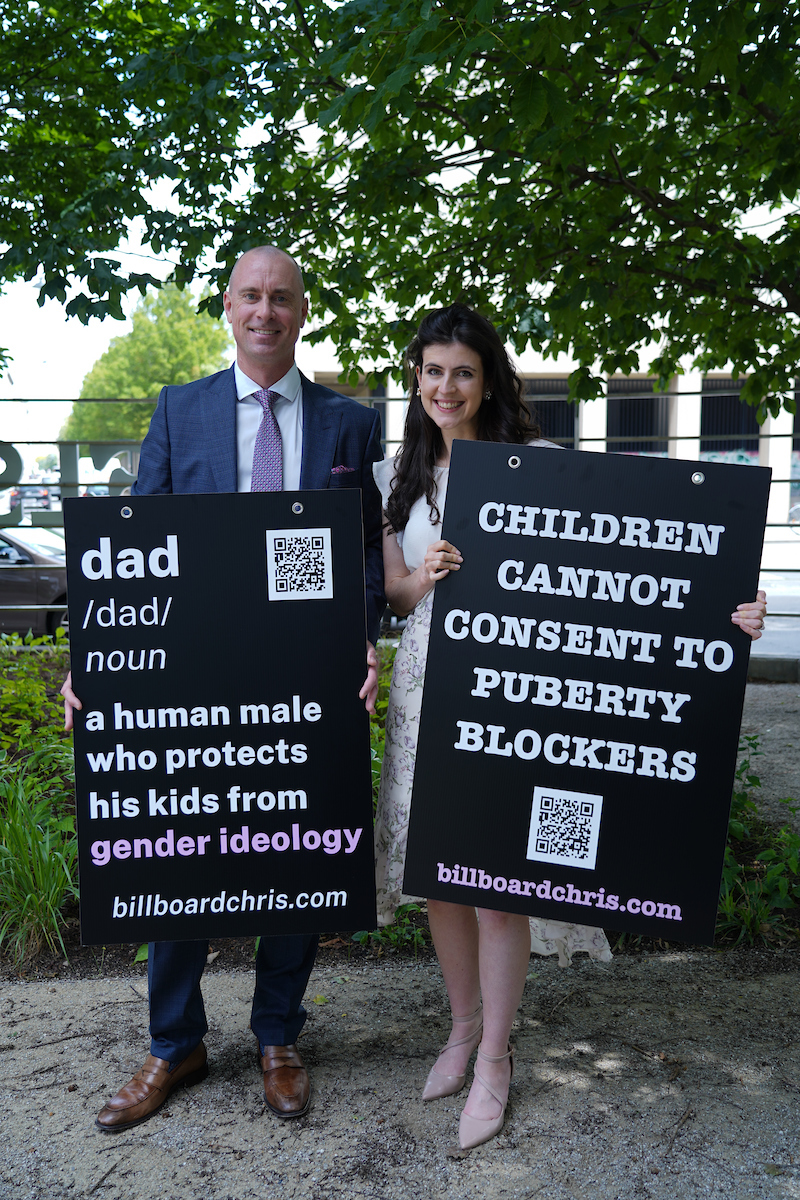
  • Pair were arrested for holding conversations in public space about gender ideology: “children cannot consent to puberty blockers”

BRUSSELS (9 December 2025) – A UK citizen and Canadian campaigner are seeking compensation after they were arrested by Brussels authorities for peacefully expressing views about the harmful effects of puberty blockers on children. 

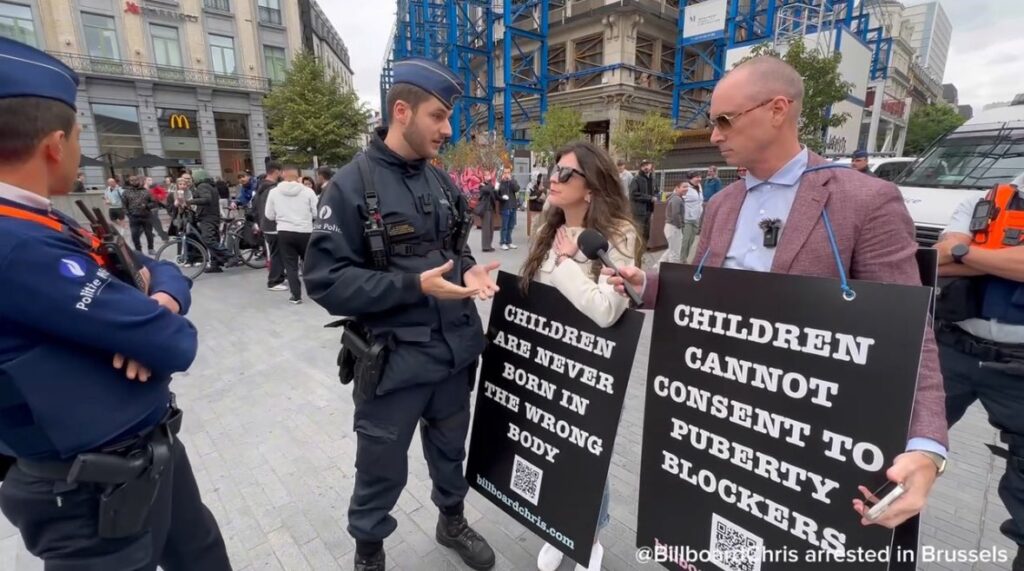
On 5 June 2025, Belgian police detained Chris Elston (known online as „Billboard Chris“) and ADF International’s Lois McLatchie Miller while they were conducting man-on-the-street interviews about gender ideology and the harmful effects of puberty blockers on children. To prompt conversation, they held signs reading: “Children are never born in the wrong body,” and „Children cannot consent to puberty blockers“.  

“It is scandalous to expose children to puberty blockers, and it is scandalous to silence and jail those who speak out about it. No one should fear arrest for defending children's safety.”

McLatchie Miller had initially called the police for help after being harassed repeatedly by hostile men on the street while trying to conduct interviews. An aggressive crowd formed around the pair. Upon arrival, 14 police officers decided to arrest McLatchie Miller and Elston rather than the aggressors. The pair were taken into custody, held for several hours, and had their signs confiscated and destroyed. 

Right to Free Speech Violated

Responding to the incident at the time, the U.S. State Department said: „We are aware of these reports and are looking into the matter. The State Department strongly supports the peaceful freedom of expression for all“. 

With the support of ADF International and Belgian legal counsel, Elston and McLatchie Miller have issued a formal demand letter to the Brussels Chief of Police, as well as to the ombudsman, the city, the police inspectorate, and the state.

The letter asserts that the authorities’ actions violated their freedom of expression and physical integrity under Belgian and international human rights law. It requests: a thorough and impartial investigation into the incident; official acknowledgment of rights violations; appropriate compensation and steps to ensure that such actions will not recur.  “Billboard Chris and Lois McLatchie Miller were arrested while holding consensual conversations on the street about the basic truth about the dangers of gender ideology. Any society that denies the basic right to express the truth is on a path to totalitarianism.  “Whether online or on the street, it is clear that free speech has reached a crisis point in Europe. EU governments cannot claim to uphold human rights while repeatedly violating the right to free expression.  “Belgian authorities not only failed to uphold the fundamental right to speak freely, they turned the power of the state against two individuals who were peacefully exercising their rights at the behest of increasingly aggressive bystanders, said Dr  Felix Böllmann, Director of European Advocacy for ADF International.  Elston, who regularly speaks about protecting children from harmful gender ideology in public squares across Europe and North America, including by sharing his conversations on social media, has publicly stated that he intends to return to Brussels and expects authorities to safeguard his right to speak freely.  “I’m speaking in the public square about one of the most significant medical human rights scandals of our day – the deliberate damaging of children’s bodies for an ideology which teaches they were born in the wrong body.  „Children don’t need drugs or scalpels – they are perfect just as they are, and need affirmation to love the skin they’re in. My engagement is based on mountains of medical evidence that has been established across the world. A society that punishes citizens for stating truth is on a dangerous path,” Elston said.   McLatchie Miller added: “Puberty blockers, and the cross-sex hormones that so often follow them, are highly dangerous drugs that can cause long-lasting damage to children – impacting their bodily development, bone density, mental health, lifelong fertility, and more. It is scandalous to expose children to these drugs, and it is scandalous to silence and jail those who speak out about it. No one should fear arrest for defending children’s safety.” 

Images for free use in print or online in relation to this story only

Pictured: Chris Elston, Lois McLatchie Miller

„Hassrede“-Verfahren wegen Bibel-Tweet zieht sich ins siebte Jahr. Finnisches Höchstgericht legt Verhandlungstermin fest 

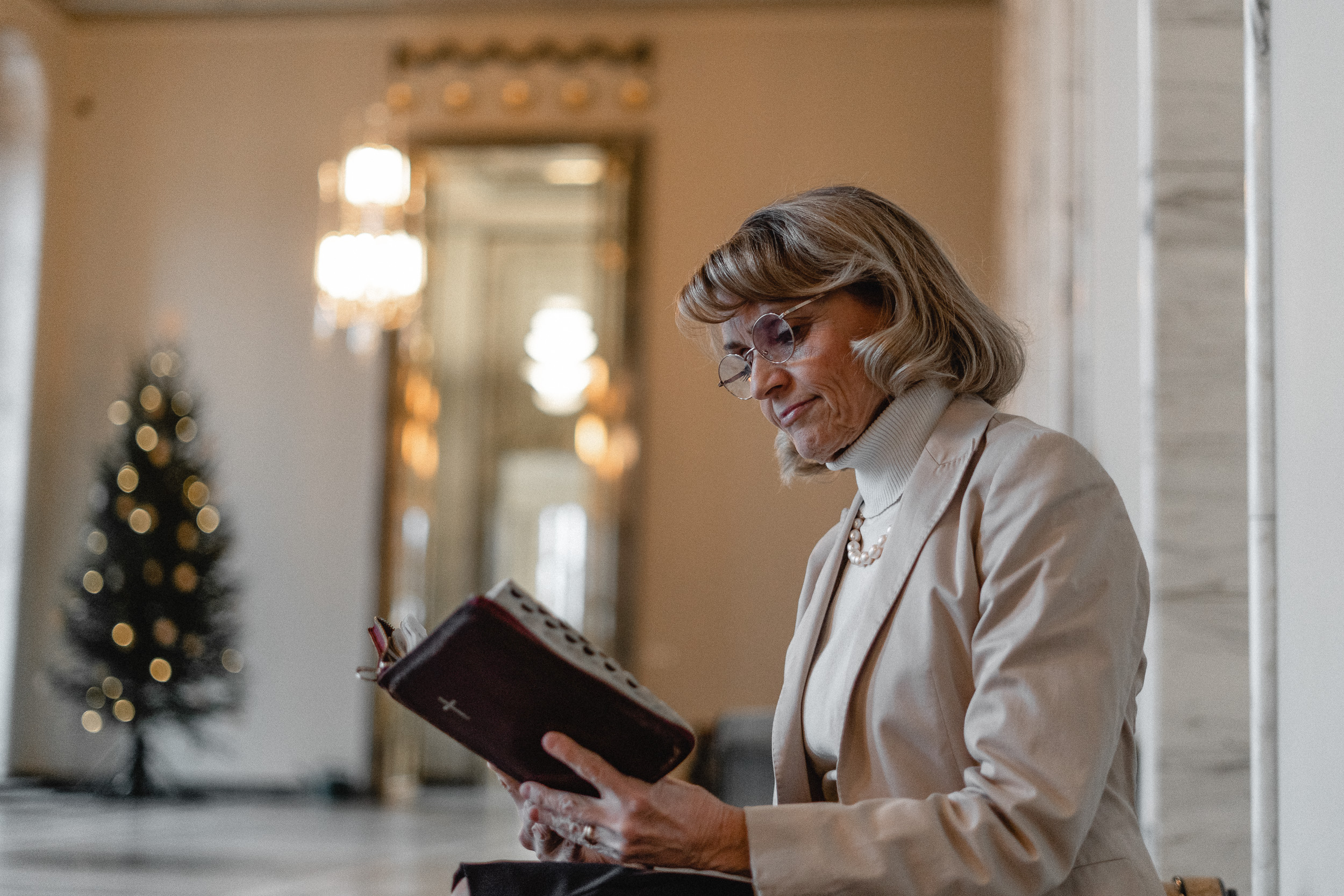
Päivi reads her bible in the Finnish Parliament building.
  • Zum dritten Mal muss sich die Abgeordnete Päivi Räsänen für ihren Tweet mit Bibelvers vor Gericht verantworten – der Fall kommt ans Höchstgericht
  • Räsänen ist wegen der Äußerung ihrer christlich geprägten Überzeugungen zu Ehe und Sexualität angeklagt, unter anderem in einem Tweet auf X im Jahr 2019
  • Seit Beginn des Prozesses 2019 koordiniert ADF International mit der Hilfe lokaler Partneranwälte die rechtliche Verteidigung von Päivi Räsänen
Päivi reads her bible in the Finnish Parliament building.

HELSINKI (25. August 2025) Der Oberste Gerichtshof Finnlands hat den Termin für eine mündliche Anhörung im Verfahren gegen die finnische Parlamentsabgeordnete Päivi Räsänen und den Bischof Juhana Pohjola festgelegt. Beide waren zuvor bereits zweimal einstimmig von den Vorwürfen der „Hassrede“ freigesprochen worden, nachdem sie öffentlich ihre christlichen Überzeugungen geäußert hatten. Mit der Verhandlung am 30. Oktober 2025 tritt die Zensurkampagne der Staatsanwaltschaft gegen Räsänen und Pohjola bereits in ihr siebtes Jahr.

„Es ist alarmierend, dass die Staatsanwaltschaft weiter gegen Räsänen vorgehen will. Die Urteile des Bezirks- und Berufungsgerichts waren eindeutig und einstimmig. Wie wir seit Jahren warnen, ermöglichen vage formulierte „Hassrede”-Gesetze ideologisch motivierte Prozesse wie diesen. Wir stehen hinter Päivi, unser Ziel ist es, dass solche absurden Fälle nicht mehr vor Gericht gebracht werden. In einer freien und demokratischen Gesellschaft sollte es allen erlaubt sein, ihre Überzeugungen ohne Angst vor Zensur zu äußern.”

Anklage für einen Tweet

Die ehemalige Innenministerin war 2021 wegen „Hassrede“ angeklagt worden, weil sie in einem Tweet von 2019, in einer Radiodiskussion von 2019 und in einer kirchlichen Broschüre von 2004 ihre auf dem Glauben basierenden Ansichten über Ehe und Sexualethik geteilt hatte. Bischof Juhana Pohjola wurde angeklagt, weil er Räsänens Broschüre vor fast zwei Jahrzehnten für seine Gemeinde veröffentlicht hatte. Ihr Fall erregte 2023 weltweites Medieninteresse, da Menschenrechtsexperten ihre Besorgnis über die Bedrohung der Meinungsfreiheit in Finnland zum Ausdruck brachten. 

Im aufsehenerregenden Prozess griff die Staatsanwältin zentrale christliche Inhalte an. Außerdem verhörte sie Räsänen und den Bischof zu theologischen Fragestellungen und ihrem persönlichen Glauben.

„Es ist kein Verbrechen, einen Bibelvers zu twittern oder sich an einer öffentlichen Debatte mit einer christlichen Perspektive zu beteiligen. Die Versuche, mich wegen meinen Überzeugungen strafrechtlich zu verfolgen, haben mir fünf sehr schwierige Jahre beschert. Ich hoffe, dass das Ergebnis als wichtiger Präzedenzfall für den Schutz der freien Meinungsäußerung gelten wird”, sagte Räsänen, ehemalige finnische Innenministerin und Großmutter von zwölf.

Zensurkampagne dauert trotz Freisprüchen an

Am 30. März 2022 sprach das Bezirksgericht Helsinki die Angeklagten einstimmig frei. Die Staatsanwaltschaft legte daraufhin im April 2022 Berufung ein. Der Fall wurde dann vom 31. August bis 1. September 2023 vor dem Berufungsgericht in Helsinki verhandelt. Am 14. November 2023 bestätigte das Gericht den Freispruch von Räsänen und Pohjola. Die Staatsanwaltschaft legte jedoch erneut Berufung ein und brachte die Anklagepunkte im Zusammenhang mit dem Tweet und der Broschüre vor den Obersten Gerichtshof. Dieser wird am 30. Oktober 2025 die mündliche Verhandlung durchführen.

Räsänens Verteidigung wurde von ADF International koordiniert. Das rechtliche Verteidigungsteam betonte den starken Schutz für die Meinungsfreiheit in den internationalen Menschenrechten. Die Staatsanwaltschaft hatte zuvor die Verwendung des Wortes „Sünde“ als beleidigend und damit rechtswidrig bezeichnet. Doch Räsänen hatte nur aus der Bibel zitiert – somit wäre ein Schuldspruch eine direkte Verurteilung von biblischen Inhalten.

Die Bibel auf dem Prüfstand

Im aufsehenerregenden Prozess griff die Staatsanwältin zentrale christliche Inhalte an. Außerdem verhörte sie Räsänen und den Bischof zu theologischen Fragestellungen und ihrem persönlichen Glauben. In ihrem eröffnenden Statement meinte die finnische Staatsanwältin Anu Mantila, dass „man die Bibel zitieren kann, aber Räsänens Interpretation und Meinung dazu kriminell“ seien.

Weitere Informationen zum Fall sowie Möglichkeiten, Päivi Räsänen zu unterstützen, finden Sie unter: https://adfinternational.org/de/paivi-rasanen

Bilder zur freien Verfügung in Verbindung mit der PR.
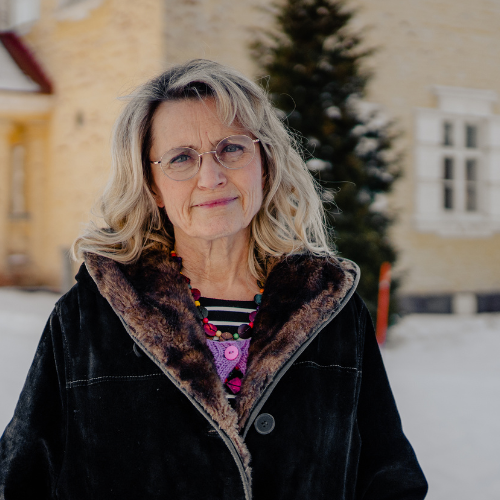
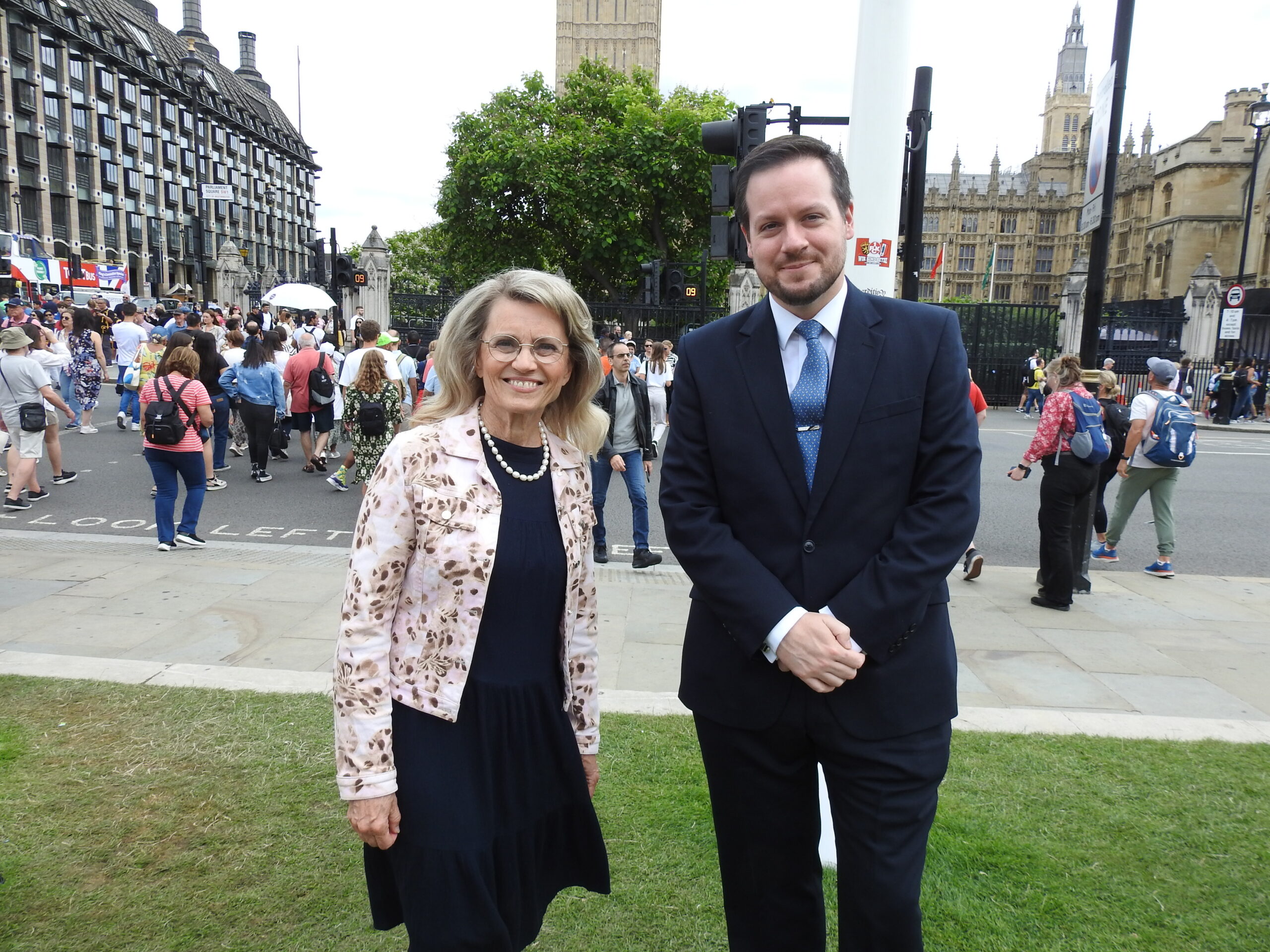
(von links: Päivi Räsänen, Räsänen mit Paul Coleman, Räsänen mit ihrem Ehemann Niilo)

Top human rights court deems Evangelical church’s appeal inadmissible

Breccia di Roma church in Rome, Italy
  • Italian Christian community forced to pay tens of thousands in taxes or make “structural modifications” to their place of worship to satisfy the authorities’ demands that their space look more like “a conventional church”

  • Represented by ADF International, the church had filed an appeal at the European Court of Human Rights, which has rejected the case

Breccia di Roma church in Rome, Italy

Strasbourg/Rome (March 24, 2025) – In a blow to religious freedom, the European Court of Human Rights (ECtHR) has ruled that the case of Breccia di Roma, an Evangelical church in Rome, is inadmissible. The church, represented by ADF International, had appealed to the Court after Italian authorities classified its place of worship as a „shop“ due to its non-traditional appearance, which led to a demand for around 50,000€ in taxes and fines. 

Despite the church’s argument that the modest architecture of its place of worship does not detract from its use for religious practice and that the Italian Tax Agency’s classification violated its right to worship freely, the ECtHR has decided not to intervene. The decision effectively upholds the Italian Supreme Court of Cassation’s ruling, denying the church the tax exemption granted to other religious buildings in Italy. 

“This ruling is disappointing, as it fails to recognize the right of churches to freely determine the manner of their worship. We continue to believe that the government has no right to dictate the appearance of a place of worship."

Court dismissal despite strong legal case 

Even though the church went up to the highest domestic court claiming a violation of its religious freedom, the ECtHR denied hearing the case claiming “non-exhaustion of domestic remedies”. The Court provided no explanation as to why it does not consider the church to have „exhausted domestic remedies,“ given that Breccia di Roma has no other domestic avenues left to pursue. The court also rejected the church’s claim of having been unjustly discriminated against, despite two lower instance courts in Italy having ruled in Breccia di Roma’s favor on this matter. The decision is final. Breccia di Roma must now pay tens of thousands in taxes or make “structural modifications” to their place of worship to satisfy the authorities’ demands.  

In recent years, “inadmissibility” has become the most common outcome of any application pending before the ECtHR. The court received 28,800 new applications in 2024, and 34,650 in 2023. At the same time, the court declared 25,990 pending applications inadmissible in 2024, and 31,329 in 2023.  

It is highly regrettable that Breccia di Roma will not receive justice from the European Court of Human Rights.This religious group was unjustly discriminated against because its chosen place of worship does not look like a conventional church in the eyes of the authorities. The small community is now burdened with thousands of Euros in taxes from which other religious buildings in Italy are exempted."

ADF International remains committed to advocating for the protection of religious freedom and ensuring that churches can operate without unnecessary discrimination based on their appearance or practices.

Breccia di Roma can be supported here.  

Case background 

The Evangelical Christian community, Breccia di Roma, which uses a former shop as it’s place of worship, obtained authorization to change the building’s intended commercial use – in part, so that the applicable taxation would align with the religious, i.e. non-commercial, nature of their activities.  

The Italian Tax Agency, however, claimed that the interior architecture of Breccia di Roma’s worship space was not sufficiently religious in appearance. Therefore, it required the church to pay commercial taxes. Despite winning in the lower courts, the Italian Supreme Court of Cassation sided with the authorities. With no further avenues for justice in Italy, the church turned to the European Court of Human Rights, which has now declined to decide their case.   

We don’t make money we bring people together closer to Christ. Granted, our building does not match the Great Synagogue, a mosque, or any of the basilicas in Rome. Also, because our resources are limited, we meet in a comparatively unspectacular building. But why would a state punish us for that? Our church is not worse or less spiritual, just because our architecture is different,” De Chirico asserted.    

Further details on the case can be found here. 

Images for free use in print or online in relation to this story only