Finnish MP Päivi Räsänen submits testimony before Canadian Senate Human Rights Committee on C-9 “Hate Speech” Bill

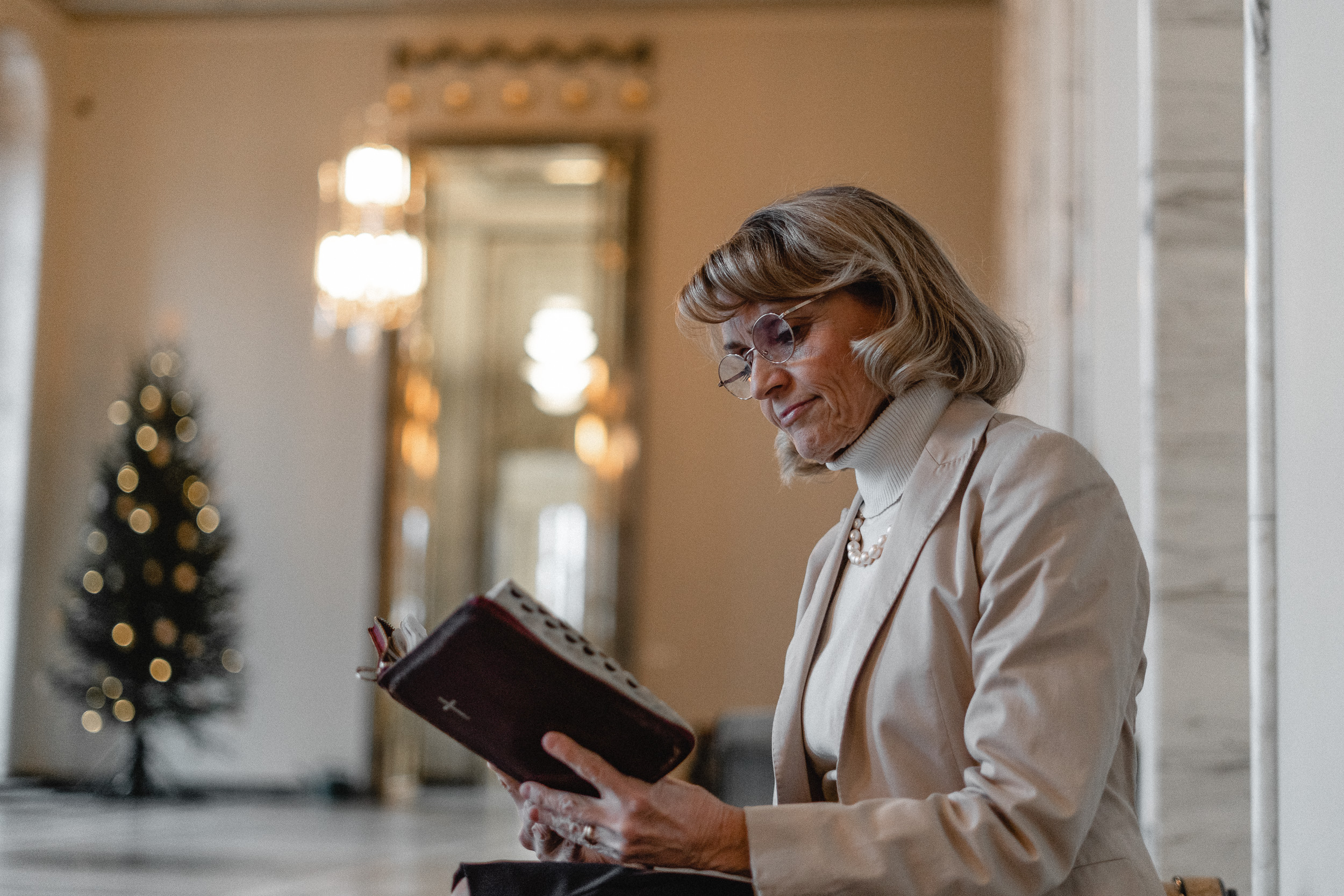
Päivi reads her bible in the Finnish Parliament building.
  • Päivi Räsänen shares her experience of prosecution and conviction by Finnish authorities for peacefully expressing Christian beliefs about marriage and human sexuality
  • Räsänen submitted testimony as Canadian Senate considers amending criminal code to weaken protections for opinions expressed on religious subjects

Päivi reads her bible in the Finnish Parliament building.

OTTAWA (2 JUNE 2026) – Finnish parliamentarian Päivi Räsänen, who was criminally convicted for a decades-old church booklet about marriage and sexual ethics, was invited to submit a testimony before the Canadian Senate Human Rights Committee on the C-9 bill concerning “hate speech”.

In her testimony, submitted for the hearing on 1 June, Räsänen discussed her experience of facing a seven-year prosecution and three criminal trials for sharing her Christian beliefs about marriage on social media and in a booklet written for her church. Citing her narrow conviction by the Finnish Supreme Court, Räsänen warned the Committee of the dangers of removing protections for religious speech in the public square.

The former Interior Minister’s testimony comes as Canada’s House of Commons considers Bill C-9, which proposes to weaken protections for speech on religious matters in the Canadian criminal code.

The bill, among other things, removes a provision that protects religious statements made in “good faith”, potentially criminalising religious speech that would otherwise be lawful.

If passed, the bill would enable the prosecution of religious speech if the courts consider that it “wilfully promotes hatred against any identifiable group”. It carries a punishment of up to two years’ imprisonment.

“My experience in Finland has shown me that laws which criminalize speech have a very real cost not only to individuals, but also society at large. They encourage law-abiding citizens to censor their speech, and deprive wider society of conversations of critical importance."

In her testimony, Räsänen emphasised the dangers that “hate speech” laws pose for fundamental freedoms and democratic societies:

“Censorship is one of the greatest existential threats to today’s democracies in Europe. You do not need to agree with my beliefs to see the danger of criminalizing peaceful speech. When the state controls which ideas and beliefs may be expressed, democracy becomes fragile. My case reveals where this path can lead.

“My experience in Finland has shown me that laws which criminalize speech have a very real cost not only to individuals, but also society at large. They encourage law-abiding citizens to censor their speech, and deprive wider society of conversations of critical importance.

Räsänen further warned against ambiguous “hate speech” legislation that criminalises the peaceful expression of certain beliefs. She recalled the Finnish Supreme Court’s decision to uphold her conviction despite acknowledging that her booklet “did not contain incitement to violence or comparable threat-like fomenting of hatred”.

She added that censorial legislation has negative consequences both for those prosecuted and others who will no longer feel able to express their views:

“Even when courts ultimately acquit, our story shows how the process itself becomes the punishment. We have faced years of investigation, public scrutiny, and legal uncertainty. This creates a chilling effect, not just for Christians, but for everyone who holds views outside a narrow, state-approved consensus… Through fear, “hate speech” laws undermine public discourse and drive diverse views from the public square.”

Räsänen concluded: “I look forward to the day when the fundamental right to free speech is upheld for all who seek to peacefully express their convictions.”

Background

In March 2026, Räsänen was found guilty of “insult” by the Finnish Supreme Court for expressing her Christian beliefs about human sexuality in a 2004 booklet produced for her church. Lutheran Bishop Juhana Pohjola and the Luther Foundation Finland were convicted alongside her for publishing the booklet.

The long-serving Finnish parliamentarian’s nearly seven-year criminal prosecution began after she shared her Christian beliefs about marriage and sexual ethics in a 2019 tweet, leading to a police investigation that resulted in further charges for expressing her beliefs in a 2019 live radio debate and authoring the 2004 church booklet.

Formally charged with “agitation against a minority group” in 2021, Räsänen was acquitted on all charges by two lower courts in 2022 and 2023. Nevertheless, the state prosecutor appealed the decision concerning the Bible verse tweet and church booklet. In a narrow 3-2 ruling, the Finnish Supreme Court upheld the acquittal for the tweet but convicted Räsänen, the Bishop and the Luther Foundation Finland for the booklet.

In May, Räsänen announced her intention to appeal her case to the European Court of Human Rights, alongside Bishop Pohjola and the Luther Foundation Finland.


Images for free use in print or online in relation to this story only

Finnish Parliamentarian Convicted of “Insulting» a Group for 20-year-old Church Booklet to Appeal to European Court of Human Rights

  • Päivi Räsänen announces intention to appeal to Europe’s top human rights court following criminal conviction by Finnish Supreme Court for a decades-old church booklet expressing her beliefs on marriage and sexuality
  • ADF International to represent Räsänen in landmark case for free speech across Europe

HELSINKI (7 May 2026) – A longstanding Finnish parliamentarian criminally convicted in March for “insulting” a group by her country’s Supreme Court has announced that she will appeal her case to the European Court of Human Rights, in the final legal juncture for this critical case for free speech in Europe.

Päivi Räsänen was found guilty for expressing her beliefs about marriage and sexuality in a booklet she wrote for her church over 20 years ago. Lutheran Bishop Juhana Pohjola and the Luther Foundation Finland were also convicted for publishing the booklet for the church.

They were criminally convicted under Finland’s 2011 “hate speech” law which prohibits “agitation against a minority group” under a section of the Finnish criminal code titled “war crimes and crimes against humanity”.

The appeal comes after the former Interior Minister’s nearly seven-year prosecution and unanimous acquittal by two lower courts in Finland. In March 2026, a mixed Supreme Court ruling acquitted Räsänen for her 2019 Bible verse tweet, but convicted her and Bishop Pohjola for “making and keeping available to the public a text that insults a group” in the 2004 church booklet on sexual ethics, according to a 3:2 majority.

Commenting on her decision to appeal, Räsänen said: «The failure of the Finnish Supreme Court to uphold freedom of speech has set a dangerous precedent in my country and across Europe. I feel it is my duty to appeal this decision, to reinstate respect for the basic human right that all are free to peacefully express their views in the public square.”

«I know I am not alone in facing unjust persecution under ‘hate speech’ laws that make sharing Christian beliefs a criminal offense. I make my appeal in the hope that the European Court of Human Rights will recognise that peacefully expressing one’s beliefs is never a crime, and ensure that this basic freedom is protected for all.»

Final chance for freedom to prevail

Räsänen, a long-serving parliamentarian, medical doctor, and grandmother of twelve, has been criminally prosecuted for nearly seven years for sharing her Christian beliefs about marriage and sexuality in a 2019 tweet and live radio debate, as well as for authoring the 2004 church booklet, for which she was charged alongside Bishop Pohjola and the Luther Foundation Finland.

In 2021, Räsänen was formally charged with “agitation against a minority group” under a section of the Finnish criminal code titled “war crimes and crimes against humanity”.

Following unanimous acquittals on all charges by two lower courts in 2022 and 2023, the state prosecutor appealed again to the Finnish Supreme Court regarding the tweet and church booklet. The case was heard in October 2025, and in March 2026 the Supreme Court upheld the acquittal for the Bible verse tweet, but convicted Räsänen and the Bishop for the 2004 booklet. The radio show charge was not appealed to the Supreme Court, so that acquittal stands.

The Supreme Court convicted Räsänen under a law that was introduced years after the booklet was published, and did so despite the court’s admission that the booklet “did not contain incitement to violence or comparable threat-like fomenting of hatred”.

In an alarming display of censorship, the Supreme Court fined Räsänen, Bishop Pohjola, and the Luther Foundation Finland several thousand Euros, and ruled that the condemned statements within the booklet must be “removed from public access and destroyed”.  

«The Supreme Court’s decision to convict myself and the Luther Foundation for publishing a booklet for our church was extremely disappointing,” added Bishop Pohjola. «As a Bishop, I have a responsibility to guide those under my pastoral care, and I am deeply concerned by the state’s extensive efforts to censor our publications and decide what can and cannot be taught by religious leaders to members of their own group.

«It is our intention to join Päivi Räsänen in appealing to the European Court of Human Rights in defence of our free speech and religious freedom rights, and those of everyone in Finland.»

An appeal to the European Court of Human Rights is the final legal opportunity for the conviction to be overturned, and marks a seminal moment for the fundamental right to free speech to be upheld in Finland and throughout Europe.

«Hate speech» laws enabling state censorship

Räsänen’s case has garnered significant international interest, with the prosecution’s extensive criticism of Räsänen and Bishop Pohjola’s beliefs provoking high-profile responses, including from the US State Department.

Senior Finnish officials also questioned the ruling: Justice Minister Leena Meri argued that the legislation is “not sufficiently precise and especially not predictable as required by the principle of legality in the criminal code,” adding that “it is very difficult for people to know what is prohibited and what is permitted”.

The judgment has exacerbated existing concerns about the precarious state of free speech across Europe, where vaguely worded «hate speech» laws are increasingly wielded to silence dissenting views.

The appeal of Räsänen, who will be represented by ADF International, has significant global implications for freedom of speech.

«The retroactive censorship of a 20-year-old booklet produced by and for a church community is among the most chilling developments in the ongoing attack on freedom of speech across Europe,» said Lorcán Price, legal counsel with ADF International, serving on Räsänen’s legal team.

«As subjective ‘hate speech’ laws are increasingly being used to silence and criminalise peaceful expression of beliefs, the European Court of Human Rights has a responsibility to decisively protect the freedom of expression that is necessary in a truly democratic society.

«The ‘hate speech’ laws used to convict Päivi Räsänen and Bishop Pohjola clearly contradict international human rights law regarding freedom of speech and freedom of religion. If such laws can be interpreted so broadly as to include a decades-old church booklet, how can anyone in Finland be certain that anything they have said, or will say, will not be prosecuted? It is imperative that the European Court of Human Rights clarify and protect these fundamental freedoms definitively.»

Images for free use in print or online in relation to this story only

Finnish Parliamentarian on trial for Bible tweet testifies before U.S. Congress: «European censorship is a worldwide concern” 

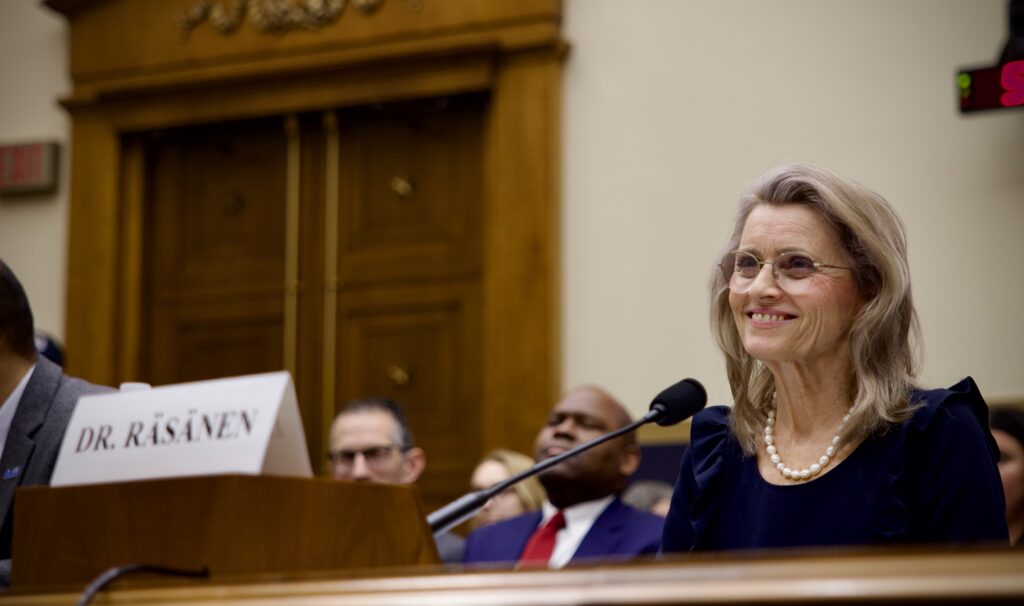
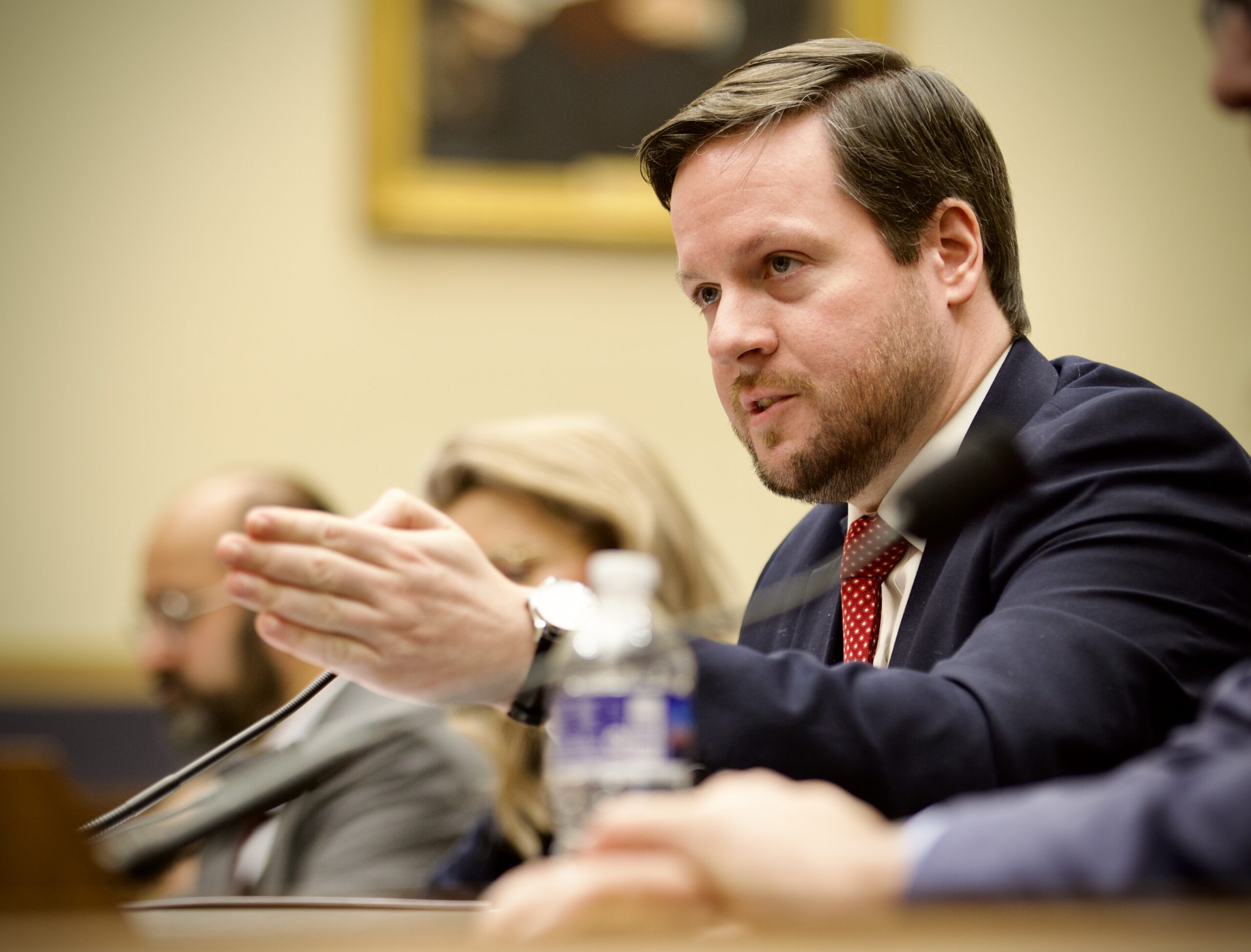
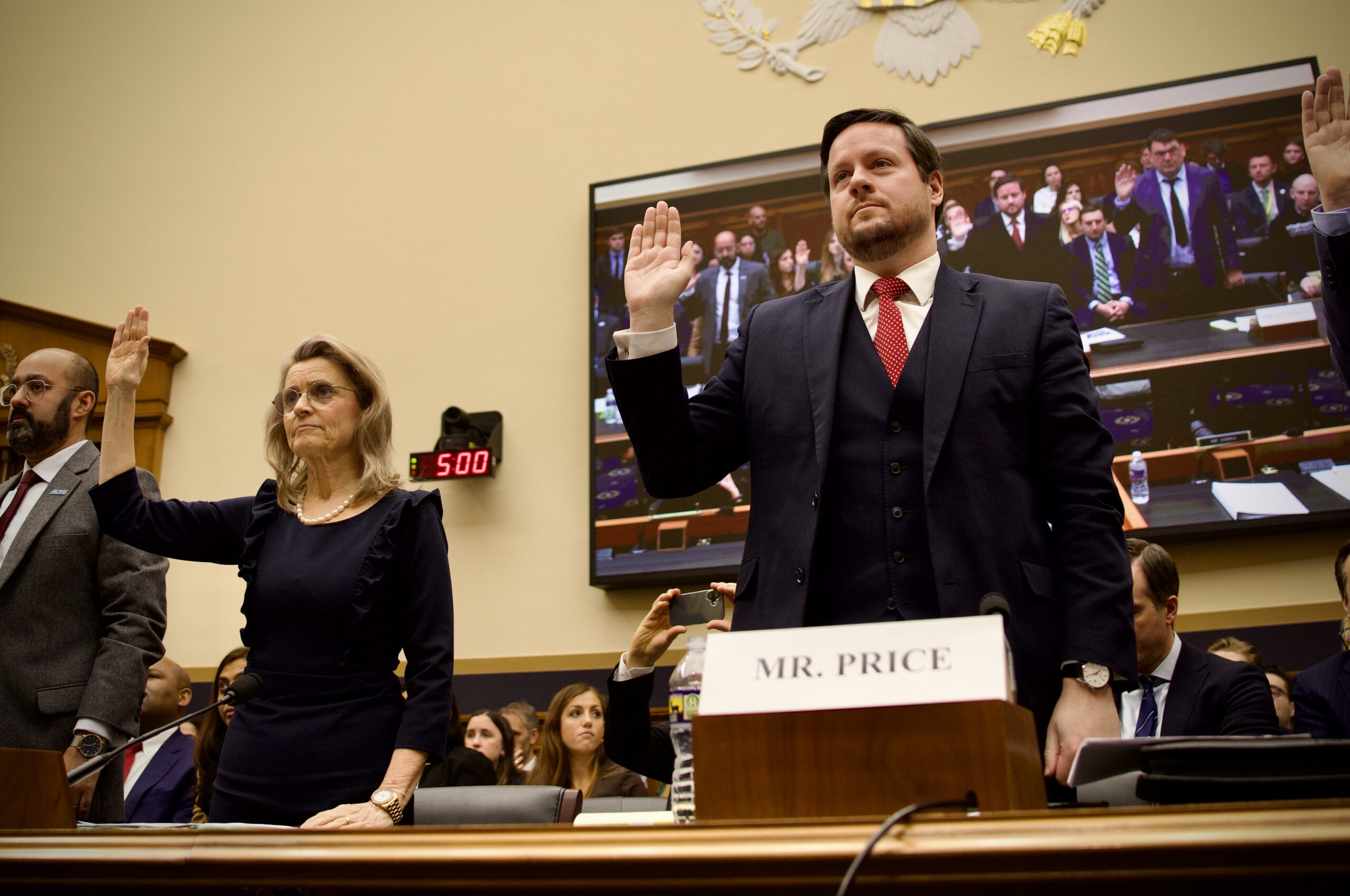
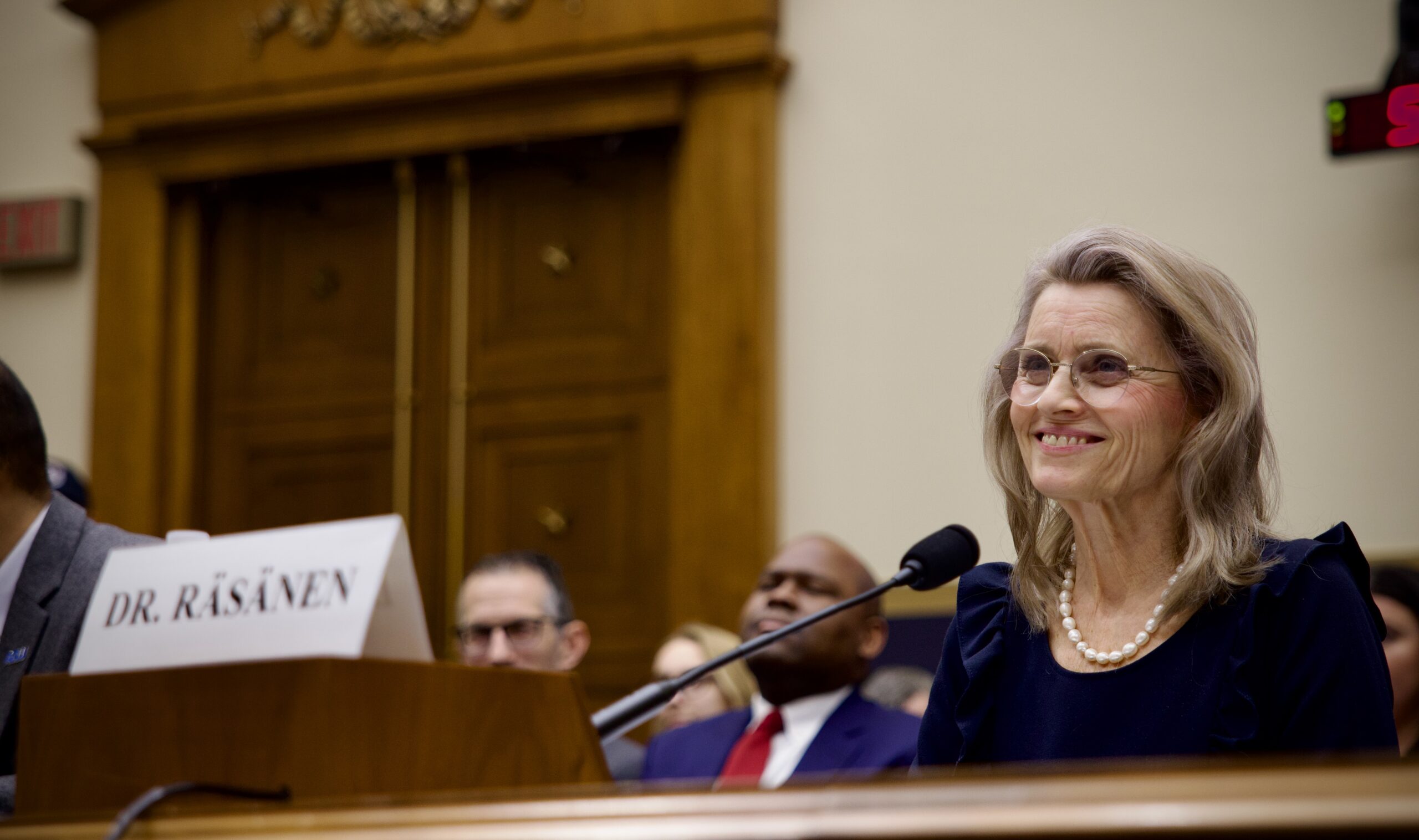
Photo of Päivi Räsänen In the US House of Judiciary hearing

  • At House Judiciary Committee hearing, Parliamentarian Päivi Räsänen testifies about her six-year-long criminal prosecution for tweeting a Bible verse under Finnish “hate speech” law. 
  • An ADF International European legal expert further testified on the dangers of European online censorship, including through the EU Digital Services Actin addition to Irish comedian Graham Linehan, who testified on his UK arrest for X posts. 
Photo of Päivi Räsänen In the US House of Judiciary hearing

WASHINGTON, D.C. (Feb. 4) – Today, experts from Europe delivered a warning to the U.S. Congress about the growing threat of European censorship to American free speech.

Finnish Member of Parliament Päivi Räsänen addressed lawmakers in a hearing titled “Europe’s Threat to Speech and Innovation: Part II,” hosted by the House Judiciary Committee. In her testimony, she detailed her ongoing criminal prosecution in Finland for expressing her Christian beliefs online, including in a 2019 Bible-verse tweet. Räsänen’s case has become one of the most prominent examples of the criminalization of peaceful speech in Europe.  

Speech that is lawful today can become criminalized tomorrow. This should concern every person that values freedom,” Räsänen said. «My case shows where this path can lead. Recent developments from the European Union, like the Digital Services Act, make European censorship a worldwide concern.” 

Prosecuted for over six years under a “hate speech” provision in the section of Finland’s criminal code pertaining to war crimes and crimes against humanity, Räsänen is currently awaiting a verdict from the Supreme Court of Finland. Her legal defence has been coordinated by ADF International. 

“When the state controls which ideas and beliefs may be expressed, democracy becomes fragile,” Räsänen added. 

“Speech that is lawful today can become criminalized tomorrow. This should concern every person that values freedom. My case shows where this path can lead. Recent developments from the European Union, like the Digital Services Act, make European censorship a worldwide concern."

Lorcán Price, Irish barrister and Legal Counsel with ADF International, also testified before the Committee, outlining how the European Union is using online speech regulations such as the Digital Service Act to create a dangerous worldwide censorship regime. 

“It is now undeniable that the reach of the DSA is not just a European problem,” Price said in his testimony. “The Commission has fired the first shots in a global struggle over whether people can speak the truth and whether American companies including Google, Bing, and Meta are free to continue to drive Internet innovation or instead be forced to help Europe silence speech worldwide.” 

Price warned that the EU’s speech restrictions risk being exported globally, particularly through large online platforms that operate across borders, raising concerns for Americans whose lawful speech could be restricted through foreign censorship. 

He cited the DSA’s first major fine of €120 million against X, which was issued in December for alleged violations of transparency and user-protection obligations. 

“The enormous fines levied on X by the EU commission proved beyond all doubt that the EU means to strangle free speech by a systematic assault on US companies,” Price said. In his written testimony, he added, “While these penalties are the first that the EU has imposed under the provisions of the DSA, be under no illusions, they will not be the last.”  

Graham Lineham, an Irish comedian and writer who was arrested for his X posts in September 2025 in London, also provided a witness testimony on the panel. 

Background

The hearing follows a recent report from the House Judiciary Committe previous House Judiciary Committee session on the threat of Europe’s growing censorship, during which Price also testified, warning lawmakers that European censorship laws threaten free expression far beyond the European Union. The initial hearing focused largely on the EU’s Digital Services Act and its implications for Americans’ online speech. Most recently, The House Judiciary Committee warned about the DSA’s risks to American free speech in a new report «The Foreign Censorship Threat, Part II: Europe’s Decade-Long Campaign to Censor the Global Internet and How it Harms American Speech in the United States. 

The DSA grants the European Commission broad authority to regulate content on large online platforms. While framed as an online safety measure, the law creates strong incentives for platforms to remove lawful speech through heavy fines, government oversight, and reliance on “trusted flaggers” to identify allegedly problematic content. Because major platforms operate globally, the DSA risks establishing a de facto worldwide censorship regime that affects users far beyond Europe. 

ADF International has been at the forefront of raising concerns about the DSA and defending individuals targeted under Europe’s expanding speech laws, including providing legal support in Räsänen’s case, which has drawn international attention as a warning of the erosion of fundamental freedoms.

Images for free use in print or online in relation to this story only

Finnish Parliamentarian on Trial for Bible Tweet to Testify Before U.S. Congress on Europe’s Growing Censorship Regime 

  • Finnish Parliamentarian Päivi Räsänen to testify at House Judiciary Committee hearing on her criminal prosecution for “hate speech,” joined by ADF International European legal expert 
  • Räsänen, prosecuted for over six years, is currently awaiting a verdict from the Supreme Court of Finland on criminal charges for tweeting a Bible verse in 2019 

WASHINGTON, D.C. (Jan. 30) – The U.S. House Judiciary Committee will hold a hearing titled “Europe’s Threat to Speech and Innovation: Part II,” examining how European speech laws and censorship regimes are impacting free expression, innovation, and democratic debate. 

Witnesses, including Finnish Parliamentarian Päivi Räsänen and ADF International legal expert Lorcán Price, will warn lawmakers of Europe’s expanding speech restrictions, including criminal prosecutions for peaceful expression. These restrictions pose serious threats to fundamental freedoms and risk being exported beyond Europe to the United States. Graham Linehan, an Irish comedian who was arrested for his X posts in September 2025, will also serve as a witness on the panel.

Räsänen’s case has become one of Europe’s most prominent examples of the criminalization of speech, after she was criminally charged and put on trial for expressing her Christian beliefs online in a 2019 tweet. She is currently awaiting a verdict after facing criminal trial before the Supreme Court of Finland in October. 

Price will offer testimony regarding Europe’s censorship crisis and the European Union’s attack on free speech using the Digital Services Act (DSA), which is one of the most dangerous restrictions on free speech in the digital age. The House Judiciary Committee warned about the DSA’s risks to American free speech in its July report “The Foreign Censorship Threat: How the European Union’s Digital Services Act Compels Global Censorship and Infringes on American Free Speech”. 

When: 
Feb. 4, beginning at 10 a.m. EST 

Where: 
Rayburn House Office Building, Washington, D.C., and via livestream 

Media Attendance: 
Members of the media are encouraged to attend the hearing in person or view the livestream. Interviews with speakers may be requested in advance. 

To schedule interviews or for additional information, contact ADF International Communications Officer, Anna Rose Myrick at [email protected] or (480)-371-7941.

Images for free use in print or online in relation to this story only