Christian Convert From Islam Freed After Imprisonment Over Facebook Posts

  • Contributor to Facebook group for Christian converts from Islam has been freed after over three years in detention 
  • Abdulbaqi Saeed Abdo, father of 5, withstood severe conditions – and period of hunger strike – before being released from prison this month, with support from ADF International
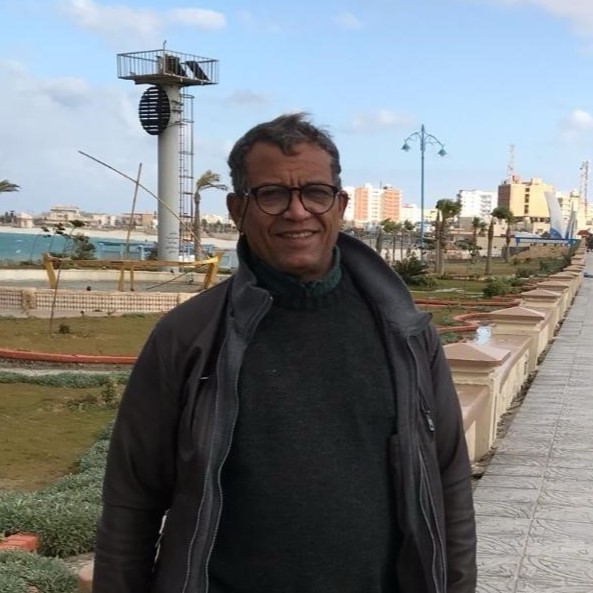
CAIRO (2 February 2025) – The father of 5 imprisoned for participating in a private Facebook group about converting to Christianity from Islam has been freed from detention after 3 years – but his case remains open.

Abdulbaqi Saeed Abdo, originally from Yemen, was part of a Christian Facebook group that discussed Islamic theology and apologetics. In 2021, Abdo was arrested while he was living as a UNHCR-registered asylum seeker in Egypt. He had originally fled to Egypt because he faced death threats in Yemen after converting to Christianity.  

"It isn’t right that a government should tear me away from my family, keep me in these awful conditions, only because of the faith in which I peacefully choose to believe."

He was moved between several detention centers throughout his three years of imprisonment, even undergoing a hunger strike within his final six months in an act of desperation. The husband and father of five suffered from poor health in relation to his heart, liver, and kidneys. 

“I endured many hardships in prison. It isn’t right that a government should tear me away from my family, keep me in these awful conditions, only because of the faith in which I peacefully choose to believe. 

«I thank everyone who prayed for me while I was in prison, cared about and followed up on my case, and shared the joy of my release from prison,” commented Abdo upon his release. 

Abdo’s son, Husam Baqi, added: 

«It is hideous that individuals are not allowed to believe and express their beliefs freely and are imprisoned or killed for their faith.»

"This case shows the extremity of unchecked government censorship in the online age."

Abdo continues to fight his open legal battle with support from ADF International, who helped secure his release by submitting his case to the UN Working Group on Arbitrary Detention. 

A Global Trend of Online Censorship

Commenting on the case, Kelsey Zorzi, Director of Advocacy for Religious Freedom for ADF International, said: 

“The arbitrary detention of this husband and father without a criminal trial, and the lack of an opportunity for him to defend himself against alleged offenses, constitutes a severe violation of human rights. 

«The peaceful expression of one’s religious convictions cannot be a crime – not in Egypt, nor anywhere else in the world. This case shows the extremity of unchecked government censorship in the online age. The world must take note.” 

Support from around the World

While Abdo sufered in prison, Ayaan Hirsi Ali, research fellow at Stanford University’s Hoover Institution, described his unfair treatment as “grotesque”. 

«The imprisonment of Yemeni refugee Abdulbaqi Saeed Abdo at the hands of Egyptian authorities is a surreal example of censorial blasphemy policies in action,» she said.  

Previously a prominent atheist, Ali announced in November that she was converting to Christianity. Because of her outspoken rhetoric against the Muslim Brotherhood, she faces constant death threats.  

«This is the logical conclusion to a trend that empowers authorities to brutalize innocent people for free expression on social media. From China to Pakistan, from Russia to Syria, from the UK to Egypt—free speech must urgently be defended from our age’s resurgent Stalinism,” she added.

Images for free use in print or online in relation to this story only

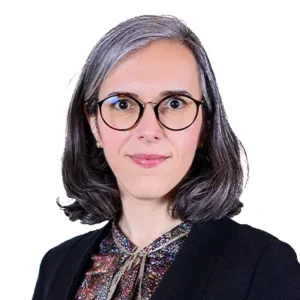
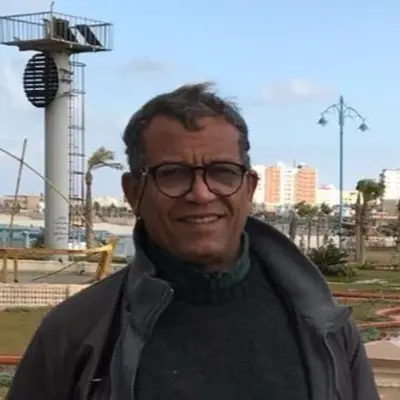
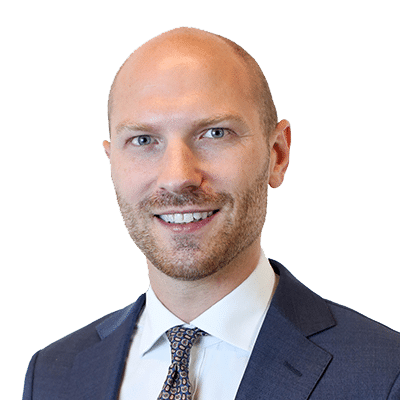
PICTURED: Abdulbaqi Saeed Abdo; Kelsey Zorzi, ADF International

European Politicians Call for Social Media Censorship and Attack X and Meta’s Free Speech Policies as ‘Threat to Democracy’

  • X-owner Elon Musk accused of being in ‘conspiracy’ with ‘populists and the far right’ during debate at the Council of Europe

  • UK Labour MP called out by MEP for criticising Mr Musk and Meta’s free speech policy and for voicing ‘support for Britain’s notoriously heavy-handed prosecutions for social media posts during last summer’s riots’

  • ADF International executive director Paul Coleman: ‘We are living in a new bipolar order of speech’ between Europe and USA

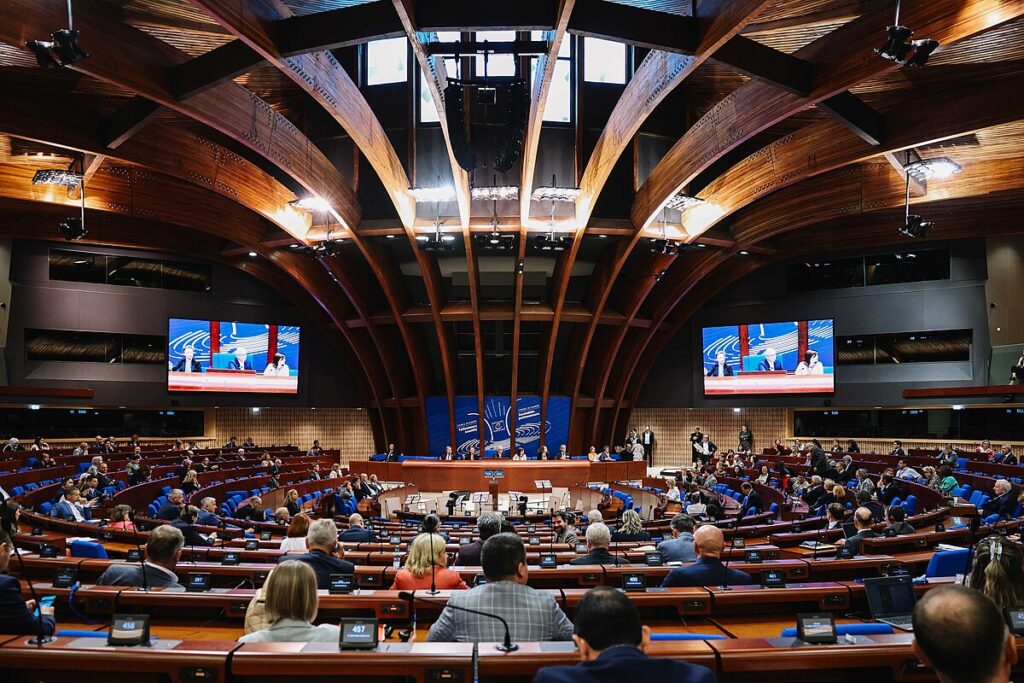
STRASBOURG (1 February 2025) European politicians on Thursday called for social media censorship to “protect democracy” and criticised X and Meta’s free speech policies during a debate at the Council of Europe.

Politicians at the Parliamentary Assembly of the Council of Europe (PACE) called for censorship, in the form of tackling so-called “misinformation”, “disinformation” and “hate speech” online, and voted in favour of a report on social media content regulation.

This follows the European Union last week doubling down on online censorship through the Digital Services Act (DSA), with the same justification of “protecting democracy”.

During Thursday night’s debate, Elon Musk and Mark Zuckerberg were singled out as threatening democracy with their free speech policies.

Belgian politician Christophe Lacroix said: “Why is Elon Musk in the US government?… There is a conspiracy, in any case a conjunction of interests between populists and the far right and the billionaire owners of social networks to effectively interfere in the electoral process.”

UK Labour MP Cat Eccles said Mr Musk’s “rise of influence” was “something we should all be worried about” and criticised Meta for its new free speech policy, which she characterised as “abandoning fact checking”.

She also indicated support for the notoriously heavy-handed prosecutions for social media posts during Britain’s riots last summer, saying: “While we must value freedom of expression, we must remember that it does not protect individuals from the consequences of their actions. In the UK we saw this play out recently with the horrendous Southport murders last summer and subsequent riots, with people arrested and charged for inciting hatred and violence on all sides.”

French politician Sandra Regol said free speech online posed a threat to “our democracy” and “diversity”.

She said: “We’ve heard a lot about freedom of expression. It’s supposed to be the guarantor of this diversity, it’s supposed to be the guarantor of our democracies and, in a crazy, absolute reversal of values, it’s now the tool that’s destroying this diversity.”

Three amendments were proposed in Thursday’s debate to preserve freedom of expression and they were all rejected.

But an amendment to the report calling for collaborating “with journalists and fact-checking organisations to effectively combat disinformation» was adopted by two-thirds majority.

This puts Europe further at odds with the US regarding free speech, after President Trump last week signed an executive order to end federal government censorship. 

Luxembourg MEP Fernand Kartheiser said:

“Free speech is under serious threat in Europe. It was deeply concerning to see politicians at the Council of Europe calling for online censorship in the name of ‘protecting democracy’.

“Democracy is impossible without free speech, but for some reason, too many politicians, including from the UK, can’t seem to grasp this.

“Labour MP Cat Eccles voiced support for Britain’s notoriously heavy-handed prosecutions for social media posts during last summer’s riots in the country.

“European politicians should consider how their support for censorship and their attacks on the free speech policies of American citizens Elon Musk and Mark Zuckerberg’s platforms will affect our relationship with our vital ally the United States.

“The US has made its commitment to free speech clear and US Vice President JD Vance already threatened last year to withdraw US support for NATO if the EU censors X.

“For the sake of truly preserving European democracy and also good relations with America, all attempts to impose censorship in Europe, including through the Digital Services Act, must end.”

Paul Coleman, executive director of ADF International, a global organisation dedicated to protecting fundamental freedoms, including at the European institutions, stated:

“We are living in a new bipolar order of speech. On the one hand, Europe is doubling down on censorship, while the US is recommitting to its free speech heritage.

“This will usher in an unprecedented era of tension within the West itself over this most basic of human rights, and it is the responsibility of all who value freedom to side with the protection of free speech.”

EU doubled down on social media censorship with DSA last week

Last week, the European Commissioner in charge of enforcing the DSA, Henna Virkkunen, announced a number of measures to further crack down on speech, including doubling the number of staff working on enforcement from 100 to 200 by the end of 2025.

The Digital Services Act (DSA), which came into full force in February 2024, is an EU regulation that aims to tackle “misinformation”, “disinformation”, and “hate speech” online.

By requiring the removal of so-called “illegal content” on social media platforms, it censors free speech both within and outside the EU and could even affect the speech of US citizens online.

On the DSA, Mr Coleman commented:

Last week, the European Commission made clear that it will be increasing its efforts to suppress speech, arguing that the Digital Services Act is needed to ‘protect democracy’ from so-called ‘misinformation’, ‘disinformation’ and ‘hate speech’ online.

“As we saw clearly from Thierry Breton’s letter to Elon Musk this summer, warning him not to breach the DSA ahead of his interview with Donald Trump, the DSA will be used to censor views disfavoured by those in power.

“The DSA poses a grave threat to the fundamental right to freedom of expression, guaranteed to every person under international law. It is not the place of any authority to impose a narrow view of acceptable speech on the rest of society.

“The effects of the DSA will not be confined to Europe. There are legitimate worries that the DSA could censor the speech of citizens across the world, as social media companies could regulate their content globally to comply with European standards.”

Other measures announced by Commissioner Virkkunen included making a previously voluntary code of conduct on “illegal hate speech online” legally binding and advancing a framework called the European Democracy Shield (EDS).

The EDS uses fact checkers and NGOs to combat so-called “foreign information manipulation, interference, and disinformation”.

Under the DSA, social media platforms can face massive fines of up to 6% of global annual turnover for failing to remove so-called “misinformation”, “disinformation” and “hate speech”.

Images for free use in print or online in relation to this story only

How the EU Digital Services Act (DSA) Affects Online Free Speech in 2025

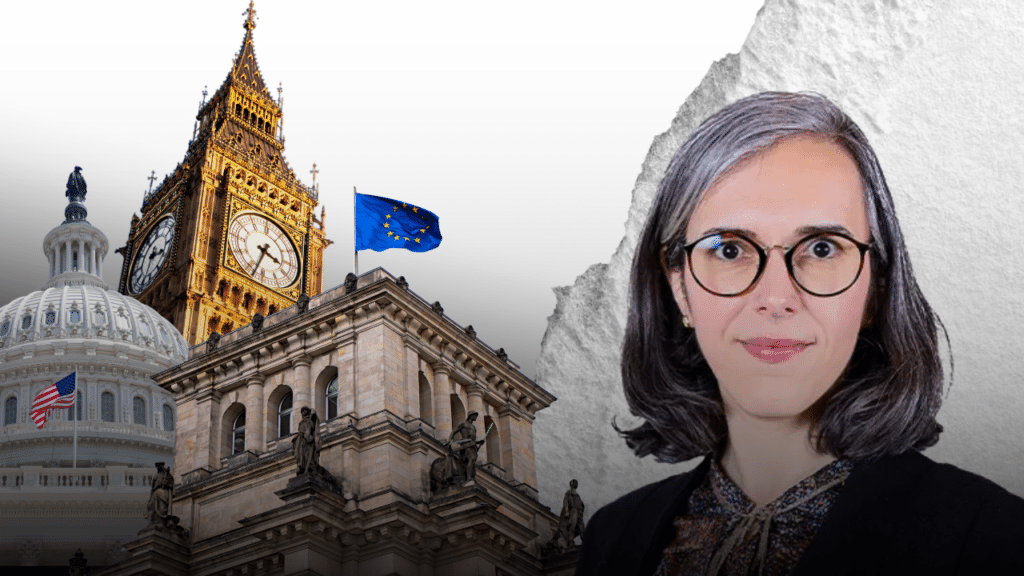
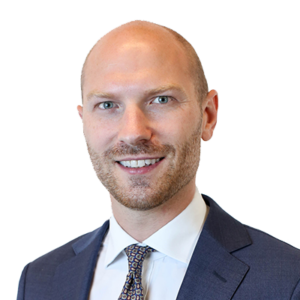
Dr. Adina Portaru is ADF International's EU Digital Services Act expert

Nicknamed the ‘Digital Surveillance Act’, the EU’s key online platform legislation hit its one-year mark in February 2025

Imagen de Dr. Adina Portaru
Dr. Adina Portaru

Senior Counsel, Europe, ADF International
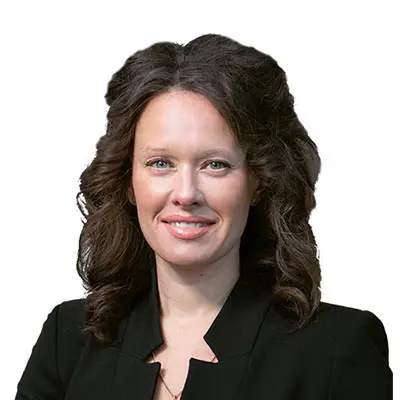
Adina Portaru is ADF International's EU Digital Services Act expert

The European Digital Services Act (DSA), which took effect last February, has been hailed as a landmark law designed to bring order to the digital world. Yet, beneath the surface of supposedly protecting democracy, lies a framework fraught with overreach, ambiguity, and the erosion of fundamental freedoms.

The EU Commission claims that the Digital Services Act is needed to “protect democracy” by tackling so-called “misinformation”, “disinformation” and “hate speech” online. It promises to create a safer online space by holding digital platforms—particularly “Very Large Online Platforms” (VLOPs) such as Google, Amazon, Meta and X—accountable for addressing these terms.

However, its implementation raises grave concerns. By mandating the removal of broadly defined “harmful” content, this legislation sets the stage for widespread censorship, curtailing lawful and truthful speech under the guise of compliance and safety. The result will be a sanitized and tightly controlled internet where the free exchange of ideas is stifled.

Ultimately, the EU Digital Services Act will allow the silencing of views online that are disfavoured by those in power.

Freedom of speech is the cornerstone of a democratic society and includes the right to voice unpopular or controversial opinions. For this reason, ADF International is committed to ensuring that the right to freedom of speech is firmly upheld.
The Implications on Free Speech

The Digital Services Act’s regulatory framework has profound implications for free speech. 

Under the DSA, tech platforms must act against “illegal content”, removing or blocking access to such material within a certain timeframe. However, the definition of «illegal content» is notably broad, encompassing vague terms like “hate speech”—a major part of the DSA’s focus.

The DSA relies on the EU Framework Decision of 28 November 2008, which defines “hate speech” as incitement to violence or hatred against a protected group of persons or a member of such a group. This circular definition of “hate speech” as incitement to hatred is problematic because it fails to specify what «hate» entails. 

Due to their vague and subjective nature, “hate speech” laws lead to inconsistent interpretation and enforcement, relying more on individual perception rather than clear, objective harm. Furthermore, the lack of a uniform definition at the EU level means that what is considered «illegal» in one country might be legal in another.

Given all this, tech platforms face the impossible task of enforcing uniform standards across the EU.

The effects of the DSA will not be confined to Europe. There are legitimate worries that the DSA could censor the speech of citizens worldwide, as tech companies may impose stricter content regulations globally to comply with European requirements.

How will the EU DSA impact your freedom of speech in 2025?

Big Tech Platforms

Tech platforms aren’t just removing clear violations—they’ve also started removing speech that could be flagged as “harmful”. If you post a political opinion or share a tweet that some might find offensive, it might get flagged by an algorithm. To avoid massive fines or penalties, platforms will err on the side of caution and remove your post, even if it’s perfectly lawful.

Platforms rely on the automated removal of «harmful» information. These tools are widely known to be inaccurate, often fail to consider context, and therefore flag important and legal content. And if it’s not the algorithms that flag your content, it may be regular users who disagree with what you’re saying.

Alleged “Hate Speech” Case

There are many instances in which “hate speech” laws have targeted individuals for peacefully expressing their views online, even before the DSA came into effect. ADF International is supporting the legal defence of Päivi Räsänen, a Finnish Parliamentarian and grandmother of 12, who stands criminally charged for “hate speech”.
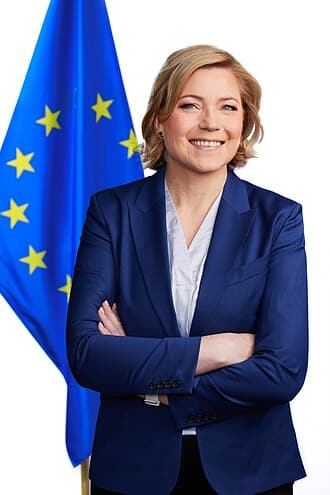
Päivi shared her faith-based views on marriage and sexual ethics in a 2019 tweet, a radio show, and in a 2004 pamphlet that she wrote for her church, centred on the Biblical text “male and female he created them”.

Päivi endured two trials and years of public scrutiny before she was unanimously acquitted of “hate speech” charges by both the Helsinki District Court and the Court of Appeal. Despite her acquittal, the state prosecutor has appealed the case, taking it to the Finnish Supreme Court.

It’s obvious that these laws aren’t only about combatting hate and violence; rather, they may target any speech deemed controversial or that challenge the status quo.

Sie sehen gerade einen Platzhalterinhalt von YouTube. Um auf den eigentlichen Inhalt zuzugreifen, klicken Sie auf die Schaltfläche unten. Bitte beachten Sie, dass dabei Daten an Drittanbieter weitergegeben werden.

Mehr Informationen

Penalties for Non-Compliance with the EU Digital Services Act

The penalties for failing to comply with the EU Digital Services Act are severe.

Non-compliant platforms with more than 45 million active users could be fined up to 6% of their global annual turnover. For tech platforms like Google, Amazon, Meta, and X, this means billions of euros. So, even the biggest tech companies can’t afford to fall short of the DSA regulations.

If a platform repeatedly fails to comply with the DSA, the EU Commission can impose a temporary or permanent ban, which could result in the platform’s exclusion from the EU market entirely. For platforms that rely heavily on this market, this would mean losing access to one of the world’s largest digital markets.

The risks are high, and tech platforms will scramble to ensure they comply—sometimes at the expense of your fundamental right to free speech.

Section 230, the DSA, and the UK Online Safety Act

The US, the EU, and the UK take different approaches to regulating online speech. While Section 230 protects platforms from liability in the US, the Digital Services Act and the UK Online Safety Act enforce stricter content moderation rules, requiring platforms to remove «illegal» and «harmful» content or face severe penalties.

Below is a comparison of how each framework handles platform liability, free speech, and government oversight:

Feature USA (Section 230) EU (Digital Sservices Act) UK (Online Safety Act)
Legal Basis First Amendment protects free speech; Section 230 shields platforms from liability. EU regulation on transparency and accountability, resulting in content moderation. UK law regulating online content to prevent harm, with strict enforcement.
Platform Liability Section 230 protects platforms from liability for most user-generated content. Large platforms must remove illegal content or face penalties. Platforms must remove harmful but legal content or face fines.
"Hate Speech" Protected unless it incites imminent violence. Platforms must remove illegal "hate speech". Requires platforms to remove content deemed harmful, even if legal.
"Misinformation" Generally protected under free speech laws. Platforms must take action against "systemic risks" like "disinformation". Platforms must mitigate risks from "misinformation", especially for children.
Government Censorship The government cannot censor speech except in rare cases (e.g., incitement to violence). “Trusted flaggers” can flag content for removal, but independent oversight applies. The regulator (Ofcom) enforces rules, and platforms must comply.

“Shadow Content Banning”

In the digital age, we rely increasingly on digital technology to impart and receive information. And it’s essential that the free flow of information is not controlled by unaccountable gatekeepers policing what can and cannot be said.

ADF International’s stance is clear: this legislation will result in dangerous overreach that threatens the very freedoms it claims to protect.

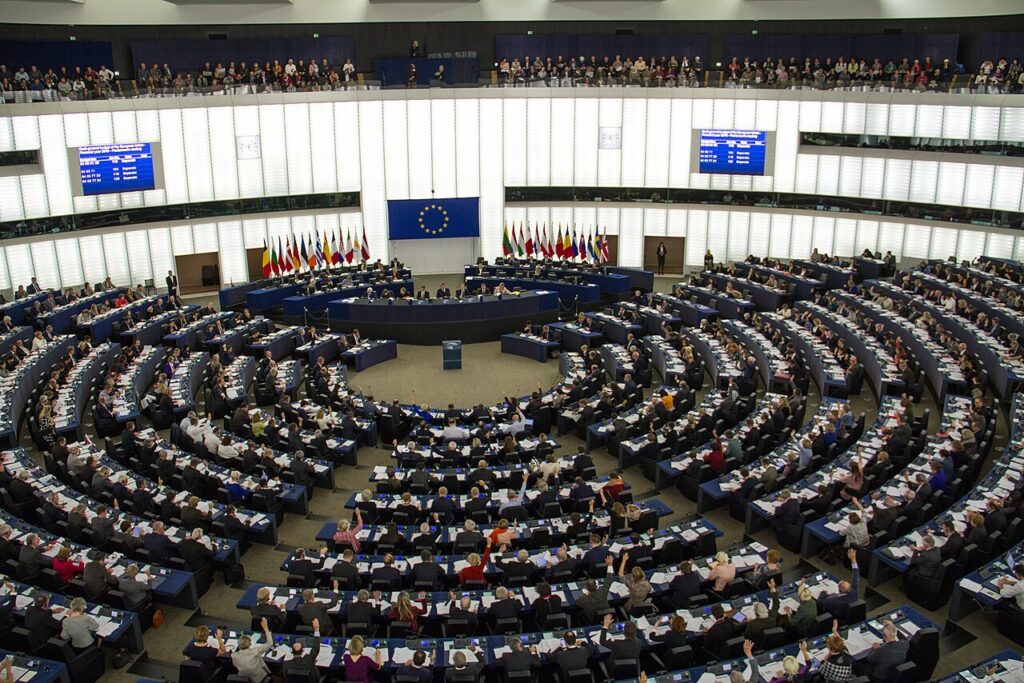
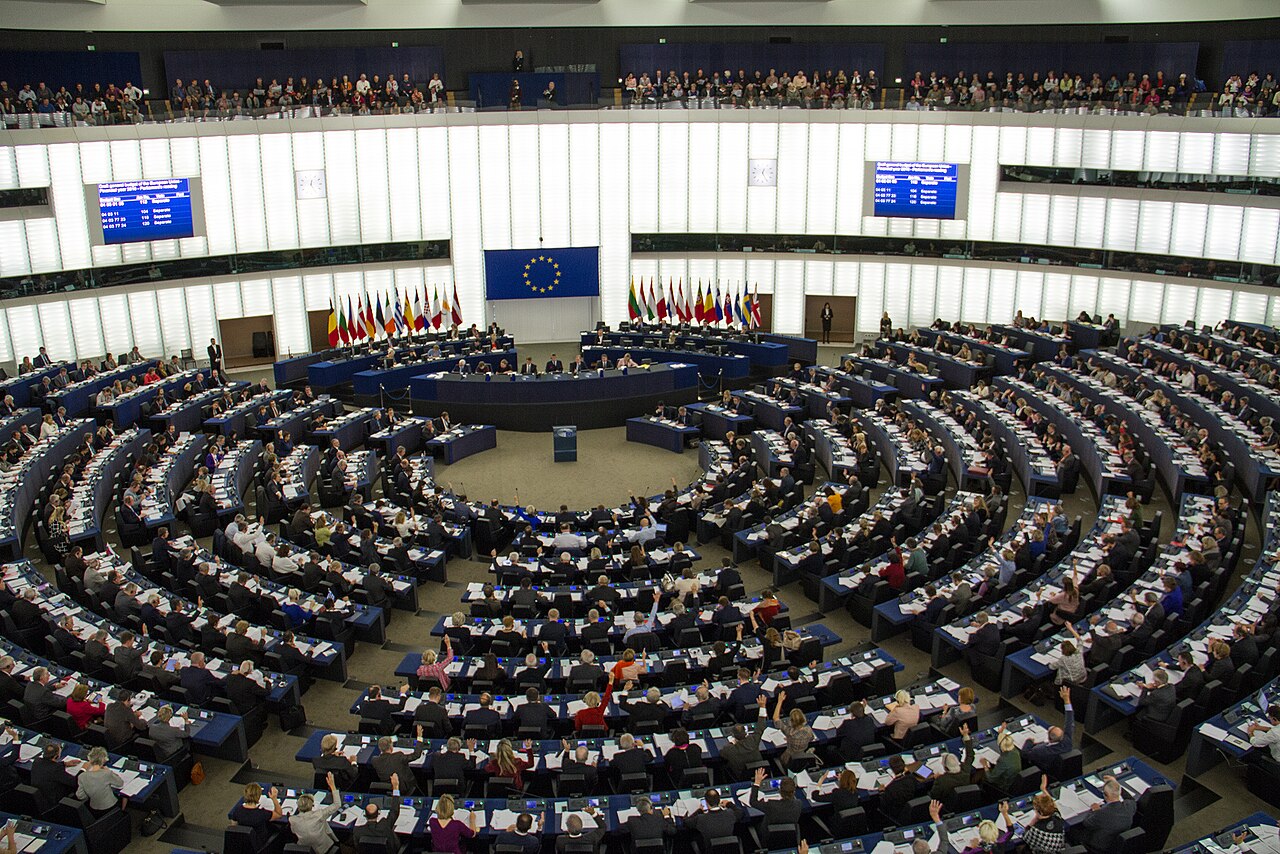
In January, our legal team attended a plenary session and debate at the EU Parliament in Strasbourg regarding the enforcement of the DSA. The discussion brought to light significant concerns across the political spectrum about how the DSA may impact freedom of speech and expression, and rightfully so.

EU Parliament

Several members of the EU Parliament (MEPs), who initially favoured the legislation, raised serious objections to the DSA, with some calling for its revision or annulment. A significant point of contention was the potential for what they termed “shadow content banning”—removing content without adequate transparency.

This includes cases where users might be unaware of why their content was banned, on what legal basis, or how they can appeal such decisions. Most of the time, they’re left with nothing but a generic AI response and no explanation. 

Some MEPs, like French MEP Virginie Joron, referred to the DSA as the “Digital Surveillance Act”.

Despite intense opposition, the EU Commission representative and the Council of the EU representative promised to enforce the DSA more rigorously. They vowed to double down on free speech by enforcing more thorough fact-checking and anti “hate speech” laws “so that “hate speech” is flagged and assessed [within] 24 hours and removed when necessary”.

They failed to provide comprehensive responses to the concerns raised about the DSA’s potential to erode fundamental rights, leaving critical questions about its implementation and implications unresolved.

Conclusion: EU Digital Services Act or “Digital Surveillance Act”?

The EU Digital Services Act’s enforcement mechanisms are riddled with ambiguity. Terms like “misinformation,” “disinformation,” and “hate speech” are too wide and vague to serve as a proper basis for silencing speech. These terms are too easily weaponized, enabling those in power to police dialogue and suppress dissent in the name of safety.

By placing excessive pressure on platforms to moderate content, the DSA risks creating an internet governed by fear—fear of fines, fear of bans, and fear of expressing one’s views. If the DSA is allowed to stifle open dialogue and suppress legitimate debate, it will undermine the very democratic principles it claims to protect.

Policymakers must revisit this legislation, ensuring that efforts to regulate the digital sphere do not come at the cost of fundamental freedoms.

Europe’s commitment to freedom of speech demands better. Through our office in Brussels, we at ADF International are challenging this legislation because it’s not up to governments or unaccountable bureaucrats to impose a narrow view of acceptable speech on society.
U.S. Reaffirms There Is No ‘Human Right’ to Abortion; Rejoins the Geneva Consensus Declaration

The US rejoins the Geneva Consensus Declaration under President Donald Trump.
  • US rejoins coalition of 40 countries standing against the creation of a «faux» international human right to abortion
  • Declaration affirms that «every human being has the inherent right to life»
The US rejoins the Geneva Consensus Declaration under President Donald Trump.

New York (27 January 2025) – A communication from the United States Mission to the United Nations has announced that the U.S. will rejoin the Geneva Consensus Declaration, a coalition of governments united around a pro-life policy stance. 

Adopted in October 2020, the coalition is comprised of now 40 signatory countries that uphold the right to life of the unborn and affirm national sovereignty with regard to pro-life laws and policies.

“Returning the U.S. to the coalition carries significant legal weight in that it prevents the emergence of a false ‘human right’ to abortion by customary international law."

The U.S. was a founding member of the Geneva Consensus Declaration. The Biden Administration exited the coalition by Executive Order on 28 January 2021.

The Declaration affirms that, “every human being has the inherent right to life” and declares that there is no international obligation to promote or fund abortion. It further emphasizes holistic strategies for advancing women’s health and well-being, including maternal care, education, and economic development.

In addition, the Trump administration reinstated by Executive Order an expanded version of the Mexico City Policy, a mainstay of every Republican administration since 1984, which prohibits international non-governmental organizations that perform or promote abortion from receiving federal funding.

By rejoining the Geneva Consensus Declaration and reinstating the expanded Mexico City Policy, the United States is committing to advancing a pro-life stance on the world stage, making clear that there is no so-called international ‘human right’ to abortion. This is a massive shift away from the virulent abortion promotion that characterized the Biden administration’s international engagement, particularly in the developing world,” commented Elyssa Koren, an international human rights lawyer for ADF International.

The United States is saying no to the imposition of abortion pressure on sovereign nations. Rejoining the Geneva Consensus Declaration is sure to have a profound effect on governments that are trying to uphold their pro-life laws in the midst of extreme pressure from the pro-abortion lobby. Further, returning the U.S. to the coalition carries significant legal weight in that it prevents the emergence of a false ‘human right’ to abortion by customary international law.

«Life is a human right, and how American taxpayer dollars are deployed should reflect that truth. The expanded Mexico City Policy does just that,» Koren further stated.

Valerie Huber, the architect of the Geneva Consensus Declaration from the Institute for Women’s Health, stated:

«I commend President Donald J. Trump for fulfilling his promise to rejoin the Geneva Consensus Declaration (GCD), a first-of-its-kind global coalition of nations dedicated to improving women’s health, strengthening families, affirming that abortion is not an international human right, and upholding the sovereign right of nations to govern free from ideological colonialism.»

Huber’s statement in full can be found here.

Images for free use in print or online in relation to this story only

PICTURED: Elyssa Koren, International Human Rights Lawyer, ADF International

EU doubles down on social media censorship that ‘will not be confined to Europe’ following concerns about Musk’s free speech policy on X

  • Members of the European Parliament debated controversial Digital Services Act on Tuesday, which censors free speech both within and outside the EU, and could affect America
  • EU’s censorship stance in marked contrast with US, where President Trump this week signed Executive Order to end government censorship

STRASBOURG (24 January) – The European Union this week doubled down on social media censorship to “protect democracy” from “foreign interference”, following concerns about Elon Musk’s free speech policy on X.

The Digital Services Act (DSA), which came into full force in February 2024, is an EU regulation that aims to tackle “misinformation”, “disinformation”, and “hate speech” online.

By requiring the removal of so-called “illegal content” on social media platforms, it censors free speech both within and outside the EU and could even affect the speech of US citizens online.

Members of the European Parliament (MEPs) debated enforcement of the controversial act on Tuesday. 

MEP Iratxe García, leader of the Progressive Alliance of Socialists and Democrats, commented:

“In recent months, we have seen how Elon Musk and his social network X have become the main promoter for the far right by supporting Donald Trump and Alice Weidel’s AfD party through fake news and hate messages.

We have also witnessed Mark Zuckerberg’s decision to remove fact-checking programs on Meta as an act of complicity with lies and manipulation… We must ensure the effective application of our rules and we must sanction those who break the rules.”

The European Commissioner in charge of enforcing the DSA, Henna Virkkunen, announced a number of measures to further crack down on speech, including doubling the number of staff working on enforcement from 100 to 200 by the end of 2025. 

“We are living in a new bipolar order of speech. On the one hand, Europe is doubling down on censorship, while the US is recommitting to its free speech heritage."

This puts the EU’s online free speech stance in stark opposition to that of the US, following President Trump this week signing an Executive Order to end government censorship.

Although Virkkunen claimed the DSA “does not censor content”, MEPs from across the political spectrum voiced well-founded concerns that, in fact, it does.

Hungarian MEP Schaller-Baross Ernő said:

Let’s call a spade a spade! In its current form, the DSA can also serve as a tool for political censorship…

“I’m afraid that in Europe the left… is not learning again. But this DSA must be abolished in this form. We don’t need more officials in Europe who censor…

“Freedom of expression and equal conditions must be ensured. This is the foundation of our democracy. Let’s say no to political censorship!”

Polish MEP Ewa Zajączkowska-Hernik said:

“For you, democracy is when people think, write and speak directly and say what you tell them to with your leftist way of thinking.

“Right-wing and conservative views are ‘thought crime’ and today’s debate should be called ‘The need to strengthen censorship to protect the trough of those who govern the European Union’.”

In addition to institutionalising censorship, the DSA also lays the ground for shadow banning, which was highlighted in this week’s debate.

Paul Coleman, executive director of ADF International, a global organisation dedicated to the protection of fundamental freedoms, including at the EU institutions, stated:

“On Monday, President Trump signed an executive order to end the weaponisation of the US government to promote censorship.

“On Tuesday, the European Commission made clear that it will be increasing its efforts to suppress speech, arguing that the Digital Services Act is needed to ‘protect democracy’ from so-called ‘misinformation’, ‘disinformation’ and ‘hate speech’ online.

“We are living in a new bipolar order of speech. On the one hand, Europe is doubling down on censorship, while the US is recommitting to its free speech heritage.

“This will usher in an unprecedented era of tension within the West itself over this most basic of human rights, and it is the responsibility of all who value freedom to side with the protection of free speech.

“As we saw clearly from Thierry Breton’s letter to Elon Musk this summer, warning him not to breach the DSA ahead of his interview with Trump, the DSA will be used to censor views disfavoured by those in power.

“The DSA poses a grave threat to the fundamental right to freedom of expression, guaranteed to every person under international law. It is not the place of any authority to impose a narrow view of acceptable speech on the rest of society.

“The effects of the DSA will not be confined to Europe. There are legitimate worries that the DSA could censor the speech of citizens across the world, as social media companies could regulate their content globally to comply with European standards.”

US Response to DSA

In response to former Commissioner Thierry Breton’s letter to Musk this summer, Congressman Jim Jordan, chairman of the US House Judiciary Committee, wrote a strongly worded letter to Mr Breton.

In it, he said:

“We write to reiterate our position that the EU’s burdensome regulation of online speech must not infringe on protected American speech…

“Your threats against free speech do not occur in a vacuum, and the consequences are not limited to Europe. The harms caused by EU-imposed censorship spill across international borders, as many platforms generally maintain one set of content moderation policies that they apply globally.

“Thus, the EU’s regulatory censorship regime may limit what content Americans can view in the United States. American companies also have an enormous incentive to comply with the DSA and public threats from EU commissioners like you.”

Increasing Censorship Efforts

Other measures announced by Virkkunen this week include making a previously voluntary code of conduct on “illegal hate speech online” legally binding and advancing a framework called the European Democracy Shield (EDS).

The EDS uses fact checkers and NGOs to combat so-called “foreign information manipulation, interference, and disinformation”.

Anyone, be it an individual or an entity, can flag content they believe to be illegal.

Under the DSA, social media platforms can face massive fines of up to 6% of global annual turnover for failing to remove so-called “misinformation”, “disinformation” and “hate speech”.

The concept of “hate speech” has no basis in international human rights law.

Because of their loose and vague nature, prohibitions on “hate speech” rely on the subjective perception of offended parties rather than objective harm.

Further, the definition of “hate speech” is not harmonised at the EU level, meaning that what is deemed illegal in one country may not be in another.

Images for free use in print or online in relation to this story only

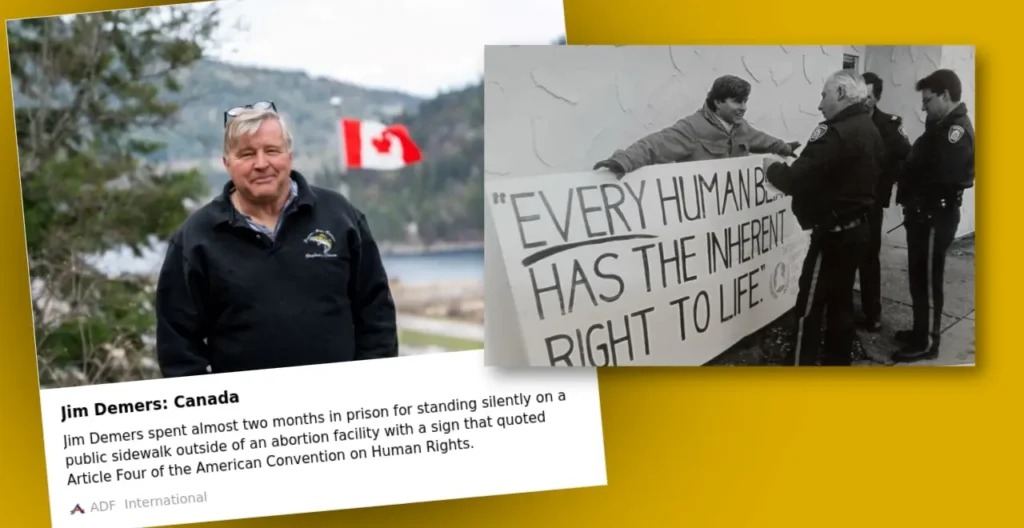
Jim Demers: Justice Delayed and Overdue in Canada

Jim Demers is a Canadian pro-lifer who deserves justice.

The authorities have violated Canadian man Jim Demers' rights

Imagen de Paul Coleman
Paul Coleman

Executive Director, ADF International

Jim Demers is a Canadian pro-lifer who deserves justice.

Around the world, governments are enacting so-called “buffer zones”—restricted areas where the state dictates what can and cannot be said. These designated zones—incorporating public footpaths, bus stops, and even people’s homes—prohibit otherwise perfectly lawful activity from taking place within them.

They’re even being used to criminalize silent prayer in public places, as in the cases of Isabel Vaughan-Spruce and Adam Smith-Connor—two courageous UK citizens we’ve stood alongside.

As we’ll see, these restrictions on our lawful right to freedom of thought and expression have been going on for a long time. We want to introduce you to Jim Demers, a lifelong Canadian resident who has faced unrelenting opposition for his pro-life views.

Jim Demers' So-Called 'Crime'

Back in 1996, Jim stood peacefully on a public sidewalk outside an abortion facility in Vancouver, holding a sign that quoted the American Convention on Human Rights:

“Every person has the right to have his life respected. This right shall be protected by law and, in general, from the moment of conception.” This peaceful act of expression led to Jim’s conviction as a criminal. He was imprisoned alongside violent offenders—all for exercising his right to free expression.

His so-called “crime”? Holding a pro-life sign within the “bubble zone” created by the Access to Abortion Services Act of British Columbia. Jim was convicted for “protesting against abortion services” and “sidewalk interference” inside the zone. But Jim didn’t speak to or interact with any members of the public or staff at the abortion facility, nor did he obstruct access to the facility in any way.

You are currently viewing a placeholder content from YouTube. To access the actual content, click the button below. Please note that doing so will share data with third-party providers.

More Information

Censorship Zones Silence Pro-Life Viewpoints

We can all agree that harassment is wrong. Indeed, in many countries that have introduced these buffer zones, harassment is already illegal. These zones are about silencing pro-life viewpoints in the exact place where a pro-life viewpoint might be needed the most. 

Both international law and the Canadian Charter of Rights and Freedoms guarantee the fundamental right to freedom of expression. Yet the unjust and discriminatory Act under which Jim was convicted still stands to this day—nearly 30 years later.

The shrinking space for free speech in Canada results from such laws being left to stand for decades, creating the false impression that these restrictions are legitimate. Let us reiterate to you today that they are not.

Jim brought his case to the Inter-American Commission on Human Rights in 2004. Twenty years later, the Commission still has not delivered a judgment, choosing instead to simply sit on his case. This is arguably the most severe case of an alleged backlog at any international human rights body.

Conclusion: We Will Stand with Jim Demers and He Deserves Justice

Now, we are standing with Jim. We have reactivated his case and are calling on the Commission to finally rule that Canadian authorities violated his rights. This case isn’t just about Jim—it’s about protecting the freedom of every person to express themselves without fear of criminal prosecution.

If international law and the Canadian Charter of Rights and Freedoms mean anything, then Jim’s rights—and the right of every person to free expression—must be defended.

“I hope I’m never silent when bad things are happening, and I hope nobody else is silent either when bad things are happening. I have dedicated my life to speaking out in defence of the unborn, and because of this, I was criminally convicted and even spent time in jail.” Jim’s courage reminds us that silence is never an option when freedoms are at risk. He deserves justice, no matter how delayed.

Facebook’s Commitment to Winding Back Censorship

Zuckerberg announces censorship windbacks

Practice what you preach, allow free speech

Zuckerberg announces censorship windbacks

After we – and many other free speech groups – spent years sounding the alarm on the suppression of open conversation online, Mark Zuckerberg has this week committed to winding back censorship across all Meta platforms – including Facebook, Instagram, and Threads.

In a monumental announcement, the CEO admitted that the third-party “fact-checkers” employed to moderate content on Meta were “too politically biased”, and that it’s “time to get back to our roots around freedom of expression.”

This isn’t just good news for Instagrammers and influencers. It marks a sea change in the public landscape, indicating an expectation that our right to free speech will be honoured—whether on or offline.

We can celebrate this important milestone and will be watching closely to see if Zuckerberg follows through on his promises. But at ADF International, we’re still keenly aware that the threat to free speech comes not only from privately run internet platforms but also from governments.

Our Cases of Online Censorship

Take Päivi Räsänen. This Finnish member of parliament will soon be heading to a criminal trial at the Supreme Court because of a Bible-verse tweet she posted in 2019. It wasn’t a social media platform that censored her Christian view—it was the state authorities. The case is due before the Finnish Supreme Court this year.

Or take Chris Elston, a.k.a viral internet sensation Billboard Chris. Last February, he posted about his disapproval of the WHO’s selection of an infamous transgender activist to be on a panel setting guidelines for global transgender policy.

It wasn’t a social media platform that decided that his opinion shouldn’t be heard—it was the Australian authorities. We’re supporting his fight for free speech as he goes to court in March, alongside “X,” who wants to be able to host his viewpoint without government interference.

It’s easy to become discouraged as we live through an era where speaking the truth can land you in legal trouble. But this week, we mark yet another clear indication that we’re moving the needle in the right direction.