U.S. Commission on International Religious Freedom condemns targeted expulsions of Christians in Türkiye

  • USCIRF releases statement urging US government action following Türkiye’s targeted deportations of Christian missionaries; recommends country be added to Special Watchlist for severe religious freedom violations.
  • ADF International applauds push to protect religious freedom and is legally supporting the cases of Christians who have been banned from Türkiye.

WASHINGTON, D.C. (Feb. 27) – Yesterday, the U.S. Commission on International Religious Freedom (USCRIF) released a statement condemning the targeted expulsion of Christians in Türkiye. Recently, the European Court of Human Rights (ECtHR) took up twenty cases of Christians who have been designated as national security threats and expelled from the country by the Turkish government. The USCIRF statement recommends that the U.S. Department of State place Türkiye on its Special Watch List for severe violations of religious freedom.

These cases, almost all supported by ADF International, stem from the Turkish government’s use of internal security codes to label foreign Christian missionaries as threats to national security, blocking them from entering or remaining in the country despite long-standing lawful residence.

Türkiye’s arbitrary labeling of foreign-born Protestant Christians as national security threats is meant to intimidate the Christian community and prevent them from gathering for worship. Everyone, regardless of residency status, has the right to freedom of religion or belief under international law,” said USCIRF Chair Vicky Hartzler. “The U.S. administration should maintain the momentum President Trump made in his September meeting with President Erdoğan and push for tangible improvements to Türkiye’s religious freedom record, including an end to its repressive tactics against Christians.”

“We hope that the U.S. government and the international community will continue to stand up for this fundamental right and call on Türkiye to put an end to the targeted expulsions of Christian missionaries. Peacefully practicing the Christian faith is no reason to be labelled as a security threat and expelled from the country these individuals lawfully built their lives in.”

The statement echoes a recent resolution from the European Parliament condemning the targeted expulsions from the country “carried out under unsubstantiated national-security pretexts and without due process” for foreign Christians, in addition to journalists. The Turkish government swiftly dismissed the resolution as containing “unfounded allegations” and characterized it as interference in the country’s internal affairs. 

We applaud USCIRF’s decision to speak out on the egregious violations of religious freedom we are seeing in Türkiye,” said Kelsey Zorzi, Director of Advocacy at ADF International. “We hope that the U.S. government and the international community will continue to stand up for this fundamental right and call on Türkiye to put an end to the targeted expulsions of Christian missionaries. Peacefully practicing the Christian faith is no reason to be labelled as a security threat and expelled from the country these individuals lawfully built their lives in.”

Background

Since 2019, Turkish authorities have issued internal security codes like “N-82” and “G-87” to target hundreds of foreign Christians, preventing them from re-entering Türkiye after trips abroad or denying them residence permits. These measures have affected at least 160 foreign workers and their families, many of whom lived and served in Türkiye for decades.

The government’s use of these codes effectively labels individuals as a “threat to public order and security,” a classification normally reserved for terrorism suspects. However, those targeted have no criminal records or evidence of unlawful conduct. The only thing that they have in common is openly practicing and sharing their Christian faith.

The 2024 Human Rights Violation Report presented by the Protestant Church Association records 132 people who have been arbitrarily branded with an entry ban code, preventing them from entering Türkiye solely on the basis of their Christian faith. The total number of those affected is 303, according to the report.

Reports of similar measures affecting many foreign Protestant Christians show that these cases are not isolated, but point to a wider pattern of systemic discrimination. The cases raise serious questions about fundamental rights protected under the European Convention on Human Rights.

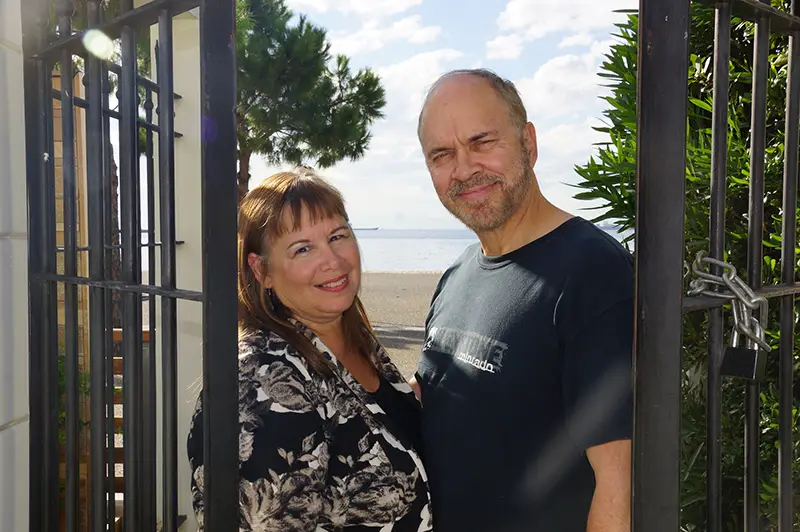
Among those affected are long-term residents such as Pam and Dave Wilson, who served in Türkiye for almost forty years before being barred from returning; Rachel and Mario Zalma (pseudonyms to preserve anonymity), whose ministry work led to an N-82 designation after attending a church conference; and David Byle, a Christian minister forced into exile after 19 years of service.

These bans have not only separated families from the communities they helped build, but also left local churches without stable leadership, weakening the already-small Christian presence in a country where Christians make up a small fraction of the population.

ADF International has supported a number of these cases over several years, and directly represents four individuals before the ECtHR, two of whom are lead applicants, and has supported the majority of the other cases.

Sie sehen gerade einen Platzhalterinhalt von YouTube. Um auf den eigentlichen Inhalt zuzugreifen, klicken Sie auf die Schaltfläche unten. Bitte beachten Sie, dass dabei Daten an Drittanbieter weitergegeben werden.

Mehr Informationen
Images for free use in print or online in relation to this story only

Turkish Government Denies Targeted Deportation of Christian Missionaries; Accuses European Parliament of ‘Interference’  

  • Turkish Foreign Ministry dismisses overwhelming 502–2 vote as “baseless,” despite mounting scrutiny over expulsions of Christian missionaries from the country 
  • European Parliament voted to condemn use of Turkish security codes to expel Christiansthis followed European Court of Human Rights recent decision to take 20 cases of missionaries expelled from Türkiye; the majority of which are legally supported by ADF International 

Strasbourg (17 February 2026) — The Turkish government has formally rejected the European Parliament’s recent resolution condemning targeted expulsions from the country „carried out under unsubstantiated national-security pretexts and without due process“ for foreign Christians, in addition to journalists. 

In a statement issued on 13 February, a day after the vote, Türkiye’s Ministry of Foreign Affairs dismissed the resolution as containing “unfounded allegations” and characterized it as interference in the country’s internal affairs. 

The European Parliament adopted the resolution by an overwhelming margin (502 votes in favor and 2 against) signaling broad cross-party concern over what lawmakers described as the misuse of national security frameworks to restrict fundamental rights, including freedom of religion. The resolution followed the European Court of Human Rights’ decision at the beginning of February to take up 20 cases involving foreign Christians who were expelled or banned from re-entering Türkiye. 

These cases, the majority of which are supported by ADF International, stem from the Turkish government’s use of security codes, typically reserved for terrorist activity, to designate peaceful foreign Christian residents as threats to national security and block them from entering or remaining in the country despite longstanding lawful residence. The missionaries deported come from several countries across Europe, including the United Kingdom, Switzerland, and Germany. More than a dozen are originally from the United States.  

“The Turkish government’s rejection of the European Parliament’s vote shows a clear lack of respect for its human rights obligations.When a government weaponizes national security mechanisms to target peaceful missionaries and faith communities, they must not be allowed to act with impunity.”

European Parliament addresses expulsion of missionaries

The European Parliament resolution specifically addresses the expulsion of foreign Christian missionaries, all legally residing in the Türkiye and many of whom were long-term residents of the country, through security codes that have resulted in deportations, re-entry bans, and loss of residency status. Lawmakers raised concerns about the lack of transparency, limited judicial review, and restricted access to evidence in these cases. 

During the debate on the resolution European Member of Parliament Sokol (EPP) stated:  

“These deportations of Christians in Türkiye for reasons of national security are one more attack on Christians, the most persecuted religious minority around the world. (…) The EU cannot talk of human rights and then remain silent when Christians are facing problems in Africa or persecution in a neighboring country. We must stand up for freedom of religion everywhere without any double standards. (…) Türkiye must put a stop to these deportations of Christians.”  

Cases of Expelled Christians Now Before the European Court of Human Rights 

The 20 pending cases before Europe’s top human rights court challenge the compatibility of the security-based expulsions with human rights protections for religious freedom, family life, and due process under the European Convention on Human Rights. 

The government’s use of these codes effectively labels individuals as a “threat to public order and security,” a classification normally reserved for terrorism suspects. However, those targeted have no criminal records and no evidence of unlawful conduct—the only thing that they have in common is openly practicing and sharing their Christian faith. 

The 2024 Human Rights Violation Report presented by the Protestant Church Association records 132 people who have been arbitrarily branded with an entry ban code, preventing them from entering Türkiye solely on the basis of their Christian faith. The total number of those affected is 303, according to the report. 

ADF International provides legal support to affected individuals seeking justice before the European Court of Human Rights and calls on Turkish authorities to ensure that security measures are applied consistently with international human rights obligations. 

Images for free use in print or online in relation to this story only

Police arrest Christian pastor and visit his home after he commented on Islam and transgender ideology while street preaching

Photo of Pastor Dia arrested in handcuffs for peaceful preaching.
  • Pastor Dia Moodley has been arrested twice for peaceful street preaching
  • Police visited pastor at his home after latest arrest
  • Pastor Moodley is considering legal action against the police, with the support of ADF International
Photo of Pastor Dia arrested in handcuffs for peaceful preaching.

BRISTOL (16 February 2026) – Police arrested and visited a Christian pastor’s home after he peacefully commented on Islam and transgender ideology while street preaching in Bristol city centre.

Pastor Dia Moodley, 58, was arrested by Avon and Somerset Police officers last November in Broadmead on suspicion of “inciting religious hatred” under the Public Order Act 1986 for his speech, despite the fact that he had merely publicly shared his Christian views.

The pastor, who suffers from a heart condition, was held in a police cell for eight hours before being released under censorial bail conditions banning him from entering and therefore preaching in Bristol city centre over the Christmas period.

The bail conditions were dropped after Pastor Moodley made representations to the police, but two police officers later visited his home on Thursday 8 January, questioned him further on the November incident and invited him to a voluntary interview under caution.

With the support of his legal team, Pastor Moodley is considering whether to attend the interview. The pastor is currently waiting to hear whether he will be criminally charged for his peaceful speech.

ADF International is providing legal support to Pastor Moodley, who is considering legal action against the police for the violation of his free speech rights.  

This is the second time Avon and Somerset Police officers have arrested Pastor Moodley for peacefully street preaching.  

In March 2025, the pastor was twice threatened with arrest for “breaching the peace”, after preaching about the differences between Christianity and Islam while holding a Quran.  

He was the victim of assault on that occasion by Muslim bystanders and one man even threatened to stab the pastor. The police have not charged any of the individuals who assaulted him. 

The pastor met with the US State Department prior to that incident in March, at a meeting facilitated by ADF International, and spoke about his experience as a victim of censorship in the UK.

Pastor Moodley said: “This latest arrest has had a profoundly negative effect on me and has been extremely challenging personally.  

“I am a law-abiding citizen and it feels surreal that the police have criminalised me so harshly and repeatedly merely for peacefully expressing my Christian views in the public square. 

“Unfortunately, I believe that the police view me, a Christian pastor, as an easy target and are afraid of others being offended by my lawful speech. This is two-tier policing in action.”

Legal Counsel for ADF International Jeremiah Igunnubole said: “Pastor Dia’s arrest for peacefully commenting on Islam and transgender ideology shows police are using public order legislation to impose de facto blasphemy laws in the UK.  

“This is far from an isolated incident. It is part of a clear pattern of behaviour from Avon and Somerset Police, who for years have targeted Pastor Dia for his peaceful expression in the public square and have failed in their duty to investigate serious crimes committed against him, by those who objected to his speech.    

“The police must stop their two-tier approach of criminalising lawful speech. There has long been a pressing need for Parliament to pass legislation to ensure the right to freedom of expression is robustly protected in this country. 

“Pastor Dia’s case is all the more pressing as the government finalises its broad and ambiguous definition of ‘anti-Muslim hatred’, which risks censoring legitimate speech related to Islam. 

“Pastor Dia’s case shows how authorities can misconstrue peaceful comments on Islam as ‘hateful’ and criminal. This misconstruction will be repeated unless clarity is provided to preserve the ability of citizens to peacefully comment, discuss and criticise in accordance with their core beliefs.”  

After Pastor Moodley’s first arrest in March 2024, the police also unlawfully instructed that his signs, which he used while street preaching, be destroyed. The police have failed to even acknowledge his formal request for compensation for the signs.  

Previously, police tried to censor Pastor Moodley from commenting on any religion besides Christianity while street preaching. Avon and Somerset Police dropped these restrictions and admitted they were “disproportionate” after Pastor Moodley launched a legal challenge with the support of ADF International.  

November 2025 arrest 

On 22 November, Pastor Moodley was engaging in street preaching in Bristol city centre on two topics: the reality of the sex binary and the falsehood of transgender ideology, and the theology of Christianity compared to other religions, including Islam.

He often engages in dialogue with members of the public during street preaching and the vast majority of his interactions are positive, even if the people he speaks with hold different views. 

On the day, Pastor Moodley had a respectful conversation on Islam with three young Muslim women. 

Later on, one couple objected to Pastor Moodley’s views on transgender ideology.

The woman called the police and two officers then arrived and solely focussed on the accounts of bystanders who objected to the pastor’s preaching.

The police refused to engage with the pastor and members of his congregation and hear their account of what had happened.  

The police then arrested Pastor Moodley on suspicion of “inciting religious hatred” and committing a “religiously aggravated” offence under the Public Order Act 1986, for peacefully expressing his Christian views.

The pastor has a heart condition and was sweating visibly due to the stress of the situation.  

He asked for the handcuffs to be placed at the front of his body and not behind his back, which would make it difficult for him to breathe. The police officer initially appeared annoyed and reluctant to consider the request but eventually agreed.  

Pastor Moodley was held in a police cell for eight hours before being released.  

The bail conditions initially imposed on Pastor Moodley banned him from entering the city centre until 30 December.  

These were only overturned on 17 December and prevented him from preaching in the busiest part of the city for most of December, stopped him from attending to an important pastoral matter and disrupted his personal life. 

Read more about Avon and Somerset Police’s past targeting of Pastor Moodley here, here and here.

Images for free use in print or online in relation to this story only

Pictured: Pastor Dia Moodley, Pastor Moodley being arrested in November 2025, Legal Counsel for ADF International Jeremiah Igunnubole

Bis zu 10 Jahren Haft: Brasilianisches Gericht verhandelt Fall einer Veterinärstudentin wegen Social-Media-Kommentare über Gender-Ideologie

Gegen Isadora Borges wurde aufgrund von Beiträgen auf X zur Gender-Ideologie Anklage erhoben; die erste Anhörung in dem Verfahren fand am 10. Februar statt.

Der Fall erregte internationale Aufmerksamkeit, nachdem Elon Musk einen Post über die Strafverfolgung teilte; ADF International unterstützt Isadora Borges rechtlich in ihrer Verteidigung.

Lies weiter

Brazilian Veterinary Student Faces Up to 10 Years in Prison for Social Media Comments on Gender Ideology 

Brazilian veterinary student facing prosecution in Brazil for gender ideology comments
  • Brazilian woman is facing criminal prosecution for comments shared on social media gender ideology; hearing is set for February 10.
  • Case highlights Brazil’s escalating censorship of peaceful expression; ADF International is providing legal support in her defence.
Brazilian veterinary student facing prosecution in Brazil for gender ideology comments

BRASÍLIA (9 February 2026) — A Brazilian woman, Isadora Borges, is facing criminal prosecution after posting comments on social media expressing her views on gender ideology, exposing her to a possible prison sentence of four to ten years. 

In November 2020, Isadora Borges made two posts on X (then Twitter), peacefully expressing her views against gender ideology. One comment stated that “transgender” women “were obviously born male.” Another stated: “A person who identifies as transgender retains their birth DNA. No surgery, synthetic hormone, or clothing change will change this fact…“ 

Her comments quickly gained attention online, and prompted Erika Hilton, a self-described “transgender” politician, to report Borges for “transphobia” to the federal police.  

In September 2025, Borges was notified of the criminal charges brought against her. She was accused of two counts of transphobia, with each count carrying a punishment of 2-5 years in prison. The case is now moving to trial, with a hearing date set for tomorrow, February 10. 

No one should face a decade behind bars for expressing an opinion on a matter of public concern,” said Julio Pohl, Legal Counsel for ADF International, which is providing legal support to Borges. “Weaponising Brazil’s expansive ‘transphobia’ laws to punish peaceful expression is a profound violation of freedom of speech. 

“I commented on the issue because I care about the truth and protecting women.  No one should ever fear going to prison for recognizing biological reality. I hope that my case can serve as a turning point in fighting censorship in Brazil. Brazilians deserve the freedom to speak openly without punishment.”

ADF International is providing legal support to Borges as she seeks to defend her fundamental right to freedom of expression without fear of prosecution. 

I commented on the issue because I care about the truth and protecting women. No one should ever fear going to prison for recognizing biological reality,” said Isadora Borges. “I hope that my case can serve as a turning point in fighting censorship in Brazil. Brazilians deserve the freedom to speak openly without punishment.” 

Growing Pattern of Censorship in Brazil

Since a 2019 ruling by Brazil’s Supreme Federal Tribunal equated “homophobia” and “transphobia” with the crime of racism—without legislation passed by Congress—individuals across Brazil have increasingly faced criminal investigations and prosecutions for peaceful expression. Cases such as Isadora Borges’ have become more common over the last year in Brazil.  

In 2025, social media influencer Isabella Cepa faced criminal investigations for her online post about gender ideology. Similarly, Nine Borges (not related to Isadora Borges) is under criminal investigation for “transphobia” for posting an Instagram video drawing attention to concerns about the financing and influence of pro-LGBT organisations in Brazil, which included criticism of Symmy Larrat, Brazil’s LGBT National Secretary. 

In another case, Assemblies of God Pastor Douglas Baptista faced criminal charges for authoring a book with a Christian view of sexuality. His case was legally supported by ADF International. Charges in his case were dropped, but they remain evidence of the broader, chilling trend of government efforts in Brazil to censor peaceful online expression. 

ADF International also represents five Brazilian legislators (Senator Eduardo Girao and members of the Chamber of Deputies Marcel Van Hattem, Adriana Ventura, Gilson Marques, and Ricardo Salles) before the Inter-American Commission on Human Rights. The legislators are challenging violations of their free speech rights before the Commission. They claim violations of their rights under the Convention, including their freedom of expression, as a result of escalating state censorship which reached a head with last year’s X ban in Brazil during the municipal elections period. Censorship in Brazil has been a persistent and escalating problem since 2019. 

Images for free use in print or online in relation to this story only

Der Europäische Gerichtshof befasst sich mit Einreiseverbote gegen Christen in die Türkei

  • Der Europäische Gerichtshof für Menschenrechte hat 20 Fälle von Christen, die allein wegen des Auslebens ihres Glaubens aus der Türkei verbannt wurden, offiziell aufgegriffen.
  • ADF International unterstützt 17 dieser Verfahren und macht auf schwerwiegende, strukturelle Menschenrechtsverletzungen aufmerksam.

STRASSBURG (05. Februar 2026) -Der Europäische Gerichtshof für Menschenrechte (EGMR) hat offiziell 20 von Christen eingereichte Fälle angenommen, in denen die Türkei Betroffenen allein wegen der Ausübung ihres Glaubens faktisch die Wiedereinreise verweigert hat.

Diese Fälle – fast alle von ADF International unterstützt – gehen auf die Verwendung interner Sicherheitscodes wie „N-82“ durch die türkische Regierung zurück. Mit diesen Codes wurden friedliche ausländische Christen als Bedrohung für die nationale Sicherheit eingestuft. Dadurch wird ihnen trotz langjährigem rechtmäßigem Aufenthalt die Einreise oder der Verbleib im Land verwehrt.

Seit 2019 haben die türkischen Behörden Hunderten von ausländischen Christen interne Sicherheitscodes wie „N-82“ und „G-87“ zugewiesen. In der Folge wird diesen Christen nach Auslandsreisen die Wiedereinreise untersagt oder ihre Aufenthaltserlaubnis entzogen. Diese Maßnahmen betreffen mindestens 160 ausländische Arbeitnehmer und ihre Familien – schätzungsweise Hunderte von Personen –, von denen viele seit Jahrzehnten in der Türkei leben und arbeiten.

Der EGMR hat die Fälle gebündelt an die türkische Regierung übermittelt und darauf hingewiesen, dass diese für hinreichend zusammenhängend gehalten werden, um sie gemeinsam zu prüfen. Zugleich wurde die Türkei aufgefordert, im weiteren Verfahren eine Stellungnahme abzugeben.

„Der friedliche Gottesdienst und die Teilnahme am kirchlichen Leben stellen keine Gefahr für die nationale Sicherheit dar. Dennoch wurden ausländische Christen in der Türkei – darunter Pastoren, Lehrer, Mitarbeiter kirchlicher Einrichtungen und Missionare – auf Grundlage nicht öffentlich zugänglicher Akten als Sicherheitsrisiko eingestuft und des Landes verwiesen“, erklärte Dr. Lidia Rider, Juristin bei ADF International. „Da ihnen weder die Vorwürfe offengelegt noch Beweise zugänglich gemacht wurden, hatten sie keine reale Möglichkeit, sich wirksam vor Gericht zu verteidigen. Dass der Gerichtshof diese Fälle nun aufgreift, ist ein wichtiger Schritt hin zu Transparenz, Verantwortlichkeit und rechtlichem Schutz.“

Diskriminierung hinter den Zahlen

Durch die Verwendung dieser Codes stuft die Regierung Betroffene faktisch als „Bedrohung für die öffentliche Ordnung und Sicherheit“ ein – eine Kategorie, die üblicherweise mutmaßlichen Terroristen vorbehalten ist. Tatsächlich jedoch haben die Betroffenen keine Vorstrafen, und es gibt keinerlei Hinweise auf rechtswidriges Verhalten. Das Einzige, was sie verbindet, ist die offene Ausübung und Weitergabe ihres christlichen Glaubens.

Der Menschenrechtsverletzungsbericht 2024 (Human Rights Violation Report) des Verbands evangelischer Kirchen dokumentiert 132 Personen, die willkürlich mit einem Einreisesperrcode belegt wurden und allein aufgrund ihres christlichen Glaubens nicht mehr in die Türkei einreisen dürfen. Insgesamt sind laut Bericht 303 Menschen von diesen Maßnahmen betroffen.

Berichte über vergleichbare Maßnahmen, von denen zahlreiche ausländische protestantische Christen betroffen sind, zeigen, dass es sich nicht um Einzelfälle, sondern um ein breites Muster systematischer Diskriminierung handelt. Diese Fälle werfen Fragen im Hinblick auf die durch die Europäische Menschenrechtskonvention geschützten Grundrechte auf, insbesondere das Recht der Religionsfreiheit, das Recht auf Familienleben und den Schutz vor Diskriminierung. Zugleich verdeutlichen sie die Notwendigkeit transparenter, nachvollziehbarer und belegbarer Entscheidungen, wenn Staaten sich auf öffentliche Ordnung oder nationale Sicherheit berufen – zumal die plötzlichen und unbegründeten Verbote für langjährige Bewohner und ihre Familien schwerwiegende Folgen haben.

Echte Menschen, Echte Konsequenzen

Zu den Betroffenen gehören Menschen, die seit Jahrzehnten in der Türkei lebten und arbeiteten, wie Pam und Dave Wilson, die fast 40 Jahre lang in der Türkei tätig waren, bevor ihnen die Rückkehr verwehrt wurde. Oder Rachel und Mario Zalma (Pseudonyme zur Wahrung der Anonymität), deren kirchliches Engagement nach der Teilnahme an einer Kirchenkonferenz zu einer N-82-Einstufung führte, und David Byle, ein Geistlicher, der nach 19 Jahren Dienst ins Exil gezwungen wurde.

Diese Verbote haben nicht nur Familien von den Gemeinschaften getrennt, die sie über Jahre mit aufgebaut hatten, sondern auch viele örtliche Kirchen ohne Leitung zurückgelassen. Damit wurde die ohnehin geringe christliche Präsenz in einem Land weiter geschwächt, in dem Christen nur einen winzigen Teil der Bevölkerung ausmachen.

Langjährige Bemühungen zur Aufdeckung systematischer Missbräuche

Seit mehreren Jahren macht ADF International auf diese Menschenrechtsverletzungen aufmerksam: unter anderem durch Schulungen für lokale Anwälte, wissenschaftliche Veröffentlichungen und Expertengutachten, die systematischen Verstöße gegen die Religions- und Weltanschauungsfreiheit sowie damit verbundene Rechte dokumentieren.

ADF International hat über mehrere Jahre hinweg zahlreiche Kläger und ihre Anwälte in diesen Verfahren unterstützt und vertritt vier Betroffene unmittelbar vor dem EGMR, darunter zwei Hauptkläger. Zudem unterstützt die Organisation nahezu alle weiteren Fälle.

„Wir begrüßen die Entscheidung des Gerichts, diese Fälle gemeinsam zu behandeln. Es handelt sich hierbei nicht um vereinzelte Fehler oder einmalige Entscheidungen“, sagte Kelsey Zorzi, Direktorin der Rechtsabteilung für weltweite Religionsfreiheit bei ADF International. „Die gebündelte Prüfung dieser Fälle macht deutlich, dass der Gerichtshof ein mögliches systematisches Vorgehen gegen Christen in der Türkei sieht. Wir erwarten, dass er das zentrale rechtsstaatliche Prinzip bestätigt, wonach Regierungen niemandem allein aufgrund seines Glaubens Grundrechte entziehen dürfen.“

Bilder zur kostenlosen Verwendung im Druck oder online – ausschließlich im Zusammenhang mit dieser Geschichte.

Abgebildet: Dave und Pam Wilson; David Byle; Lidia Rieder; Kelsey Zorzi