US State Department Panel Decries Censorship at UN High-Level Week

UN undermines parents' rights by pushing gender ideology.
  • Free speech experts raise concerns about the rise of free speech violations across Europe and UK to the UN
  • ADF International’s Kelsey Zorzi underscores global threats to free speech, citing EU Digital Services Act.
UN undermines parents' rights by pushing gender ideology.

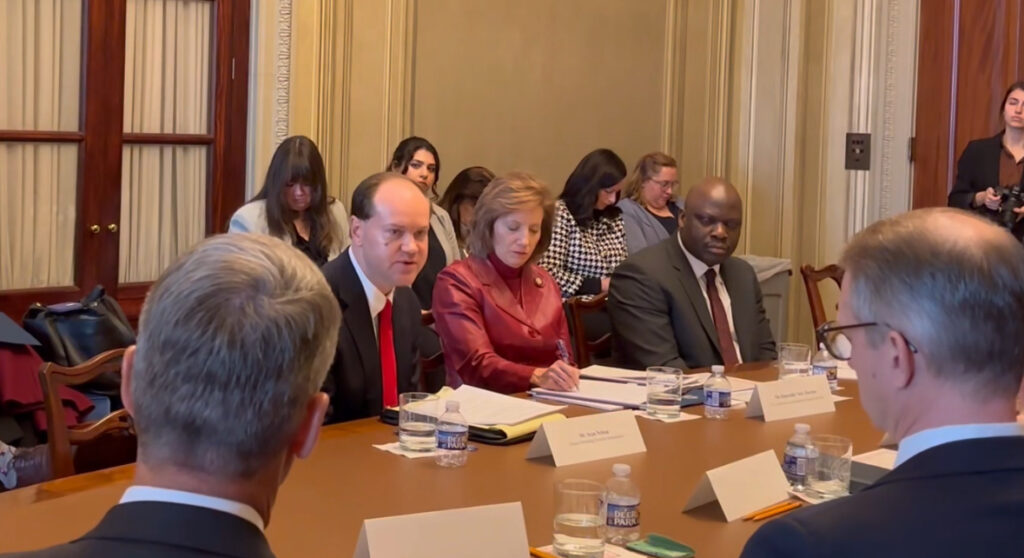
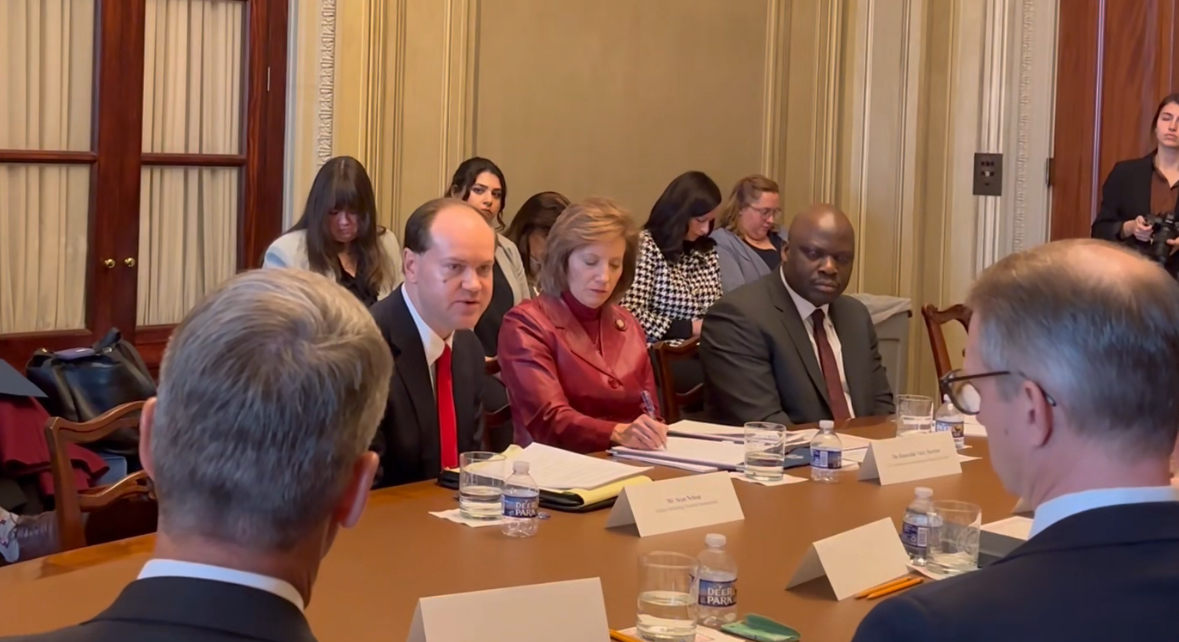
NEW YORK CITY (Sept 25) – In a significant show of concern, the U.S. State Department hosted a panel discussion at United Nations High-Level week on Thursday. Experts addressed rising global censorship, highlighting the UK and Europe. Kelsey Zorzi, Director of Advocacy for Global Religious Freedom with ADF International, highlighting growing threats to free speech across the world.

“With hundreds of active cases in dozens of countries across six continents, we have a unique vantage point from which a clear picture has emerged: censorship is becoming more aggressive, more coordinated, and more global,” said Zorzi.

“Censorship is becoming more aggressive, more coordinated, and more global."

The panel, on the margins of the UN High-Level Week before the 80th Session of the General Assembly, follows a hearing before the House Judiciary Committee of the US Congress, where ADF International similarly warned US lawmakers of the threat of censorship growing across Europe.

Escalating Censorship Across the World

Zorzi described the state of censorship in the EU as “highly concerning.” She highlighted the case of Päivi Räsänen, a sitting Finnish Parliamentarian facing criminal prosecution for tweeting a Bible verse, now before Finland’s Supreme Court.  ADF International is coordinating Rasanen’s legal defence.

Another major concern raised  was the reality that Europe is exporting censorship worldwide through the EU Digital Services Act (DSA), including to the United States.

Zorzi stated the following on the censorial impact of the DSA:

 The DSA is a brazen attempt to create a global Censorship Industrial Complex, not only for the EU but for the entire digital world. It is imposed on all platforms used by Europeans, regardless of where those companies are based. Any content found objectionable under EU rules may be banned everywhere.

“While EU regulators have denied that the DSA promotes censorship within Europe or abroad, just this week, in response to investigations carried out by the U.S. House Judiciary Committee, the internet giant Google expressed its own concerns that ‘the DSA may pose [risks] to freedom of expression within and outside of the European Union.’

“We’ve also already seen just how far governments will go in censoring online speech, and there is no reason to believe that EU regulators wielding the enormous bureaucratic power of the DSA would have any more restraint.

“The UK already arrests 12,000 people every year—over 32 people a day—for allegedly offensive online posts. The Brazilian Supreme Court has recently held that digital platforms like X should be held directly liable for posts allegedly constituting “hate speech” if they are not removed, a decision that has led, in part, to the U.S. placing sanctions on Brazilian officials. EU officials have previously even threatened X with massive fines merely for hosting a conversation with then-Presidential candidate Donald Trump.

“In a similar manner to the EU, the UK has embarked on the path of online censorship with the introduction of the so-called ‘Online Safety Act’ which is already being used to censor perfectly legitimate political speech as ‘illegal content’, like the EU’s Digital Services Act the UK’s Online Safety Act gives government regulators power to impose enormous fines on tech companies- which leads to a compliance mindset.”

Zorzi called on governments to take action, stating that, “While the current EU censorship landscape is highly concerning, the weeks ahead are critical, as the DSA comes under mandatory review this November. Many European leaders already have a vice grip on the global public square. Nations and organizations that support free speech anywhere must push back now before that vice grip becomes a chokehold.”

Images for free use in print or online in relation to this story only

„Lebensschutz ist Staatsauftrag“ – Menschenrechtsexperte Felix Böllmann spricht beim Marsch für das Leben in Köln 

Beim diesjährigen Marsch für das Leben in Köln trat am Sonntag Felix Böllmann, Rechtsanwalt und Leiter der Rechtsabteilung bei ADF International in Wien, als einer der Hauptredner auf. In seiner Ansprache vor ca. 2.000 Teilnehmern betonte Böllmann die grundlegende Bedeutung des Lebensrechts und rief zum gesellschaftlichen Einsatz für den Schutz des menschlichen Lebens auf – besonders dort, wo es am verletzlichsten ist.

Lies weiter

Brazilian Mother Denied Right to Homeschool Despite International Law 

Regiane Cichelero wants to homeschool her son.
    • Brazilian state court ruled against Regiane Cichelero, a mother who sought to homeschool her son. 
        
    • ADF International decries the decision as a violation of international human rights law protecting parental rights in education.
Regiane Cichelero wants to homeschool her son.

Santa Catarina, BRAZIL (September 4, 2025) — The highest court in the state of Santa Catarina denied the right of Brazilian mother Regiane Cichelero to homeschool her son, ruling that he must be enrolled in an officially accredited school. The decision also upholds financial penalties against her, totaling around $20,000 USD. Regiane will appeal the decision and bring the case to the highest court in the nation. 

“This decision is a disappointing setback for parental rights in Brazil. International human rights law is clear: parents have the right to choose the kind of education their children receive. By deciding that Regiane cannot homeschool her son, the court has not only failed her family but also undermined protections for all parents across Brazil"

“This decision is a disappointing setback for parental rights in Brazil,” said Julio Pohl, legal counsel for Latin America at ADF International, which coordinated Cichelero’s legal defense. “International human rights law is clear: parents have the right to choose the kind of education their children receive. By deciding that Regiane cannot homeschool her son, the court has not only failed her family but also undermined protections for all parents across Brazil.” 

Cichelero began homeschooling her son in 2020 after schools closed during the COVID-19 pandemic. When schools reopened, she chose to continue home education, believing it to be the best way to provide quality instruction consistent with her family’s religious values. 

In response, local authorities fined her heavily and threatened to remove her son from her custody if she did not comply with state schooling mandates. With today’s ruling, the court has rejected her appeal and imposed compulsory school enrollment. 

Background

Over 70,000 children are currently homeschooled in Brazil. International human rights law protects the rights of parents to make choices concerning the type of education their children receive. 

Article 26.3 of the Universal Declaration of Human Rights states that “parents have a prior right to choose the kind of education that shall be given to their children.” In addition, Article 13 of the International Covenant on Economic, Social and Cultural Rights requires states to respect the right of parents “to choose for their children schools, other than those established by the public authorities, which conform to such minimum educational standards as may be laid down or approved by the State and to ensure the religious and moral education of their children in conformity with their own convictions.” 

Following today’s decision, Cichelero said: “It is heartbreaking to be told that I cannot provide my son with the education I know is best for him. The state’s decision not only punishes me with heavy fines but also strip me of the ability to raise my child according to my convictions. No parent should have to fear punishment for choosing the best education for their child.” 

Images for free use in print or online in relation to this story only

European Legal Expert to U.S. Congress: “Protect Free Speech from European Censorship”

    • International free speech expert warns U.S. lawmakers that Europe’s Digital Services Act (DSA) threatens American free speech and risks establishing a worldwide online censorship regime.
    • ADF International is committed to challenging violations of free speech resulting from the DSA and building critical momentum to repeal or substantially reform this censorial framework.

WASHINGTON, D.C. – In a testimony before Congress, Lorcán Price, Legal Counsel with ADF International and an Irish barrister, warned that Europe’s Digital Services Act (DSA) threatens free speech far beyond the EU. Speaking before the House Judiciary Committee, chaired by Rep. Jim Jordan (R-OH), he said the law could force large online platforms to censor peaceful expression, putting free speech at risk in America and worldwide.

“What is happening in Europe is as Vice President Vance said in Munich, a ‘serious retreat from a fundamental value’- free speech,” Price said in his testimony. “It’s a sign that our European political elite has lost control of the narrative, and the Digital Services Act is part of a system of censorship in an increasing, desperate attempt to control narratives and suppress growing public discontent.”

“What is happening in Europe is as Vice President Vance said in Munich, a ‘serious retreat from a fundamental value’ - free speech. It’s a sign that our European political elite has lost control of the narrative, and the Digital Services Act is part of a system of censorship in an increasing, desperate attempt to control narratives and suppress growing public discontent."

The hearing comes at a critical moment as concern grows over free speech in Europe and recent pushback from the Trump administration against European online censorship. One year ago, while campaigning for president, Trump himself was threatened with censorship under the DSA leading up to an X interview with Elon Musk.

The hearing at the U.S. Congress takes place just months before the European Commission’s first DSA review in November 2025, yet the almost no details on the process or who will be involved.

In his testimony, Price warned that without oversight, the DSA’s broad powers could become entrenched and exported worldwide, influencing how tech companies control speech far beyond Europe.

Price warned that Europe’s growing offenses against free speech could easily enter the US under the DSA’s provisions. He cited a string of censorship attempts in Europe, including the case of Paivi Rasanen, a Finnish Parliamentarian who has endured over six years of prosecution for tweeting a Bible verse. MP Nigel Farage also testified at the hearing.

“Under the DSA, what happens in Europe won’t stay in Europe,” Price said. “The internet is global. If American policymakers don’t push back against the DSA model, the same speech restrictions now emerging in Europe will be imported here.“

What is the Digital Services Act?

The European Union’s Digital Services Act (DSA) was passed in 2022 and came into full effect in 2025, introducing sweeping regulations on online platforms. While presented as a framework for online safety, it gives the European Commission, the EU’s top executive arm, broad power to oversee what content remains online on very large platforms.

On July 1, 2025, the DSA’s “Code of Conduct on Disinformation” went into effect. The code requires platforms to monitor content and swiftly remove anything deemed as “disinformation” under EU law. The law also relies on “trusted flaggers,” including NGOs and regulators, while the Commission maintains oversight of the entire system. Platforms can face fines of up to 6% of their global revenue if they fail to comply, creating strong incentives for broad preemptive censorship of users.

Although the DSA is an EU law, its reach is global. Because these large online platforms operate worldwide, anyone, anywhere, faces the risk of having their content blocked or removed to comply with the DSA. This includes Americans, whose online posts could be censored even if protected under U.S. constitutional law.

ADF International has been at the forefront of sounding the alarm about this sweeping legislation, pushing back against online censorship and defending the fundamental right to free expression.

Images for free use in print or online in relation to this story only.

„Hassrede“-Verfahren wegen Bibel-Tweet zieht sich ins siebte Jahr. Finnisches Höchstgericht legt Verhandlungstermin fest 

Päivi reads her bible in the Finnish Parliament building.
  • Zum dritten Mal muss sich die Abgeordnete Päivi Räsänen für ihren Tweet mit Bibelvers vor Gericht verantworten – der Fall kommt ans Höchstgericht
  • Räsänen ist wegen der Äußerung ihrer christlich geprägten Überzeugungen zu Ehe und Sexualität angeklagt, unter anderem in einem Tweet auf X im Jahr 2019
  • Seit Beginn des Prozesses 2019 koordiniert ADF International mit der Hilfe lokaler Partneranwälte die rechtliche Verteidigung von Päivi Räsänen
Päivi reads her bible in the Finnish Parliament building.

HELSINKI (25. August 2025) Der Oberste Gerichtshof Finnlands hat den Termin für eine mündliche Anhörung im Verfahren gegen die finnische Parlamentsabgeordnete Päivi Räsänen und den Bischof Juhana Pohjola festgelegt. Beide waren zuvor bereits zweimal einstimmig von den Vorwürfen der „Hassrede“ freigesprochen worden, nachdem sie öffentlich ihre christlichen Überzeugungen geäußert hatten. Mit der Verhandlung am 30. Oktober 2025 tritt die Zensurkampagne der Staatsanwaltschaft gegen Räsänen und Pohjola bereits in ihr siebtes Jahr.

„Es ist alarmierend, dass die Staatsanwaltschaft weiter gegen Räsänen vorgehen will. Die Urteile des Bezirks- und Berufungsgerichts waren eindeutig und einstimmig. Wie wir seit Jahren warnen, ermöglichen vage formulierte „Hassrede”-Gesetze ideologisch motivierte Prozesse wie diesen. Wir stehen hinter Päivi, unser Ziel ist es, dass solche absurden Fälle nicht mehr vor Gericht gebracht werden. In einer freien und demokratischen Gesellschaft sollte es allen erlaubt sein, ihre Überzeugungen ohne Angst vor Zensur zu äußern.”

Anklage für einen Tweet

Die ehemalige Innenministerin war 2021 wegen „Hassrede“ angeklagt worden, weil sie in einem Tweet von 2019, in einer Radiodiskussion von 2019 und in einer kirchlichen Broschüre von 2004 ihre auf dem Glauben basierenden Ansichten über Ehe und Sexualethik geteilt hatte. Bischof Juhana Pohjola wurde angeklagt, weil er Räsänens Broschüre vor fast zwei Jahrzehnten für seine Gemeinde veröffentlicht hatte. Ihr Fall erregte 2023 weltweites Medieninteresse, da Menschenrechtsexperten ihre Besorgnis über die Bedrohung der Meinungsfreiheit in Finnland zum Ausdruck brachten. 

Im aufsehenerregenden Prozess griff die Staatsanwältin zentrale christliche Inhalte an. Außerdem verhörte sie Räsänen und den Bischof zu theologischen Fragestellungen und ihrem persönlichen Glauben.

„Es ist kein Verbrechen, einen Bibelvers zu twittern oder sich an einer öffentlichen Debatte mit einer christlichen Perspektive zu beteiligen. Die Versuche, mich wegen meinen Überzeugungen strafrechtlich zu verfolgen, haben mir fünf sehr schwierige Jahre beschert. Ich hoffe, dass das Ergebnis als wichtiger Präzedenzfall für den Schutz der freien Meinungsäußerung gelten wird”, sagte Räsänen, ehemalige finnische Innenministerin und Großmutter von zwölf.

Zensurkampagne dauert trotz Freisprüchen an

Am 30. März 2022 sprach das Bezirksgericht Helsinki die Angeklagten einstimmig frei. Die Staatsanwaltschaft legte daraufhin im April 2022 Berufung ein. Der Fall wurde dann vom 31. August bis 1. September 2023 vor dem Berufungsgericht in Helsinki verhandelt. Am 14. November 2023 bestätigte das Gericht den Freispruch von Räsänen und Pohjola. Die Staatsanwaltschaft legte jedoch erneut Berufung ein und brachte die Anklagepunkte im Zusammenhang mit dem Tweet und der Broschüre vor den Obersten Gerichtshof. Dieser wird am 30. Oktober 2025 die mündliche Verhandlung durchführen.

Räsänens Verteidigung wurde von ADF International koordiniert. Das rechtliche Verteidigungsteam betonte den starken Schutz für die Meinungsfreiheit in den internationalen Menschenrechten. Die Staatsanwaltschaft hatte zuvor die Verwendung des Wortes „Sünde“ als beleidigend und damit rechtswidrig bezeichnet. Doch Räsänen hatte nur aus der Bibel zitiert – somit wäre ein Schuldspruch eine direkte Verurteilung von biblischen Inhalten.

Die Bibel auf dem Prüfstand

Im aufsehenerregenden Prozess griff die Staatsanwältin zentrale christliche Inhalte an. Außerdem verhörte sie Räsänen und den Bischof zu theologischen Fragestellungen und ihrem persönlichen Glauben. In ihrem eröffnenden Statement meinte die finnische Staatsanwältin Anu Mantila, dass „man die Bibel zitieren kann, aber Räsänens Interpretation und Meinung dazu kriminell“ seien.

Weitere Informationen zum Fall sowie Möglichkeiten, Päivi Räsänen zu unterstützen, finden Sie unter: https://adfinternational.org/de/paivi-rasanen

Bilder zur freien Verfügung in Verbindung mit der PR.
(von links: Päivi Räsänen, Räsänen mit Paul Coleman, Räsänen mit ihrem Ehemann Niilo)

U.S. State Department Doubles Down on Warning to UK: “Buffer Zones” are an “Egregious Violation” of Free Speech 

Isabel Vaughan-Spruce in 2022.
  • State Department issues a further condemnation of Britain’s “egregious” buffer zones, warning of a “concerning departure” from shared UK-US values
  • Birmingham Christian Isabel Vaughan-Spruce is back under investigation for silently praying near an abortion facility 
Isabel Vaughan-Spruce in 2022.

WASHINGTON, D.C. / LONDON (19 August 2025) – The United States has issued its strongest warning yet to the UK over so-called “buffer zones”, which have been used to target silent prayer and peaceful expression outside abortion facilities. 

In a comment to the Telegraph, the US State Department accused the UK government of committing an “egregious violation of the fundamental right to free speech and religious liberty.”

“It is common sense that standing silently and offering consensual conversation does not constitute harm.”

The comment comes in response to cases in which individuals – some elderly – have been arrested, charged, or even criminally convicted for simply for praying silently or offering consensual conversations within large censored zones outside abortion facilities.

Under current legislation in England & Wales, “influencing” a person’s decision to access an abortion facility, within 150m of the facility, is a crime carrying a potentially unlimited fine.

In Scotland, similar legislation exists, censoring the area within 200m of all hospitals.

A State Department spokesman told The Telegraph: 

“The United States is still monitoring many ‘buffer zone’ cases in the UK, as well as other acts of censorship throughout Europe. 

“The UK’s persecution of silent prayer represents not only an egregious violation of the fundamental right to free speech and religious liberty, but also a concerning departure from the shared values that ought to underpin US-UK relations.  

“It is common sense that standing silently and offering consensual conversation does not constitute harm.” 

Free Speech in Retreat

The US government’s statement echoes Vice President JD Vance’s warning earlier this year at the Munich Security Conference, where he said free speech is “in retreat” across Europe, particularly in Britain. During Prime Minister Sir Keir Starmer’s visit to the White House, the Vice President directly raised concerns about the UK’s restriction of free speech. 

Estás viendo un contenido de marcador de posición de YouTube. Para acceder al contenido real, haz clic en el siguiente botón. Ten en cuenta que al hacerlo compartirás datos con terceros proveedores.

Más información

The US State Department’s latest Human Rights Report also highlighted “credible reports of serious restrictions on freedom of expression” in the UK. 

Individuals Targeted for Prayer or Conversation

Among those punished under the laws is Livia Tossici-Bolt, a retired biomedical scientist, who received a two-year conditional discharge and was ordered to pay £20,000 in costs after standing near a Bournemouth abortion facility holding a sign that read: “Here to talk if you want to.” She described her prosecution as “a dark day for Great Britain.” 

Adam Smith-Connor, an army veteran, was convicted in November for praying silently for a few minutes in his head near the same abortion facility in Bournemouth, and ordered to pay £9,000 in costs. 

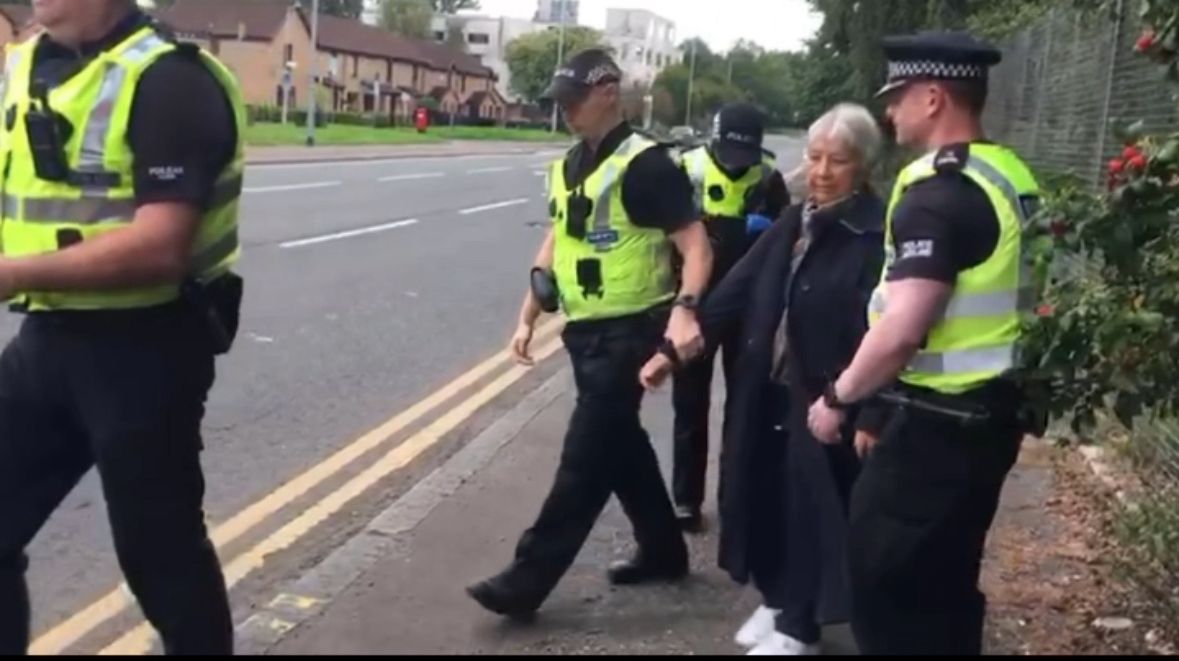
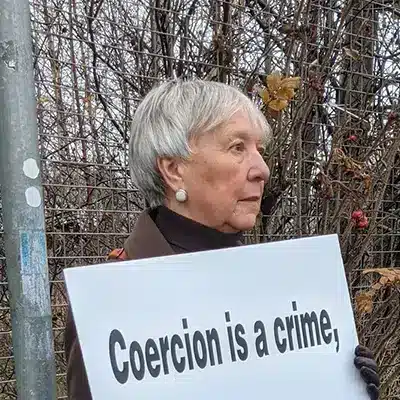
In Scotland, Rose Docherty, 75, was arrested in February for standing outside Glasgow’s Queen Elizabeth University Hospital with a sign reading: “Coercion is a crime, here to talk, only if you want.” Last week, Scottish authorities dropped their case against her and guaranteed they would return her sign. 

And recently, Isabel Vaughan-Spruce – a charitable volunteer who has supported mothers in crisis for over 20 years – was placed back under investigation for praying silently near an abortion facility in Birmingham, despite having won £13,000 in compensation from West Midlands Police last year for having unfairly arrested her twice before for the same activity. 

“Freedom of speech and freedom of religion are cornerstones of any free society,said Lorcan Price, Irish Barrister and Legal Counsel for ADF International.  

“The UK’s treatment of individuals like Livia, Adam, Isabel and Rose for the false ‘crimes’ of praying silently or offering conversation shows just how far the country has strayed from its own proud traditions of liberty. The US State Department is right to call out this injustice. It is time for the UK government to restore fundamental freedoms, and repeal buffer zone legislation.” 

Images for free use in print or online in relation to this story only

Pictured: Isabel Vaughan-Spruce; Rose Docherty; Adam Smith-Connor; Livia Tossici-Bolt; Lorcan Price (ADF International)